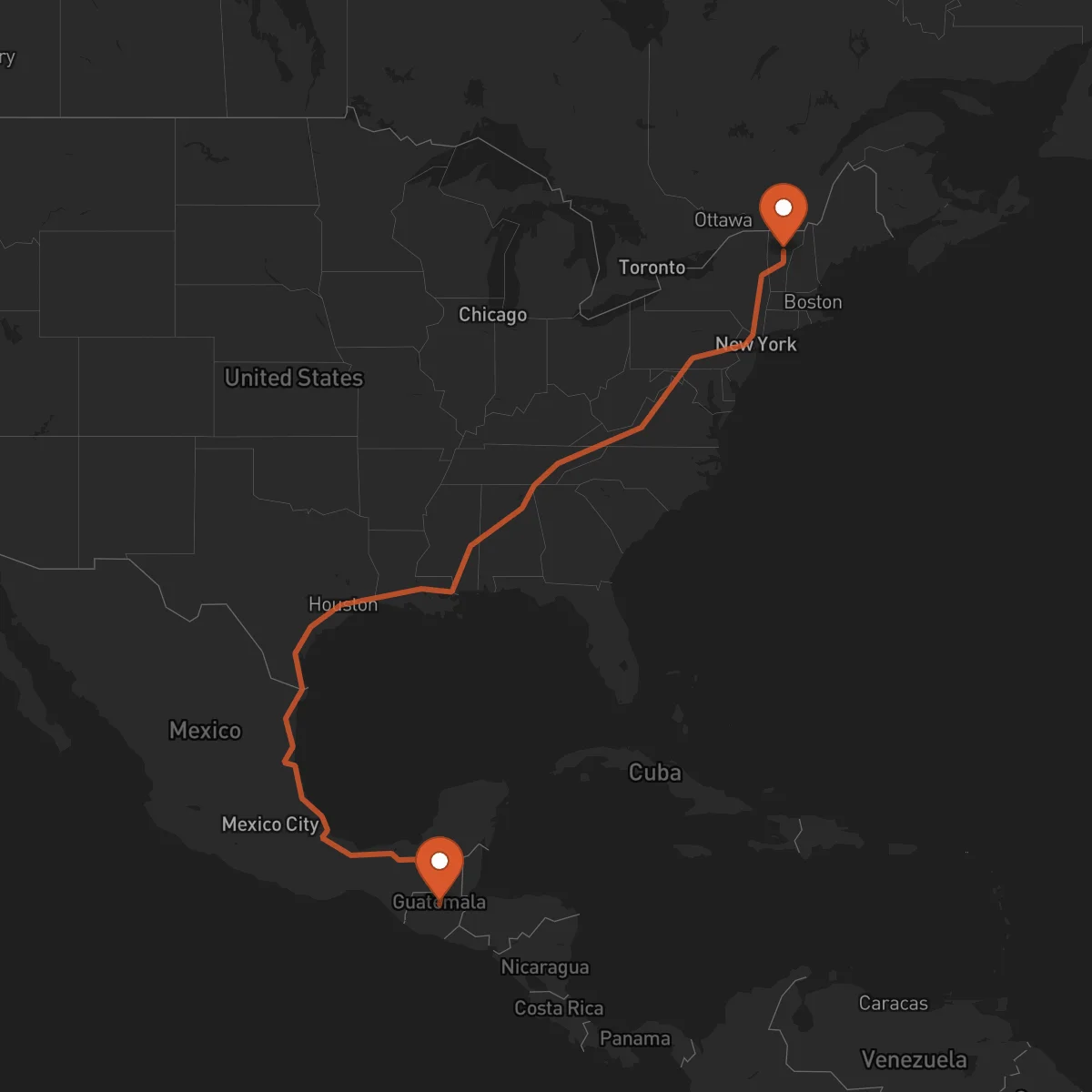
Cobán to Montpelier
Montpelier → CobánFTL freight transportation service between Cobán and Montpelier. Reliable logistics solutions for your business.
Route Description
Everything you need to know about the corridor Cobán - Montpelier
The Cobán to Montpelier corridor represents a critical North-South logistics artery connecting the highlands of Guatemala with the Northeastern United States. Strategically, it bridges the agricultural and manufacturing heartland of Central America with the consumer and industrial markets of Vermont and the broader New England region, facilitating essential trade flows. Economically, this route supports the export of Guatemala's renowned coffee, cardamom, fresh produce, and textiles, while enabling the import of US manufactured goods, dairy products, and technology equipment into Central America. Primary industries leveraging this corridor include agriculture (specialty crops), food and beverage processing, apparel manufacturing, and industrial component distribution. The transportation infrastructure relies on a multi-country highway network: originating on Guatemala's CA-14 highway, traversing Mexico's federal highways (such as Mex-190 and Mex-150D), and entering the US via a major Southern border crossing before connecting to the US Interstate system, primarily I-90, for the final leg to Vermont. Key border crossings, typically at the Mexico-US frontier (e.g., Laredo/El Paso corridors), involve complex customs procedures where documentation compliance, duties, and regulations like USMCA are paramount. Control Terrestre facilitates seamless operations on this corridor through our alliance of seasoned carriers, all holding critical certifications like C-TPAT and FAST. These credentials expedite clearance at the border, reducing delays. We provide dedicated Full Truckload (FTL) solutions, including refrigerated units for perishable goods from Cobán and dry vans for manufactured products, managing the entire cross-border process with our expertise in customs coordination and our commitment to reliable, human-centric, and sustainable ground transportation.
Services for this Route
Available services for the corridor Cobán - Montpelier
 Origin
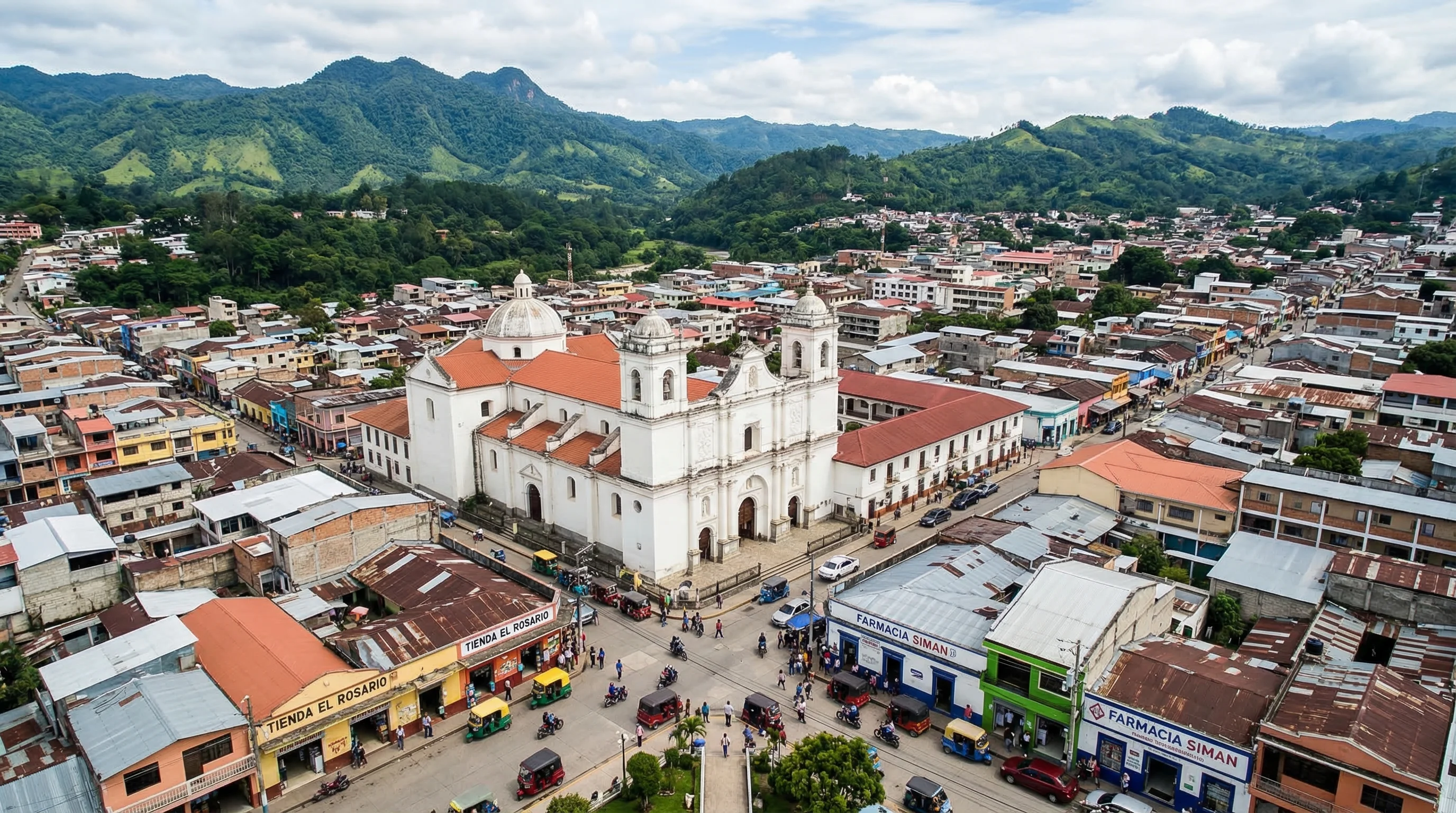
Cobán
Cobán, the capital of Guatemala's Alta Verapaz department, is a strategic logistics hub for Northern Central America. Its location in the fertile highlands provides direct access to the country's most productive agricultural zones, particularly for premium coffee, cardamom, and a variety of fruits and vegetables. The city serves as a primary collection and consolidation point for these exports before they begin their international journey. Key transportation infrastructure includes the CA-14 highway, which provides a vital paved link southwards to Guatemala City and the Caribbean port of Puerto Barrios, enabling multimodal connections. While rail infrastructure is limited, the road network is well-developed for regional trucking, making Cobán a natural origin for long-haul FTL services destined for North America. The local economy is deeply intertwined with agriculture and related processing industries, creating consistent demand for outbound freight capacity to move bulk agricultural commodities and value-added food products.
 Destination
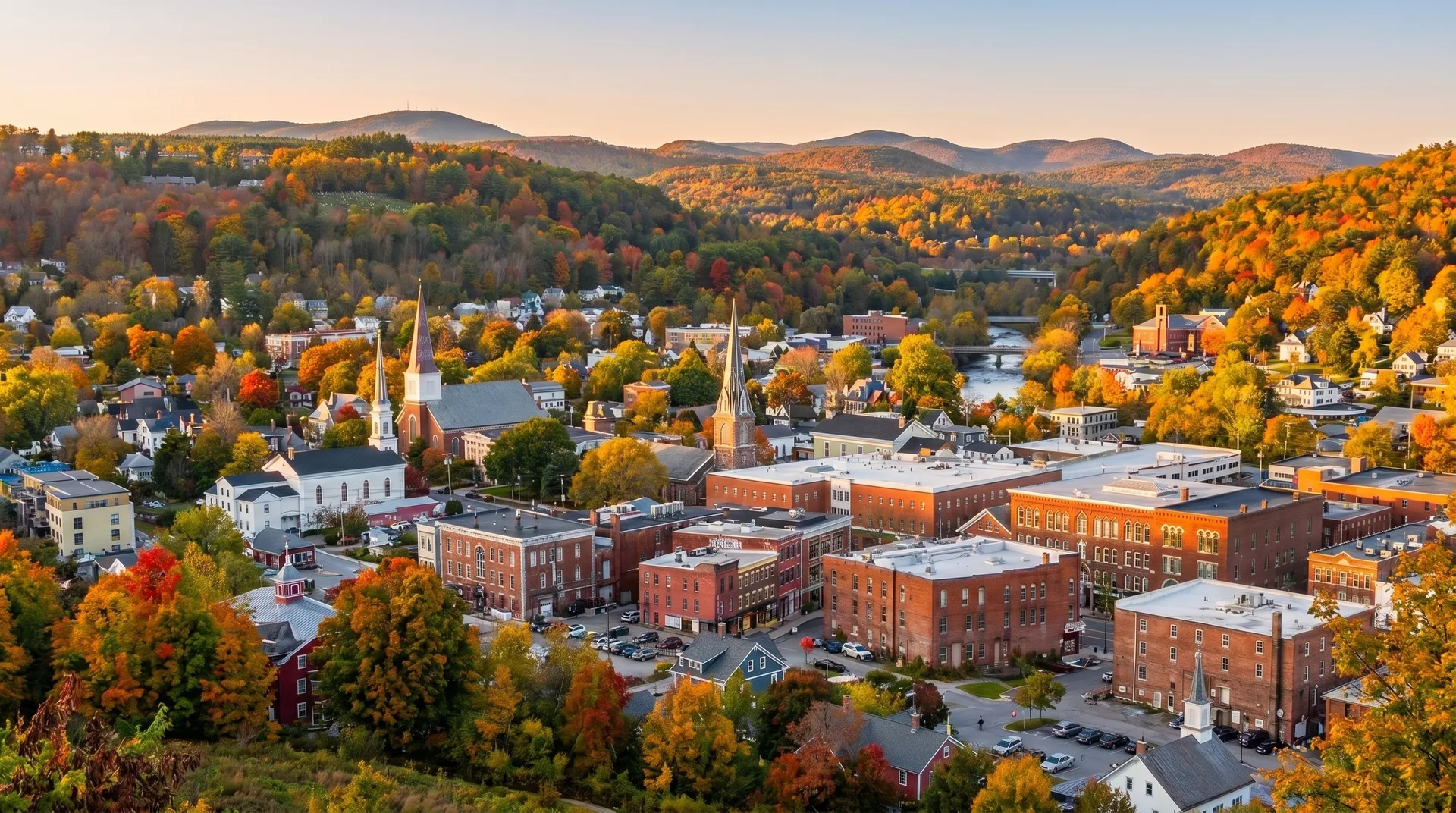
Montpelier
Montpelier, the capital of Vermont, is a strategically located logistics destination in the heart of New England. It serves as a central distribution node for the state's robust agricultural and specialty manufacturing sectors. Vermont's economy is defined by dairy farming, maple syrup production, cheesemaking, and a growing niche in craft beverages and precision manufacturing, all of which generate significant inbound freight for raw materials and outbound shipments for finished goods. The city benefits from immediate access to Interstate 89, providing a direct, high-capacity route north to Canada and south to major US markets and ports. Additionally, the region is supported by regional rail lines and is within a day's drive of major Canadian border crossings, enhancing its role in cross-border trade. The available transportation infrastructure is tailored for efficient FTL movements, with a network of state highways and interstates capable of handling all standard equipment types, from dry vans to refrigerated units, making it an effective endpoint for long-distance ground freight from the south.










