Chihuahua to Xalapa
Xalapa → ChihuahuaFTL freight transportation service between Chihuahua and Xalapa. Reliable logistics solutions for your business.
Route Description
Everything you need to know about the corridor Chihuahua - Xalapa
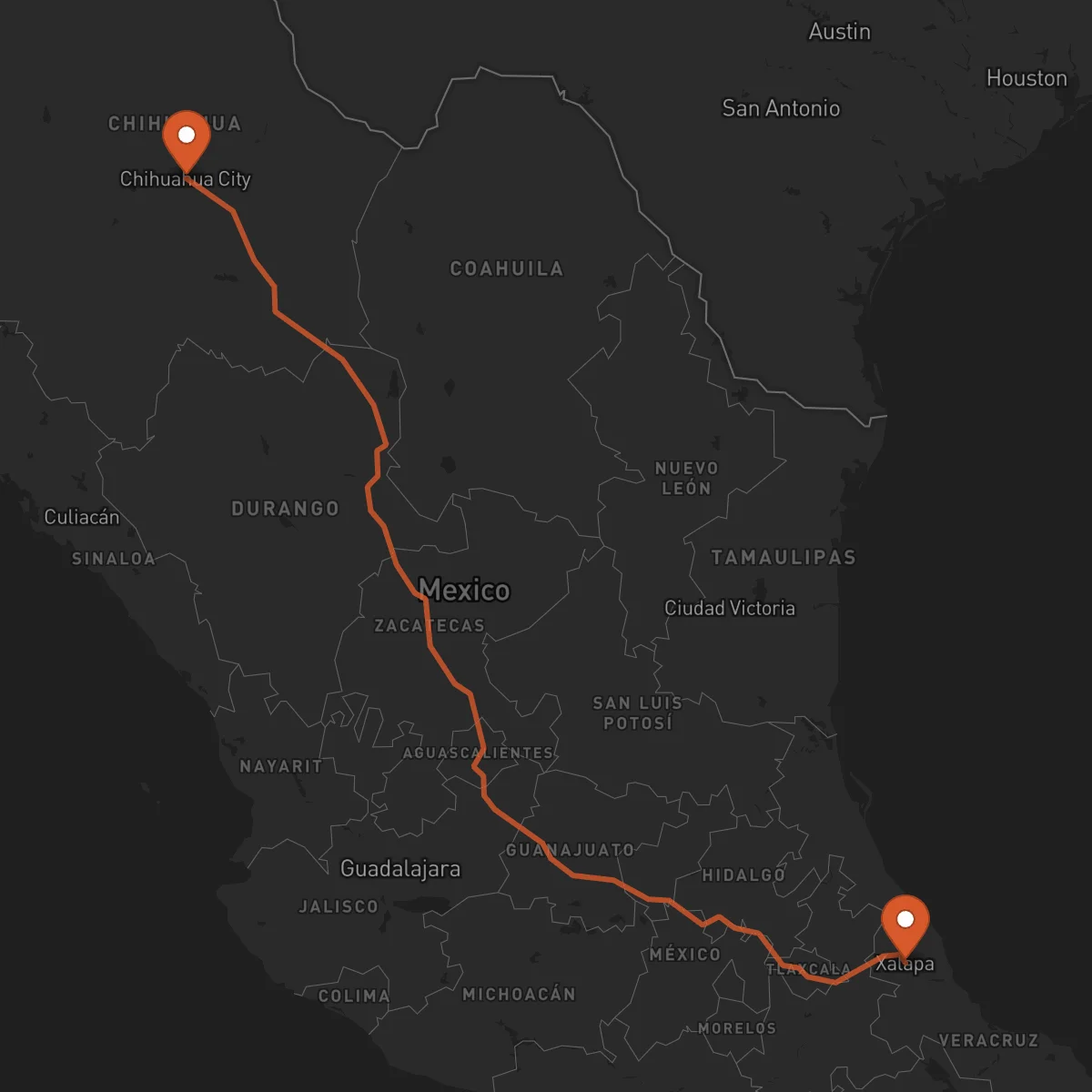
The logistics corridor connecting Chihuahua to Xalapa represents a vital link between Mexico's northern industrial powerhouse and the strategic port region of Veracruz. This 1,372-kilometer route traverses diverse terrain and connects two regions with complementary economic strengths. Chihuahua, known for its robust manufacturing and mining sectors, relies on efficient transportation to distribute products nationwide and to international markets. Xalapa, as the capital of Veracruz, serves as a gateway to Mexico's Gulf coast ports and benefits from its proximity to major maritime infrastructure.
The corridor primarily utilizes Federal Highway 45 and Highway 180, which provide reliable connections through key states including Durango, Zacatecas, San Luis Potosí, Querétaro, and Puebla. This route supports the movement of diverse cargo types, from automotive components and electronics to agricultural products and industrial machinery. The transportation infrastructure along this corridor has been continuously improved to accommodate the growing freight volumes between northern Mexico and the Gulf coast region.
Control Terrestre specializes in optimizing freight movements along this corridor through our network of certified carriers and advanced logistics solutions. Our dedicated services ensure that cargo moves efficiently from Chihuahua's industrial parks to Xalapa's distribution centers and vice versa. We understand the specific requirements of industries operating along this route, including the need for temperature-controlled transportation for certain products and specialized handling for oversized or hazardous materials. Our commitment to safety, reliability, and timely delivery makes us the preferred partner for companies requiring full truckload services between these important Mexican cities.
Services for this Route
Available services for the corridor Chihuahua - Xalapa
 Origin
Chihuahua stands as one of Mexico's most important industrial centers, strategically located in the northern part of the country. The city benefits from its proximity to the United States border and its well-developed transportation infrastructure, including direct rail connections and modern highways. Chihuahua's economy is driven by a diverse industrial base, with particular strengths in aerospace manufacturing, automotive production, mining operations, and maquiladora industries. The city hosts numerous multinational companies and serves as a regional hub for logistics and distribution activities.
The transportation infrastructure in Chihuahua is highly developed, featuring multiple logistics parks, industrial zones, and warehousing facilities. The city is connected to major highways including Federal Highway 45, which provides direct access to central and southern Mexico. Chihuahua's airport and rail connections further enhance its position as a logistics hub, enabling multimodal transportation solutions for companies operating in the region.
 Destination
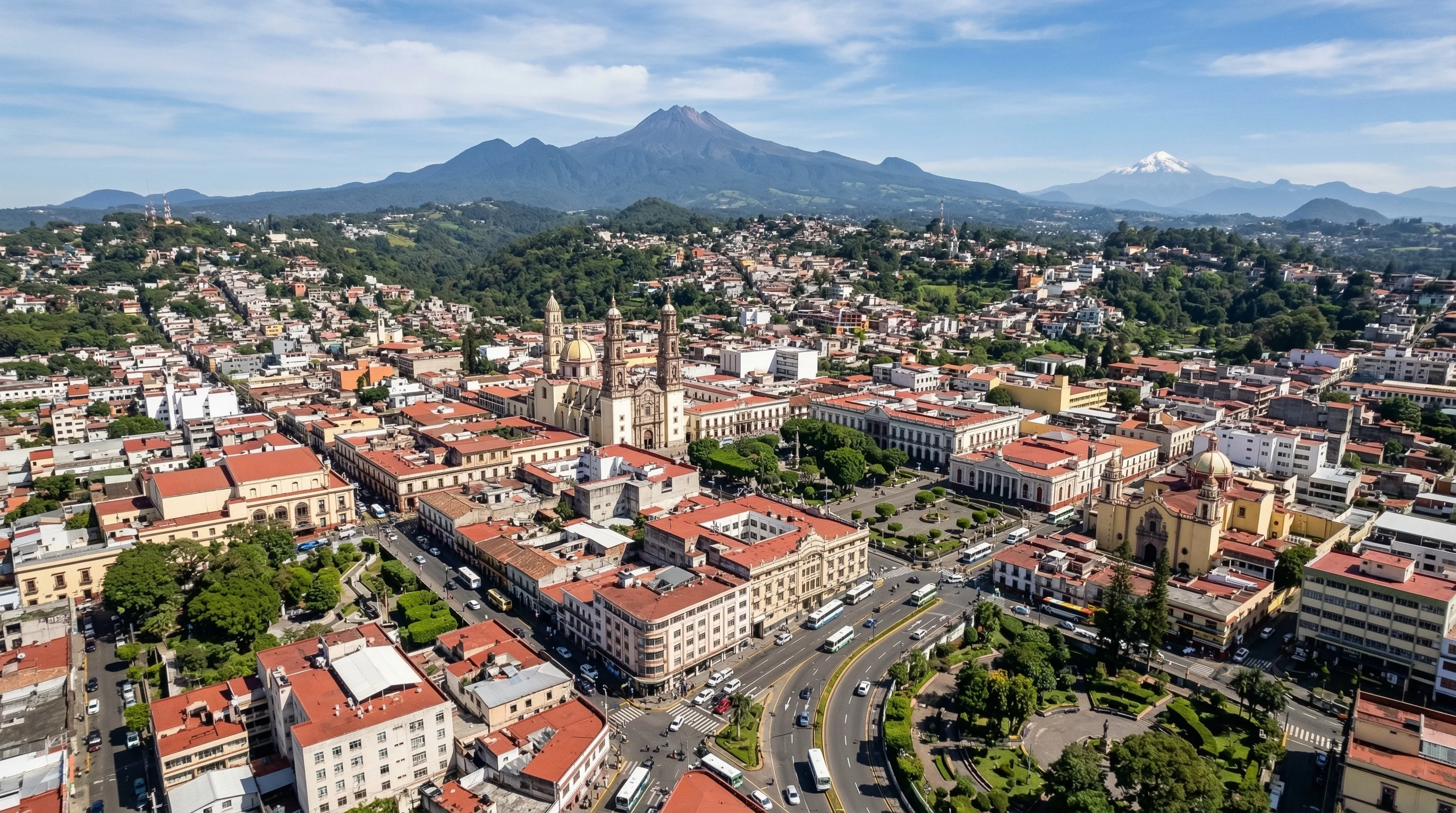
Xalapa, the capital of Veracruz, occupies a strategic position in eastern Mexico with excellent connectivity to the Gulf coast. The city serves as an important administrative, educational, and commercial center, while also functioning as a crucial node in Mexico's logistics network. Xalapa's location provides relatively quick access to Veracruz's major ports, including Veracruz, Coatzacoalcos, and Tuxpan, making it an ideal distribution point for goods destined for international markets.
The region surrounding Xalapa has a diverse economic base, including agricultural production, food processing, and light manufacturing. The city benefits from its proximity to major transportation corridors that connect to Mexico's Gulf coast ports and the central highlands. Xalapa's infrastructure includes modern highways, distribution centers, and industrial parks that support the efficient movement of freight throughout the region. The city's educational institutions also contribute to a skilled workforce that supports logistics and transportation operations.










