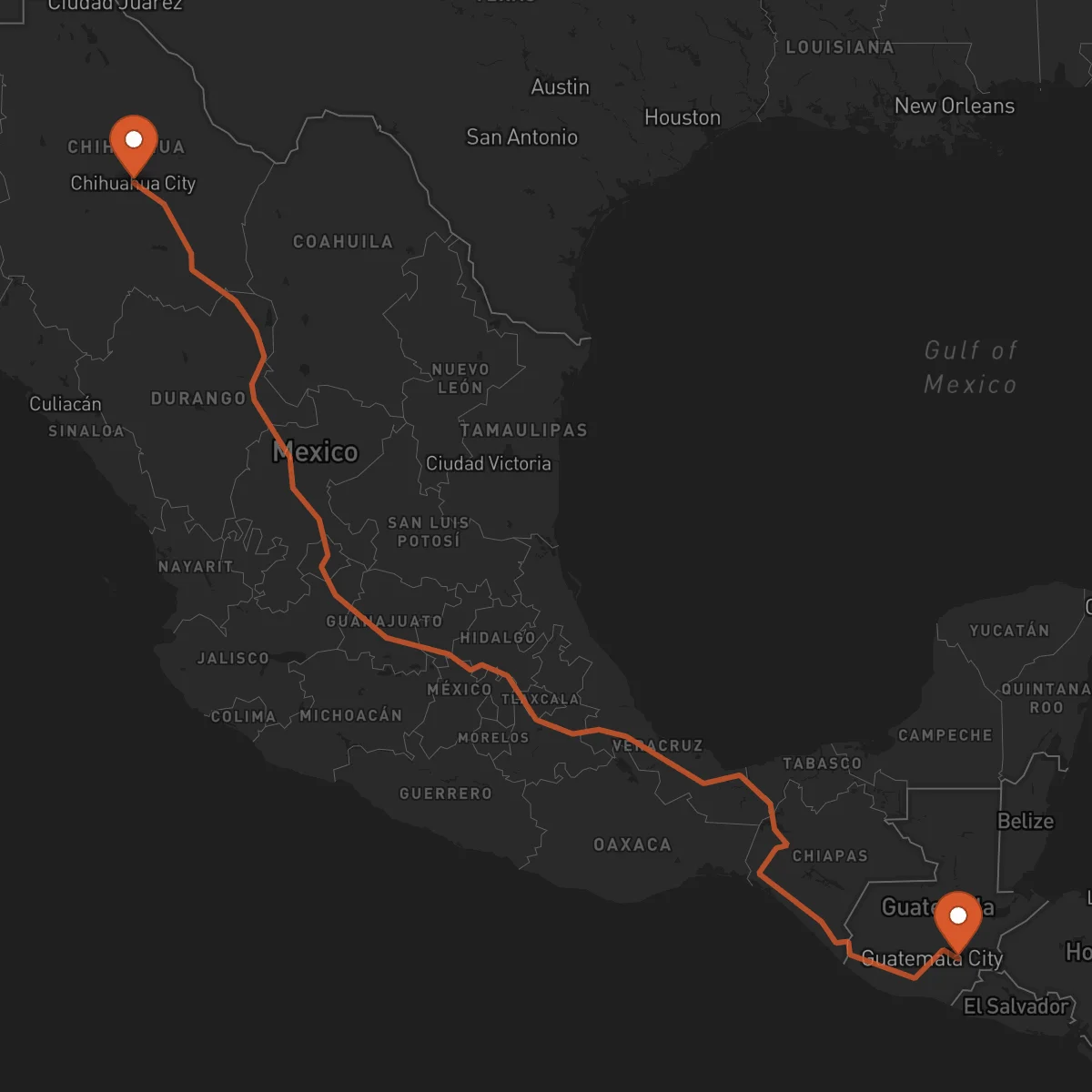
Chihuahua to Jalapa
Jalapa → ChihuahuaFTL freight transportation service between Chihuahua and Jalapa. Reliable logistics solutions for your business.
Route Description
Everything you need to know about the corridor Chihuahua - Jalapa
The Chihuahua to Jalapa corridor represents a critical north-south logistics artery connecting Mexico's industrial heartland with Guatemala's key commercial and agricultural regions. Spanning approximately 2,272 km, this cross-border route is essential for moving full truckload (FTL) freight between northern Mexico and Central America, facilitating the flow of manufactured goods, raw materials, and agricultural products. The corridor's strategic importance is amplified by its role in supporting integrated supply chains across the region, enabling businesses to access markets and suppliers on both ends efficiently.
Economically, the corridor links the manufacturing powerhouse of Chihuahua—a state dominated by maquiladoras, automotive, and aerospace industries—with Jalapa, a major hub for Guatemala's coffee, vegetable, and fruit production, as well as general commerce. This creates a consistent demand for dedicated, expedited, and specialized freight services, including refrigerated transport for perishables and flatbeds for industrial equipment. The primary industries leveraging this route include automotive parts, electronics, agricultural exports, and consumer goods distributors seeking a direct connection between production and consumption centers.
Infrastructure-wise, the route relies on a network of major highways. In Mexico, Federal Highway 45 forms the backbone south from Chihuahua City towards the border, connecting to Highway 190. The critical border crossing is at Tecún Umán/El Carmen, Guatemala, where customs and immigration procedures are handled. From there, Guatemalan highways, primarily the CA-1, lead to Jalapa. Navigating the complex customs and regulatory environments at this crossing requires expertise in documentation, compliance with programs like C-TPAT and FAST, and an understanding of local procedures to ensure seamless transit.
Control Terrestre facilitates operations on this corridor through our robust alliance of experienced carriers specializing in cross-border freight. We coordinate the entire journey, from pickup in Chihuahua to delivery in Jalapa, managing border protocols and leveraging our providers' certifications (including BASC and Clean Transportation) to ensure security and efficiency. Our focus on exclusive FTL solutions—whether dry van, refrigerated, or specialized equipment—means our clients receive a dedicated, door-to-door service tailored to the unique demands of this long-haul, international route, optimizing their supply chain with a human and green approach.
Services for this Route
Available services for the corridor Chihuahua - Jalapa
 Origin
Chihuahua City, the capital of the state of Chihuahua, is a pivotal logistics and industrial hub in northern Mexico. Its strategic location provides direct access to the U.S. border via major corridors like Federal Highway 45, making it a natural gateway for international trade. The city anchors a robust economy driven by manufacturing, particularly the maquiladora industry, with significant sectors in automotive, aerospace, electronics, and medical devices. Additionally, mining and agriculture are vital components of the regional economy. The available transportation infrastructure is comprehensive, featuring an international airport (Chihuahua International), a major railway line operated by Ferromex, and a dense network of paved highways connecting to the U.S. and the rest of Mexico. This infrastructure supports high-volume FTL movements, positioning Chihuahua as a primary origin point for freight destined for Central America and beyond.
 Destination
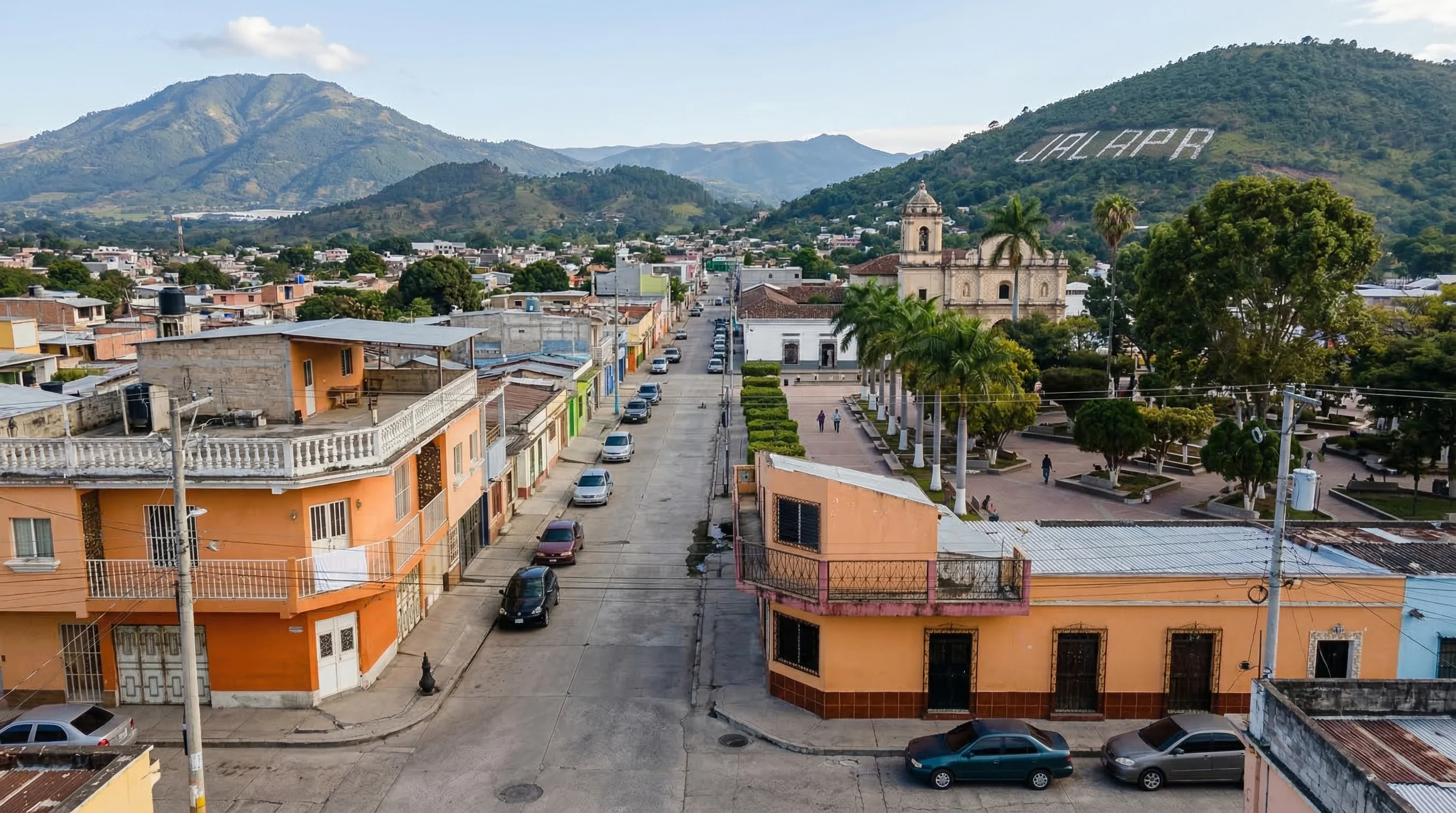
Jalapa, the capital of the Jalapa department in eastern Guatemala, holds a strategic location as a commercial and agricultural crossroads. It serves as a vital distribution center for the fertile highlands, renowned for coffee production, as well as vegetables and fruits like broccoli and berries. The city's economy is also bolstered by commerce, light manufacturing, and services. Its logistics infrastructure is defined by its position on the CA-1 highway, the main east-west artery in Guatemala, which connects the Pacific coast to the borders with Honduras and El Salvador. While Jalapa itself is inland, the corridor efficiently links it to the Caribbean port of Puerto Barrios for potential intermodal options. The consistent outbound flow of agricultural and manufactured goods creates steady demand for reliable, long-haul FTL services from Mexico, with a particular need for refrigerated units to maintain product integrity.










