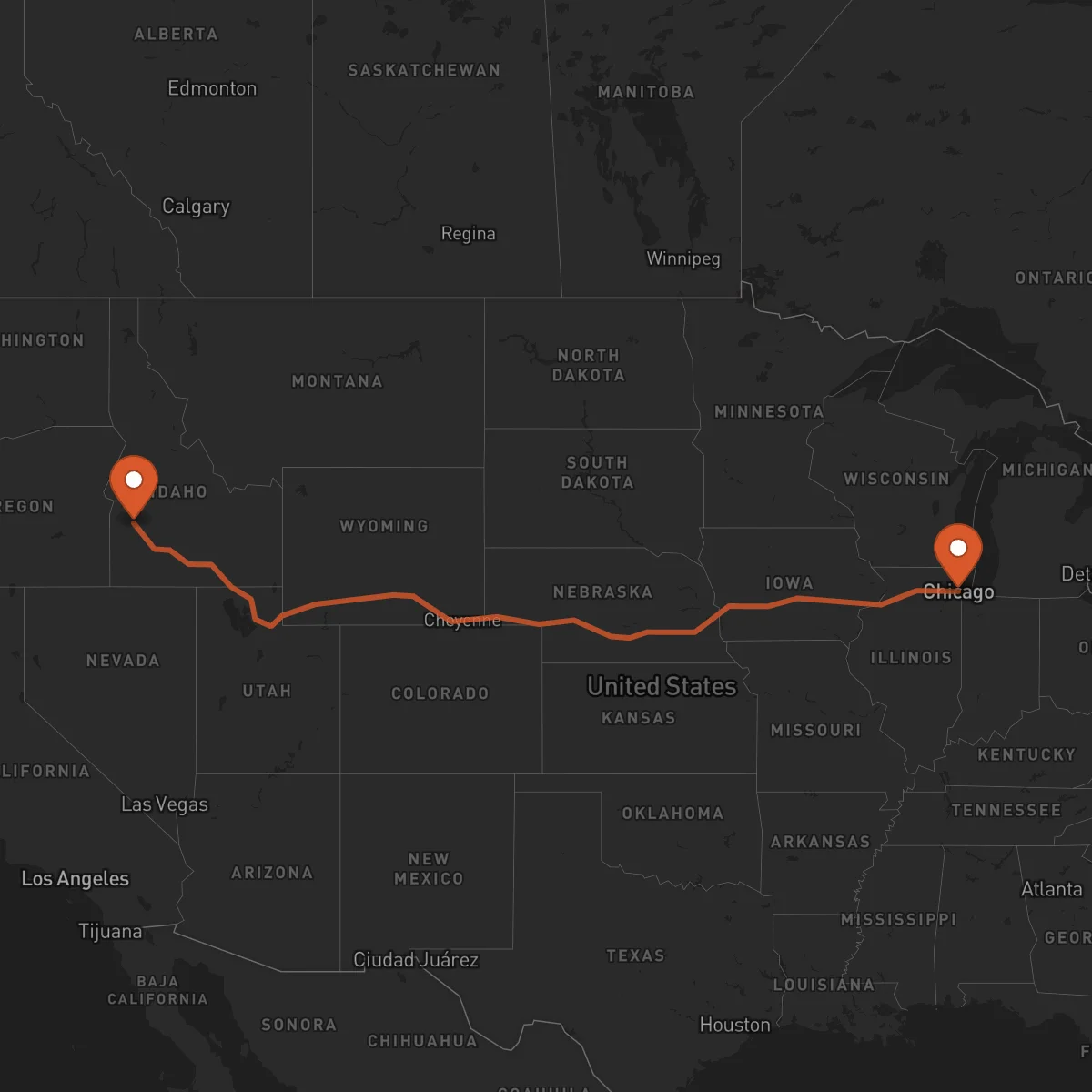
Chicago to Boise
Boise → ChicagoFTL freight transportation service between Chicago and Boise. Reliable logistics solutions for your business.
Route Description
Everything you need to know about the corridor Chicago - Boise
The Chicago to Boise corridor represents a vital freight transportation route connecting the economic powerhouse of the Midwest with the growing technology and agricultural hub of the Pacific Northwest. This 2,329-kilometer journey traverses diverse landscapes and crosses multiple state lines, making it a critical link in the North American supply chain. The route facilitates the movement of goods between two dynamic economic regions, supporting industries ranging from manufacturing and technology to agriculture and retail.
The transportation infrastructure along this corridor is robust, primarily utilizing major interstate highways including I-80, I-90, and I-84. These well-maintained routes provide reliable passage for full truckload (FTL) freight, ensuring timely deliveries across the country. The corridor benefits from Chicago's extensive intermodal facilities and Boise's growing logistics capabilities, creating a seamless transportation network for businesses.
Control Terrestre specializes in optimizing freight movements along this corridor, offering dedicated FTL services that cater to the specific needs of shippers. Our experienced network of carriers ensures that your cargo moves efficiently from origin to destination, with real-time tracking and professional handling throughout the journey. Whether you're shipping industrial equipment, consumer goods, or agricultural products, our team provides the expertise and resources needed to keep your supply chain moving smoothly across this important North American route.
Services for this Route
Available services for the corridor Chicago - Boise
 Origin
Chicago
Chicago stands as a premier logistics hub in North America, strategically positioned at the crossroads of major transportation networks. The city's central location provides unparalleled access to both coasts and serves as a gateway to Canada and Mexico. Chicago's extensive infrastructure includes O'Hare International Airport, one of the busiest in the world, and multiple Class I rail yards that facilitate intermodal transportation. The metropolitan area is home to numerous warehousing and distribution centers, making it an ideal origin point for freight shipments across the country.
The Windy City's economy is diverse and robust, with key industries including manufacturing, technology, finance, and healthcare. Chicago is particularly strong in food processing, machinery manufacturing, and printing and publishing. The region's industrial base creates consistent demand for freight transportation services, with businesses requiring reliable logistics solutions to move raw materials in and finished products out to markets across the United States and beyond.
 Destination
Boise
Boise has emerged as a significant logistics and economic center in the Pacific Northwest, offering strategic advantages for businesses looking to reach markets in the western United States. The city's location provides relatively quick access to major West Coast ports while maintaining lower operational costs compared to coastal metropolitan areas. Boise's growing infrastructure includes an international airport, expanding highway systems, and developing intermodal facilities that support the region's increasing freight volumes.
The Boise metropolitan area has experienced substantial economic growth, particularly in technology, agriculture, and outdoor recreation industries. Known as the "Silicon Slopes," the region has attracted numerous tech companies and startups, creating demand for specialized logistics services. Additionally, Idaho's strong agricultural sector, including potato farming, dairy production, and food processing, relies heavily on efficient freight transportation to move products to national and international markets. Boise's business-friendly environment and quality of life continue to attract companies that require reliable supply chain solutions.










