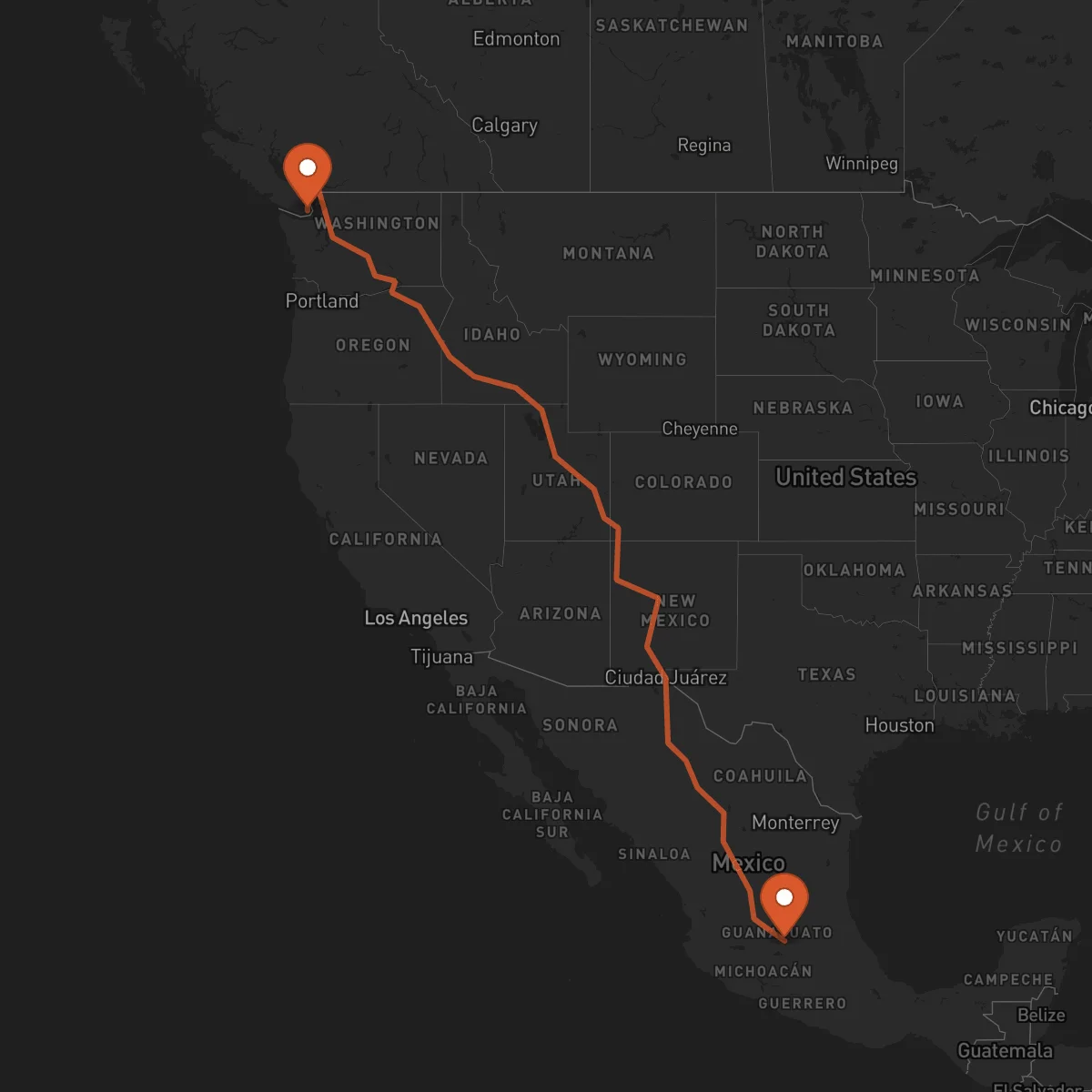
Celaya to Victoria
Victoria → CelayaFTL freight transportation service between Celaya and Victoria. Reliable logistics solutions for your business.
Route Description
Everything you need to know about the corridor Celaya - Victoria
The logistics corridor connecting Celaya, Guanajuato to Victoria, British Columbia represents one of the most strategic cross-border routes in North America. This 3,698 km corridor links Mexico's thriving automotive and manufacturing heartland with Canada's Pacific gateway, facilitating the seamless movement of goods between three major economies. The route traverses diverse terrain and crosses multiple jurisdictions, making it essential for companies engaged in international trade within the USMCA region.
The corridor's economic significance is underscored by the complementary industrial strengths of its endpoints. Celaya serves as a critical node in Mexico's automotive supply chain, hosting numerous manufacturing plants and suppliers that feed into both domestic and export markets. Meanwhile, Victoria functions as a major port city and distribution hub for Western Canada, with strong connections to Asian markets and the broader North American supply chain. This creates a powerful trade dynamic where manufacturing output from central Mexico flows northward to reach Canadian and US markets.
Key industries utilizing this corridor include automotive components, electronics, consumer goods, and industrial equipment. The route primarily follows major transportation arteries including Mexico's Federal Highway 45, which connects to the US Interstate system via Laredo/Nuevo Laredo, before continuing through the western United States and into Canada via Highway 1. The corridor's efficiency depends on smooth border crossings, with the Laredo/Nuevo Laredo point serving as the primary gateway where Control Terrestre's C-TPAT and FAST certifications ensure expedited processing.
Control Terrestre facilitates seamless operations along this corridor through our specialized cross-border expertise and dedicated FTL services. Our strategic partnerships with certified carriers ensure reliable transportation from origin to destination, while our knowledge of customs procedures and documentation requirements minimizes delays. We provide door-to-door service that maintains cargo integrity throughout the journey, whether transporting time-sensitive automotive parts or temperature-controlled goods requiring our refrigerated equipment options.
Services for this Route
Available services for the corridor Celaya - Victoria
 Origin
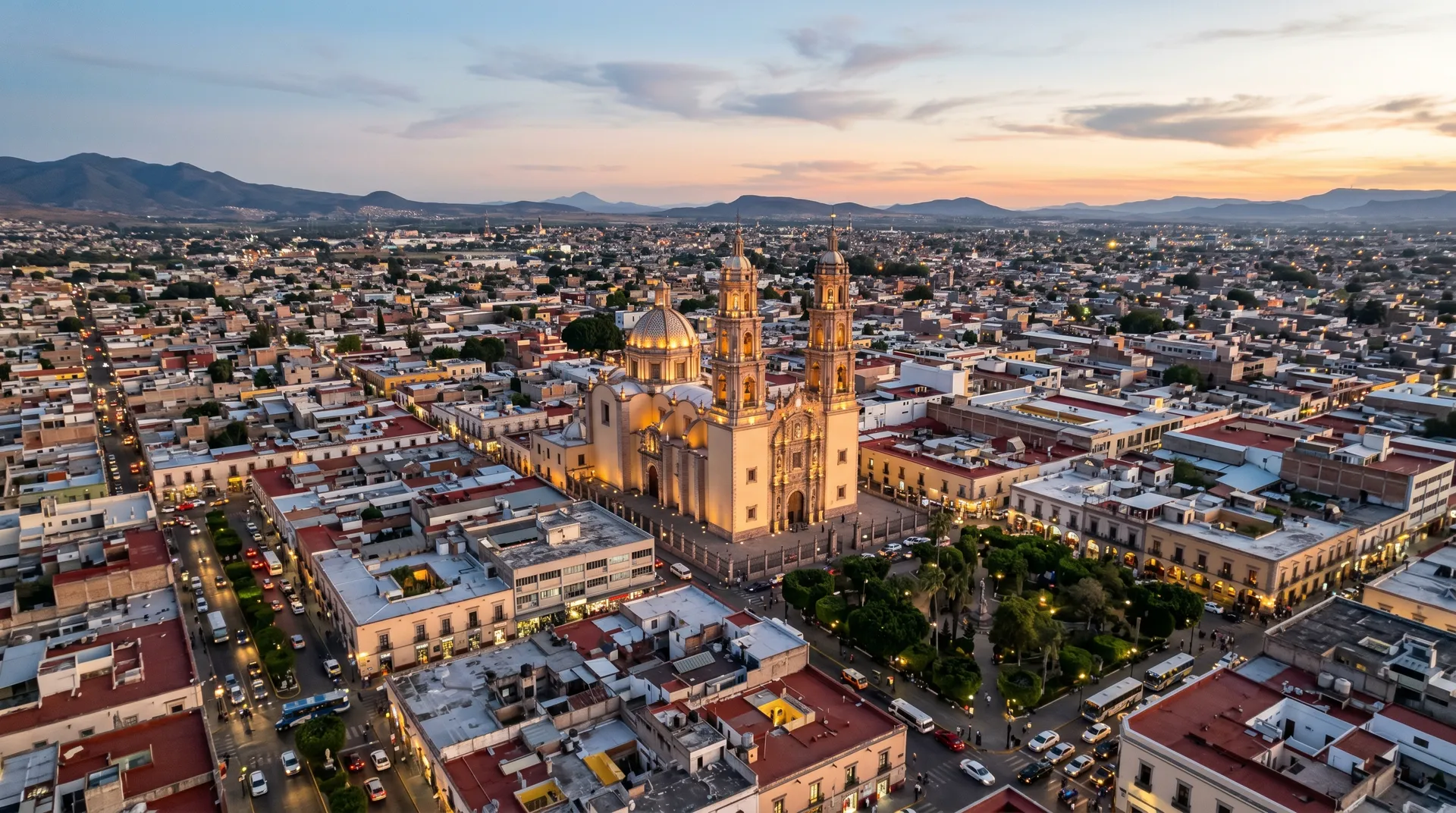
Celaya
Celaya, located in the heart of Guanajuato state, stands as a strategic logistics hub in central Mexico. Its advantageous position within the Bajío region provides excellent connectivity to major industrial centers like Querétaro, León, and Guadalajara. The city benefits from proximity to Mexico's central plateau, offering relatively flat terrain that facilitates efficient ground transportation. Celaya's industrial parks and manufacturing zones are well-served by Federal Highway 45, which provides direct north-south connectivity to the US border and beyond.
The city's economic landscape is dominated by the automotive industry, with numerous OEM plants and Tier 1 suppliers establishing operations in the area. Beyond automotive, Celaya hosts thriving food processing, metalworking, and consumer goods manufacturing sectors. The presence of industrial infrastructure, including specialized logistics parks and warehousing facilities, creates a robust ecosystem for freight movement. Celaya's growing industrial base generates substantial freight volume, making it an ideal origin point for Control Terrestre's dedicated FTL services to Canadian destinations.
 Destination
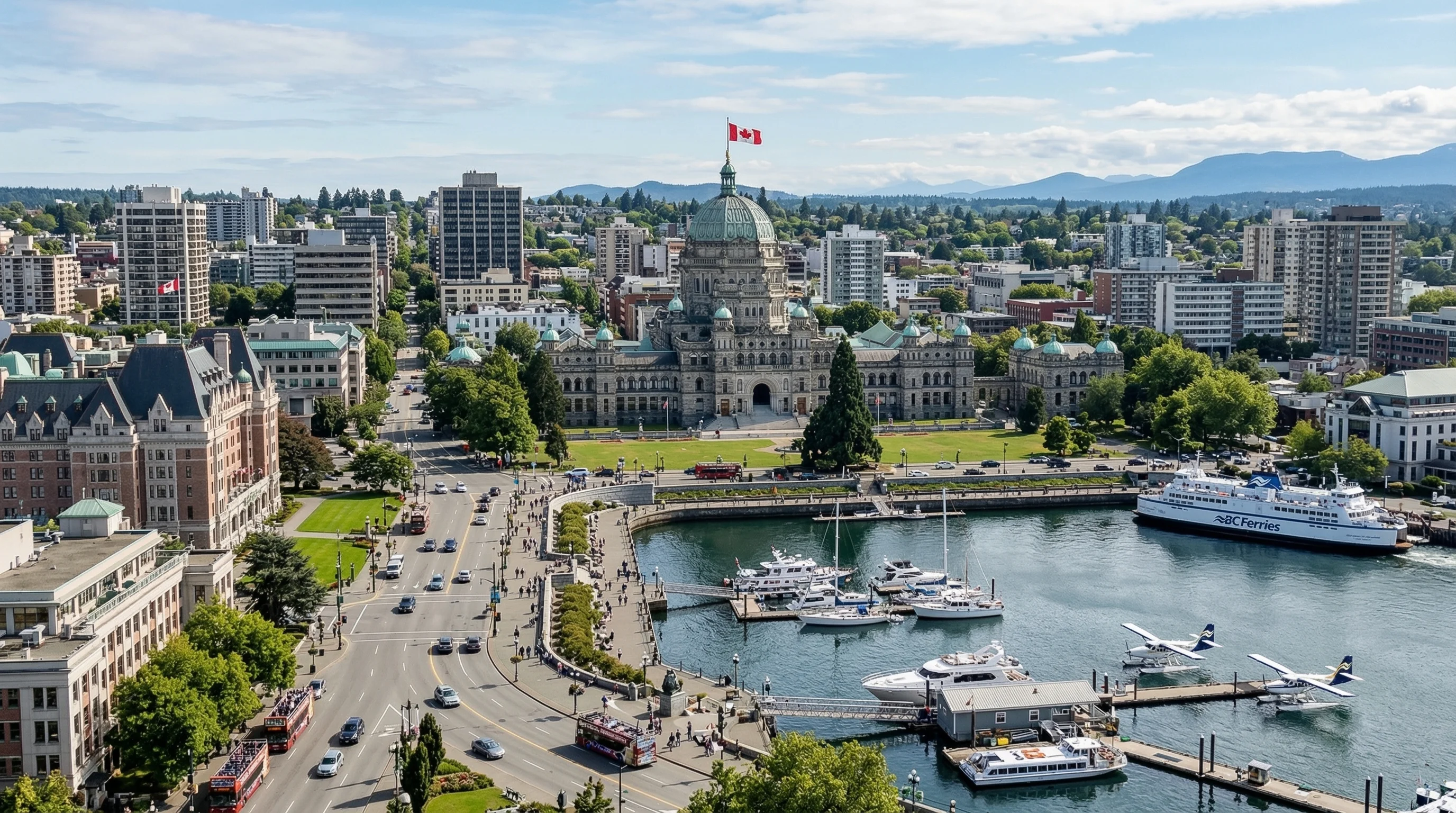
Victoria
Victoria, situated on Vancouver Island in British Columbia, serves as a strategic logistics gateway for Western Canada. While geographically separated from the mainland, Victoria maintains strong transportation connections through ferry services to Vancouver and other coastal ports. The city's location provides access to Canada's Pacific trade routes and serves as a distribution point for Vancouver Island and coastal British Columbia. Victoria's transportation infrastructure includes well-maintained highways connecting to ferry terminals, creating an integrated network for freight movement.
The local economy encompasses diverse sectors including government services, tourism, technology, and maritime industries. Victoria's port facilities handle various cargo types, while the surrounding region features strong agricultural, forestry, and manufacturing activities. The city's position within Canada's supply chain makes it a key destination for goods originating from US and Mexican manufacturing centers. Victoria's growing industrial base and strategic coastal location create consistent demand for reliable cross-border freight services, particularly for companies requiring dedicated transportation solutions from Mexico's manufacturing hubs.










