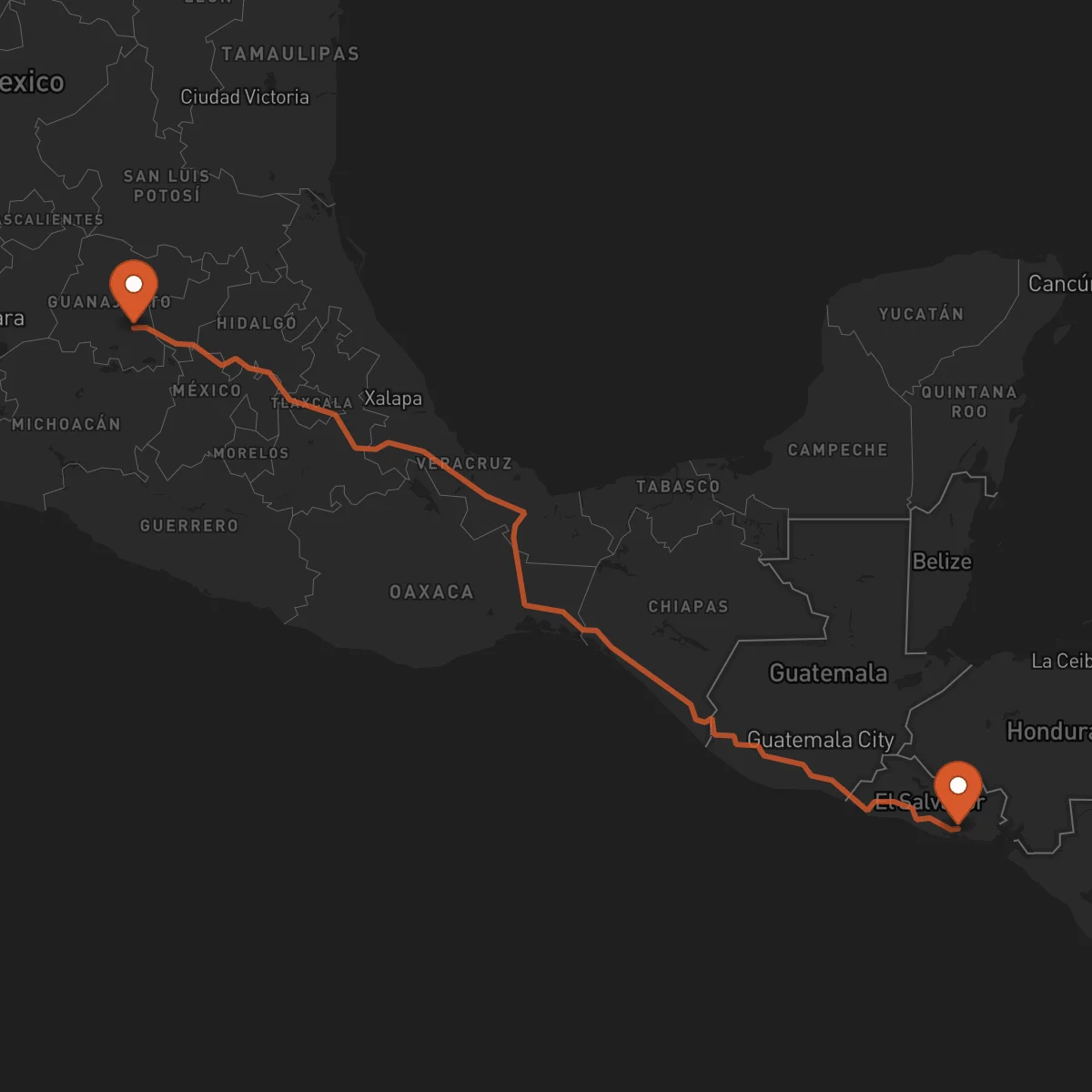
Celaya to Usulután
Usulután → CelayaFTL freight transportation service between Celaya and Usulután. Reliable logistics solutions for your business.
Route Description
Everything you need to know about the corridor Celaya - Usulután
The Celaya-Usulután corridor is a vital cross-border artery connecting Mexico's industrial heartland with Central America's agricultural and commercial centers. Spanning approximately 1,538 kilometers, this route bridges the manufacturing prowess of Guanajuato with the export-driven economy of El Salvador, facilitating the movement of goods that support regional supply chains. The corridor's strategic importance lies in its role as a conduit for trade between North and Central America, enabling efficient access to markets for both finished products and raw materials.
Economically, the corridor links two dynamic regions. Celaya is a major industrial hub within Mexico's Bajío region, known for automotive manufacturing, food processing, and logistics. Usulután, in southeastern El Salvador, is a critical agricultural zone, producing coffee, sugar cane, and seafood, and serves as a distribution node for the region. Key industries utilizing this route include automotive parts suppliers, processed food and beverage companies, agricultural exporters, and general manufacturing firms requiring reliable full truckload (FTL) movement.
Transportation infrastructure relies on a network of major highways, including Mexico Federal Highway 45D and the Central American Highway CA-1. The route involves multiple border crossings, primarily at Tecún Umán (Mexico-Guatemala) and later into El Salvador, requiring careful navigation of customs procedures in each country. These crossings demand expertise in documentation, regulatory compliance, and security protocols to ensure seamless transit.
Control Terrestre facilitates operations on this complex corridor through our strategic alliance of experienced transportation providers. Our network is equipped with the necessary certifications—such as BASC for security and Clean Transportation standards—to handle cross-border logistics efficiently. We manage the entire FTL process, from origin pickup in Celaya to door delivery in Usulután, coordinating border transitions and leveraging provider expertise to mitigate delays, all while maintaining our commitment to human-centric and sustainable freight solutions.
Services for this Route
Available services for the corridor Celaya - Usulután
 Origin
Celaya
Celaya, located in the state of Guanajuato, is a strategic logistics hub within Mexico's thriving Bajío industrial region. Its central position offers excellent connectivity to major production centers and ports on both the Pacific and Gulf coasts. The city's economy is dominated by automotive manufacturing, with a significant General Motors plant, alongside robust food processing, metalworking, and logistics sectors. This industrial density generates consistent demand for outbound FTL freight. Infrastructure supports heavy logistics operations, including direct access to Federal Highways 45 and 51, rail freight services, and proximity to the Querétaro Intercontinental Airport for time-sensitive air-rail-truck integrations, making it an optimal origin for national and cross-border shipments.
 Destination
Usulután
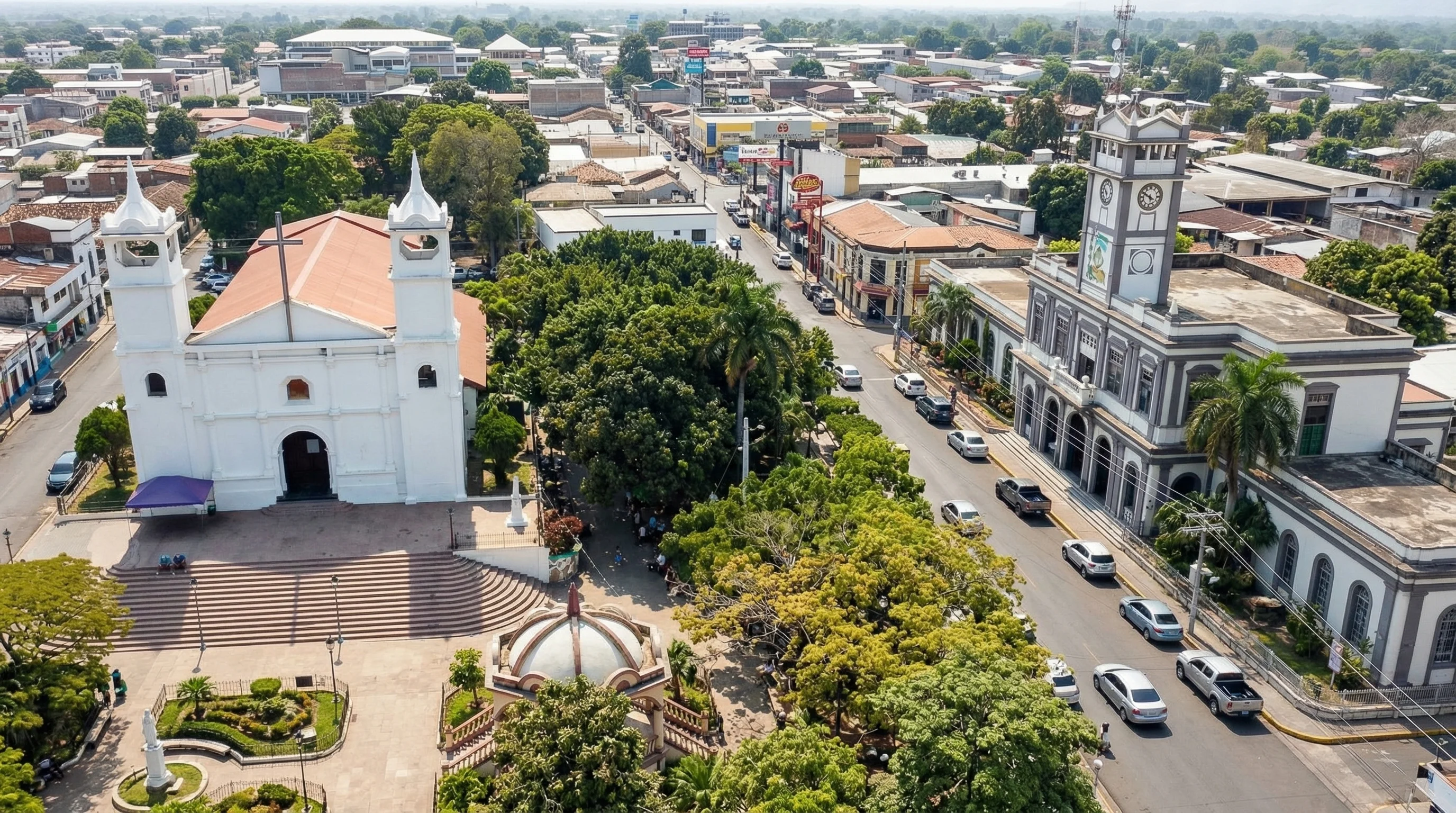
Usulután, the capital of its namesake department in southeastern El Salvador, is a strategic logistics gateway for the country's agricultural and coastal regions. Its location provides access to key production areas for coffee, sugar cane, aquaculture, and tropical fruits, which are primary exports. The city functions as a central distribution point for the eastern part of El Salvador, connecting rural producers to urban markets and the port of Acajutla for international shipment. Transportation infrastructure is based on the Central American Highway CA-1 and regional road networks, facilitating movement within El Salvador and onward connections to neighboring countries. This makes Usulután a critical destination for inbound FTL freight carrying industrial goods, packaging materials, and equipment to support local industry.










