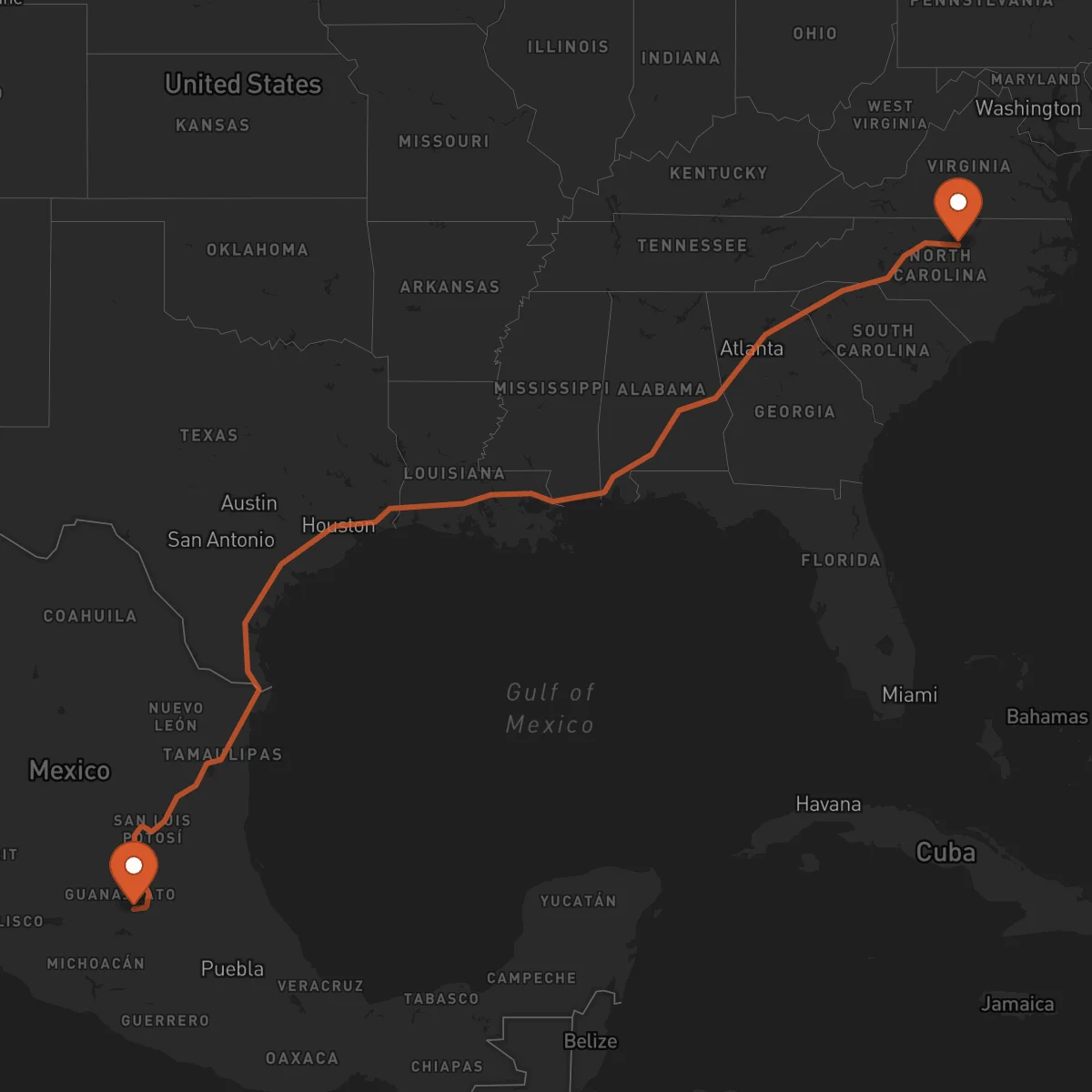
Celaya to Durham
Durham → CelayaFTL freight transportation service between Celaya and Durham. Reliable logistics solutions for your business.
Route Description
Everything you need to know about the corridor Celaya - Durham
The logistics corridor connecting Celaya, Guanajuato to Durham, North Carolina represents a vital trade route between Mexico's industrial heartland and the southeastern United States. This cross-border corridor spans approximately 2,738 kilometers and facilitates the movement of goods between two dynamic manufacturing and technology hubs. The route traverses Mexico's robust highway network before crossing through key border points, typically Laredo or Nuevo Laredo, and continues through the southern United States to reach North Carolina's Research Triangle region.
The economic significance of this corridor is substantial, linking Mexico's automotive and aerospace manufacturing clusters with North Carolina's growing technology, pharmaceutical, and research sectors. Celaya serves as a strategic logistics node in central Mexico, while Durham benefits from its proximity to major distribution centers and research facilities. The corridor supports industries including automotive parts, electronics, medical devices, and industrial equipment, with many companies leveraging this route for just-in-time manufacturing and supply chain optimization.
Transportation infrastructure along this route includes Mexico's Federal Highway 45 and Federal Highway 85, connecting to major U.S. interstates such as I-35 and I-85. The border crossing process requires coordination with customs brokers and compliance with both Mexican and U.S. regulations, including C-TPAT certification for expedited processing. Control Terrestre facilitates seamless operations on this corridor through our experienced team, certified carriers, and comprehensive logistics solutions that ensure efficient cross-border movement of full truckload shipments between Celaya and Durham.
Services for this Route
Available services for the corridor Celaya - Durham
 Origin
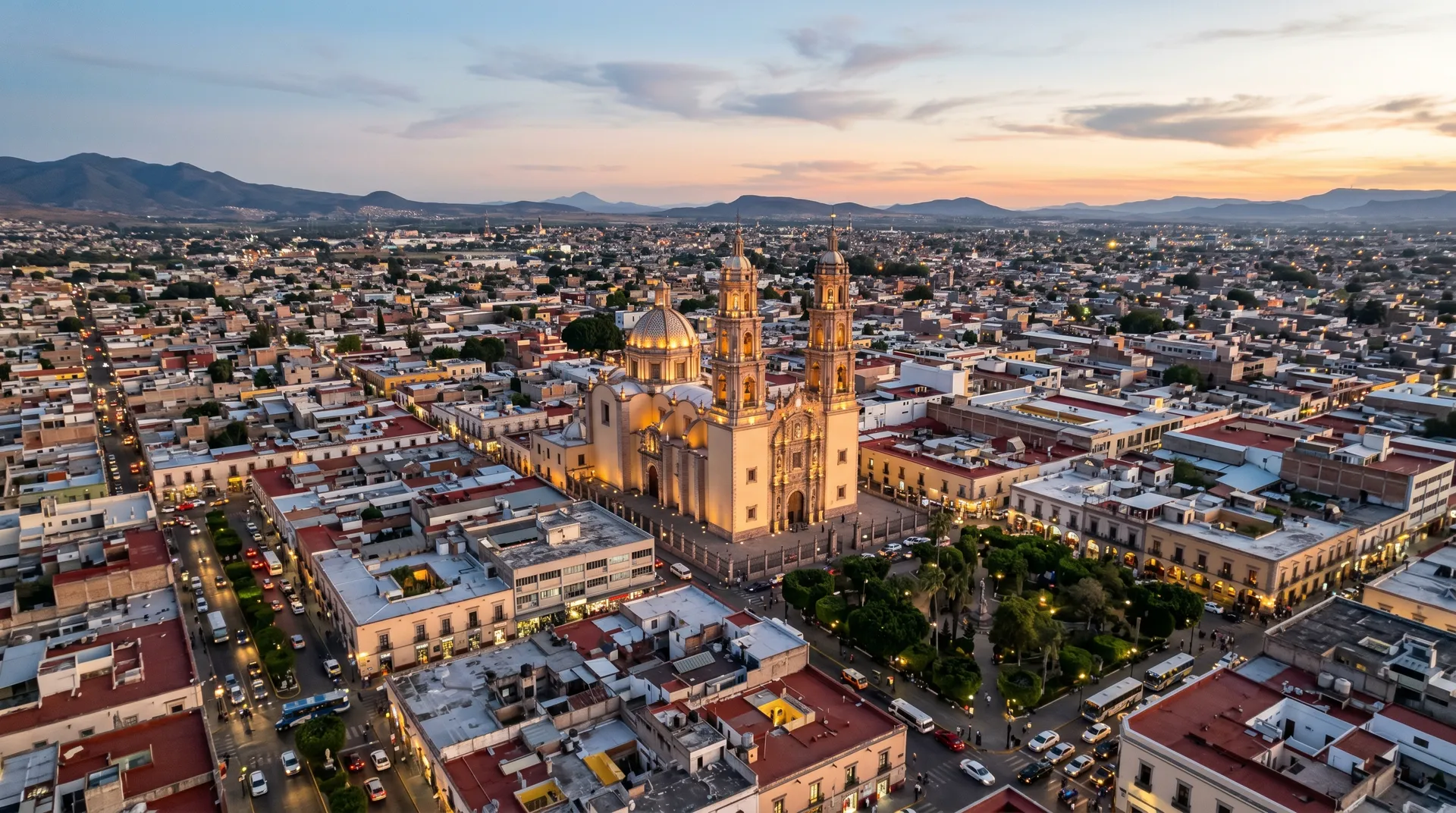
Celaya
Celaya, located in the state of Guanajuato, Mexico, stands as a strategic logistics hub in the country's central region. Its advantageous geographic position provides excellent connectivity to major industrial centers, including nearby cities like León, Silao, and Querétaro. The city benefits from its proximity to key transportation infrastructure, including the Guanajuato International Airport and direct access to Mexico's Federal Highway 45, which links northern and southern Mexico.
The region surrounding Celaya is characterized by a strong industrial base, particularly in automotive manufacturing, aerospace components, and metalworking. Major international companies have established operations in the area, taking advantage of the skilled workforce and competitive logistics costs. The city's industrial parks are equipped with modern facilities and offer comprehensive services for manufacturing and distribution operations. Additionally, Celaya's growing logistics sector provides warehousing, cross-docking, and value-added services that support the efficient movement of goods throughout Mexico and across the border to the United States.
 Destination
Durham
Durham, North Carolina serves as a strategic logistics destination in the southeastern United States, situated within the renowned Research Triangle region. The city's location provides excellent access to major transportation networks, including Interstate 85, which connects to Atlanta, Charlotte, and Richmond, and Interstate 40, linking to the Research Triangle Park and beyond. The nearby Raleigh-Durham International Airport offers extensive cargo services, while the Port of Virginia provides ocean freight connections for international shipments.
The Durham area is distinguished by its diverse economic landscape, with particular strengths in technology, healthcare, education, and research. The presence of Duke University and the Research Triangle Park has fostered a thriving ecosystem of innovation, biotechnology, and advanced manufacturing. This has created significant demand for logistics services supporting the movement of specialized equipment, pharmaceutical products, and high-tech components. Durham's industrial infrastructure includes modern distribution centers, specialized handling facilities for sensitive cargo, and a well-developed last-mile delivery network that serves the growing e-commerce sector in the region.










