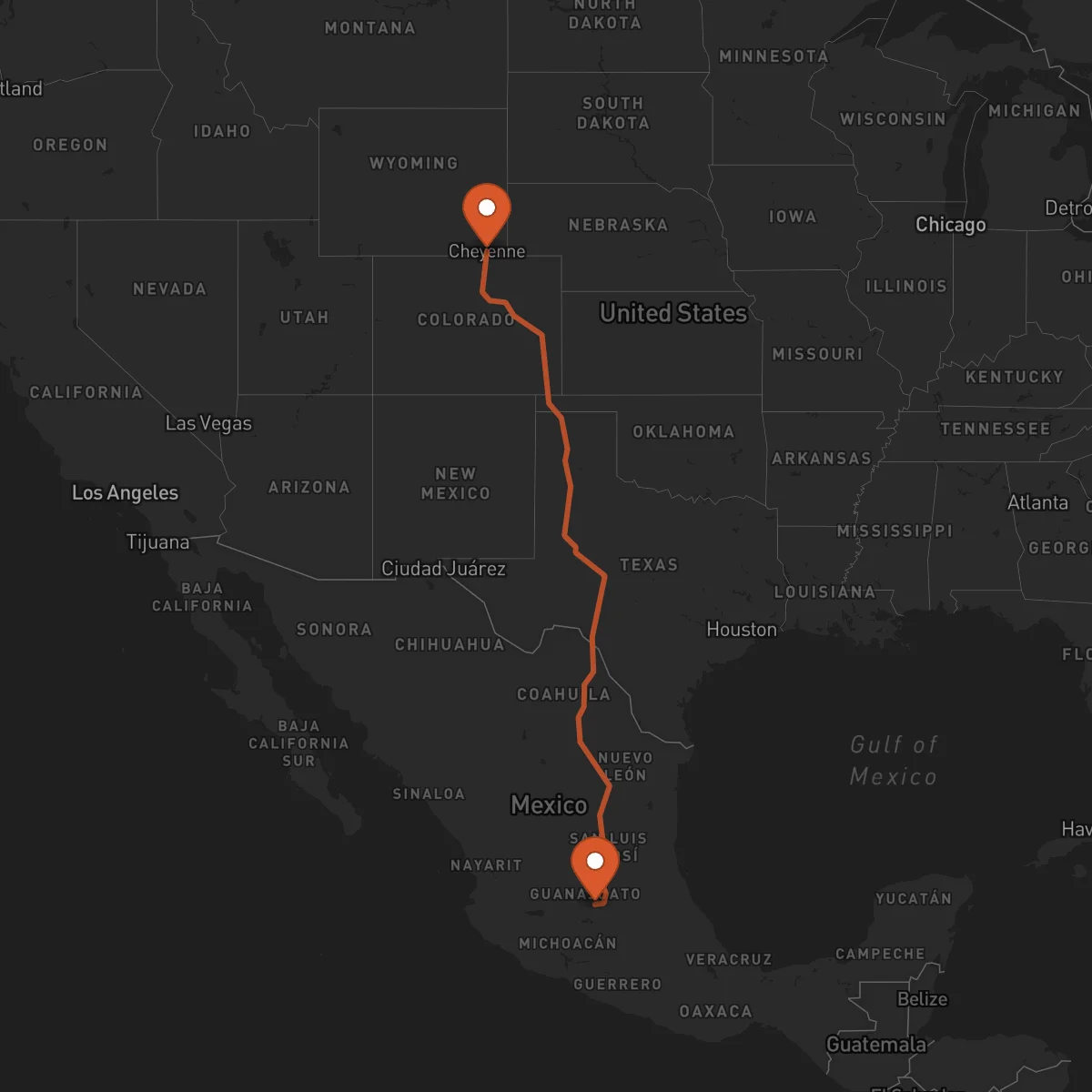
Celaya to Cheyenne
Cheyenne → CelayaFTL freight transportation service between Celaya and Cheyenne. Reliable logistics solutions for your business.
Route Description
Everything you need to know about the corridor Celaya - Cheyenne
The logistics corridor connecting Celaya, Guanajuato to Cheyenne, Wyoming represents a vital commercial link between Mexico's automotive manufacturing heartland and the United States' energy and logistics hub. This 2,322 km cross-border route traverses the industrial backbone of North America, facilitating the movement of automotive components, finished vehicles, and specialized equipment between two strategic economic centers. The corridor leverages Mexico's position as a global automotive manufacturing leader with Guanajuato's concentration of assembly plants and parts suppliers.
The route primarily utilizes Mexico's Federal Highway 45 and connects to major U.S. interstate systems including I-25, which serves as the main artery through Colorado and into Wyoming. Key border crossings at Laredo or El Paso provide access points for efficient customs processing, with Control Terrestre's certified providers ensuring smooth transit through C-TPAT and FAST program compliance. The corridor's significance is amplified by the automotive supply chain dynamics, where just-in-time delivery schedules require reliable, dedicated transportation services.
Control Terrestre facilitates seamless operations on this corridor through our network of experienced carriers who understand the complexities of cross-border automotive logistics. Our providers offer specialized equipment including temperature-controlled units for sensitive components and dedicated full truckload services that maintain cargo integrity throughout the journey. The route's infrastructure supports various freight types, from automotive parts and machinery to industrial equipment destined for Wyoming's energy sector and distribution centers in Cheyenne's growing logistics hub.
Services for this Route
Available services for the corridor Celaya - Cheyenne
 Origin
Celaya
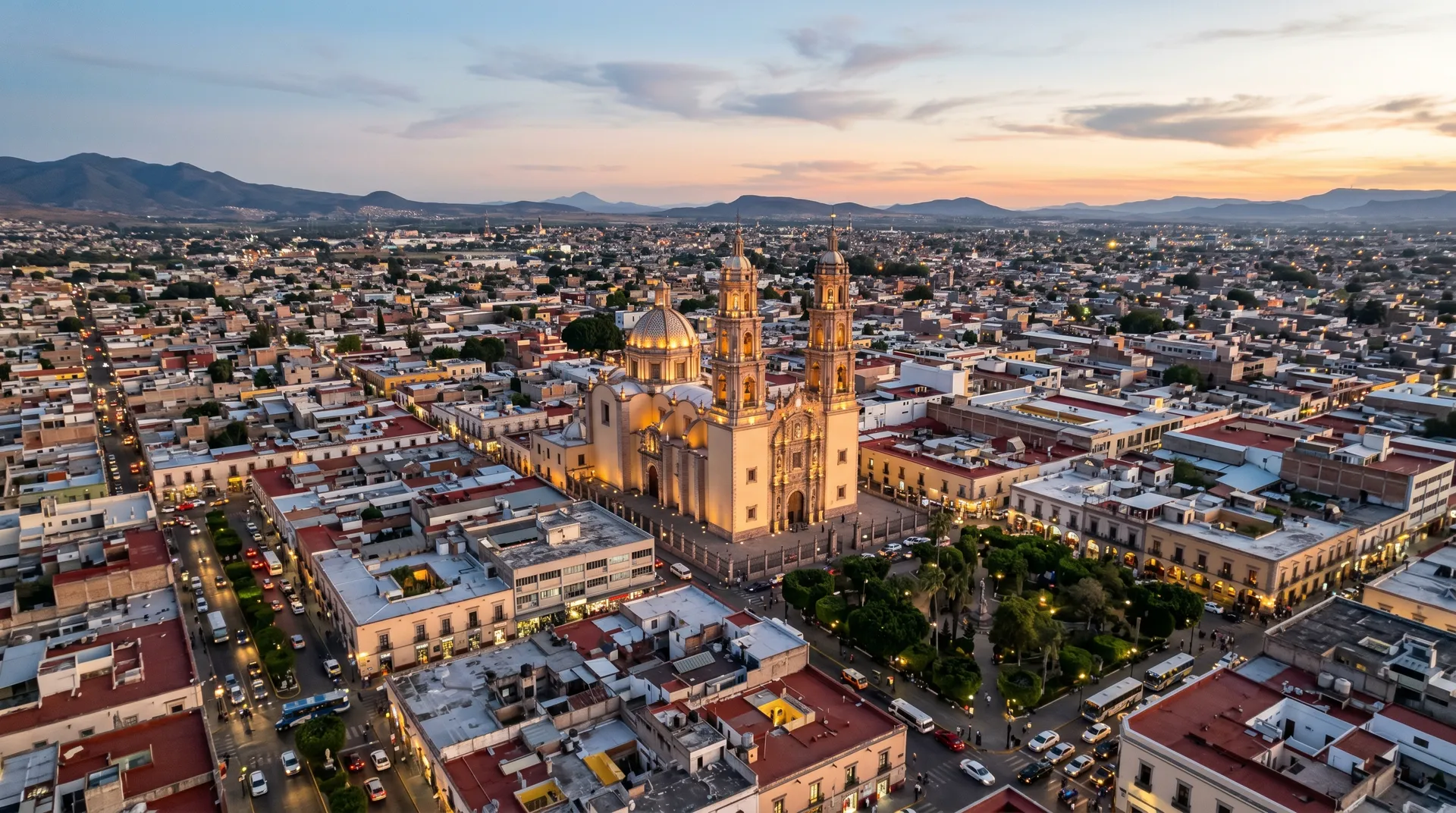
Celaya stands as a strategic logistics hub in Mexico's central region, located in the heart of Guanajuato's industrial corridor. The city benefits from its proximity to major automotive manufacturing centers and serves as a critical node in the country's automotive supply chain. Its location provides excellent connectivity to Mexico's Federal Highway 45, which links directly to the U.S. border and major ports. Celaya's infrastructure includes industrial parks, specialized logistics facilities, and a skilled workforce focused on automotive manufacturing and related industries.
The region's economic strength lies in its automotive ecosystem, with numerous tier-one and tier-two suppliers supporting assembly plants throughout Guanajuato. The city's transportation infrastructure includes rail connections, modern highways, and proximity to Silao-Bajío International Airport, facilitating multimodal logistics solutions. Celaya's industrial base extends beyond automotive to include food processing, metal mechanics, and electronics manufacturing, creating diverse freight opportunities for cross-border transportation services.
 Destination
Cheyenne
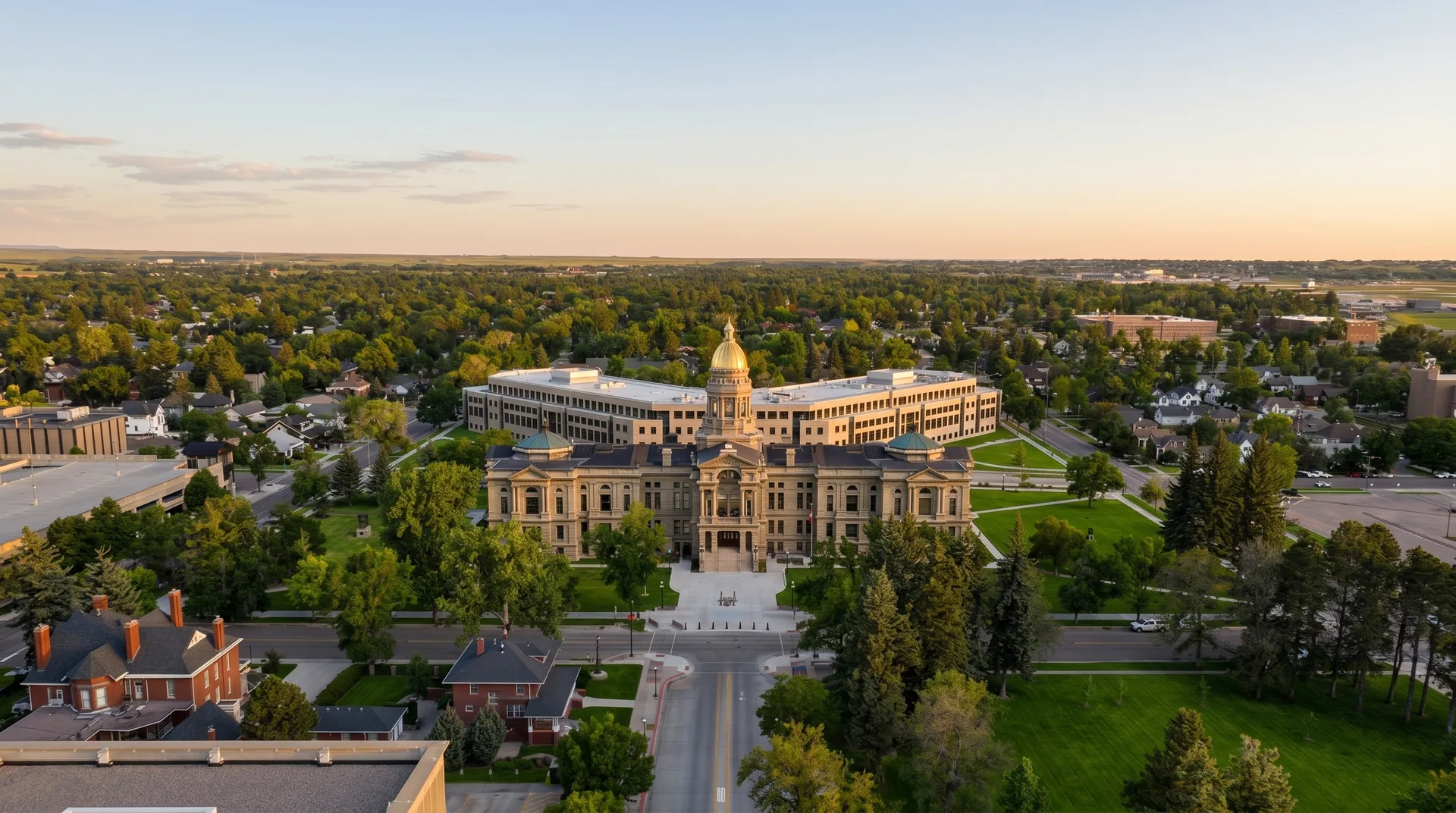
Cheyenne serves as Wyoming's capital and largest city, strategically positioned as a logistics gateway to the Rocky Mountain region. The city's location at the intersection of major interstate highways I-25 and I-80 makes it a crucial distribution point for goods moving throughout the western United States. Cheyenne's infrastructure includes the Warren Air Force Base, Union Pacific rail facilities, and the Cheyenne Regional Airport, supporting both military and commercial logistics operations. The city's logistics advantages include lower operational costs compared to major metropolitan areas and proximity to Denver's market while maintaining Wyoming's business-friendly environment.
The local economy centers on government services, military operations, logistics and transportation, with growing sectors in technology and renewable energy. Cheyenne's industrial base includes warehousing and distribution centers that serve as consolidation points for freight moving throughout the region. The city's location provides access to Wyoming's energy resources, including oil, natural gas, and coal operations, creating demand for specialized transportation services. Cheyenne's logistics infrastructure supports the movement of heavy equipment, industrial supplies, and consumer goods throughout the mountain states region.










