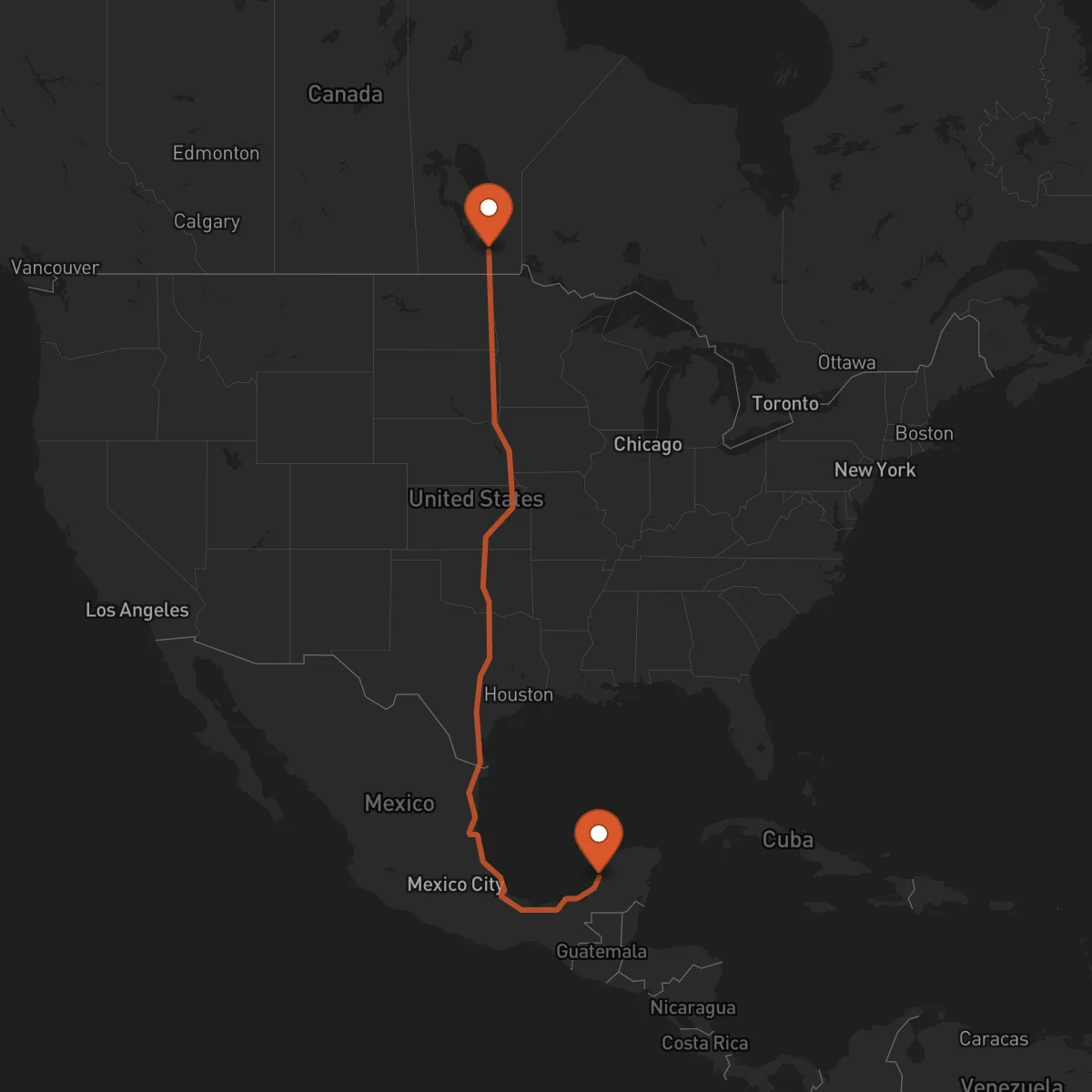
Campeche to Winnipeg
Winnipeg → CampecheFTL freight transportation service between Campeche and Winnipeg. Reliable logistics solutions for your business.
Route Description
Everything you need to know about the corridor Campeche - Winnipeg
The Campeche-Winnipeg logistics corridor connects the industrial hub of southeastern Mexico with the strategic center of Canada's transportation network. This 3,394 km cross-border route traverses through Mexico, the United States, and Canada, crossing key industrial and agricultural regions. The corridor serves as a vital link for companies operating in the automotive, energy, and manufacturing sectors, facilitating the movement of goods between North America's major economic zones.
The route primarily utilizes Mexico's Federal Highway 180 and 45D, connecting to US Interstate 35 and Canadian Highway 75. Key border crossings include Laredo-Nuevo Laredo and Pembina-Emerson, both equipped with modern customs facilities and C-TPAT/FAST certification programs. Control Terrestre's strategic partnerships with certified carriers ensure seamless cross-border operations, maintaining compliance with all customs regulations and documentation requirements.
This corridor is particularly crucial for the automotive industry, given Campeche's role in Mexico's manufacturing sector and Winnipeg's significance in Canadian automotive distribution. The route also serves energy companies transporting specialized equipment, agricultural businesses moving seasonal products, and manufacturers requiring just-in-time delivery schedules. Control Terrestre provides dedicated FTL services along this corridor, offering real-time tracking, temperature-controlled options for sensitive cargo, and specialized handling for oversized or hazardous materials.
Services for this Route
Available services for the corridor Campeche - Winnipeg
 Origin
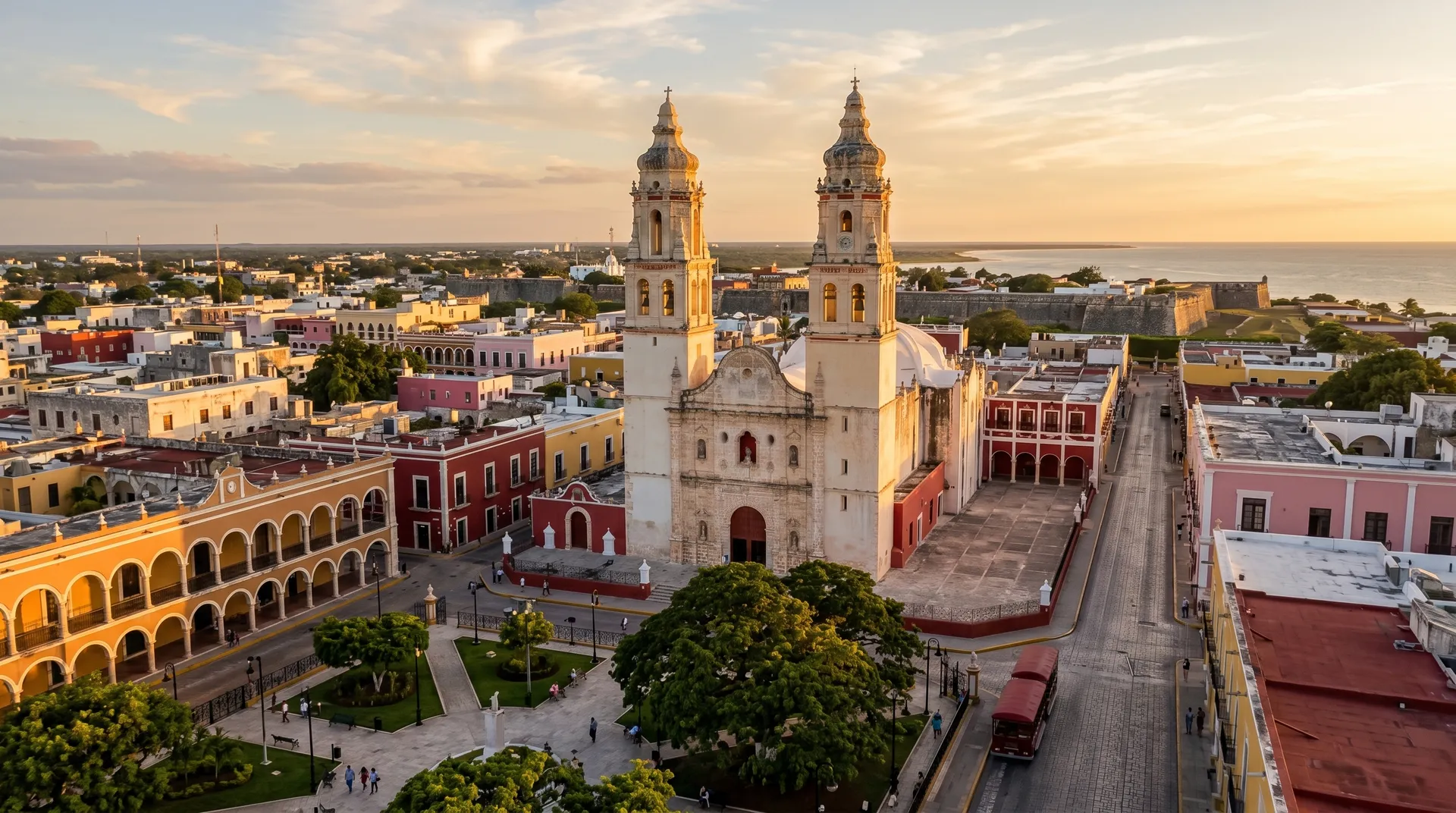
Campeche, located on Mexico's Gulf coast, serves as a strategic gateway for logistics operations in southeastern Mexico. The city's industrial park hosts numerous manufacturing facilities, particularly in the automotive and energy sectors. Its port infrastructure, combined with excellent road connections to the interior of the country, makes it an ideal origin point for cross-border freight movements. The region's growing industrial base, supported by skilled workforce and competitive operating costs, continues to attract investment from international companies.
 Destination
Winnipeg, situated at the geographic center of Canada, is a crucial logistics hub for the country's transportation network. The city's strategic location at the confluence of the Red and Assiniboine rivers has evolved into a major distribution center, with extensive rail and road infrastructure connecting to all parts of Canada and the northern United States. Winnipeg's industrial sectors include advanced manufacturing, aerospace, and agricultural processing, making it a key destination for various types of freight. The city's well-developed transportation infrastructure includes direct highway connections to major Canadian cities and the US border.










