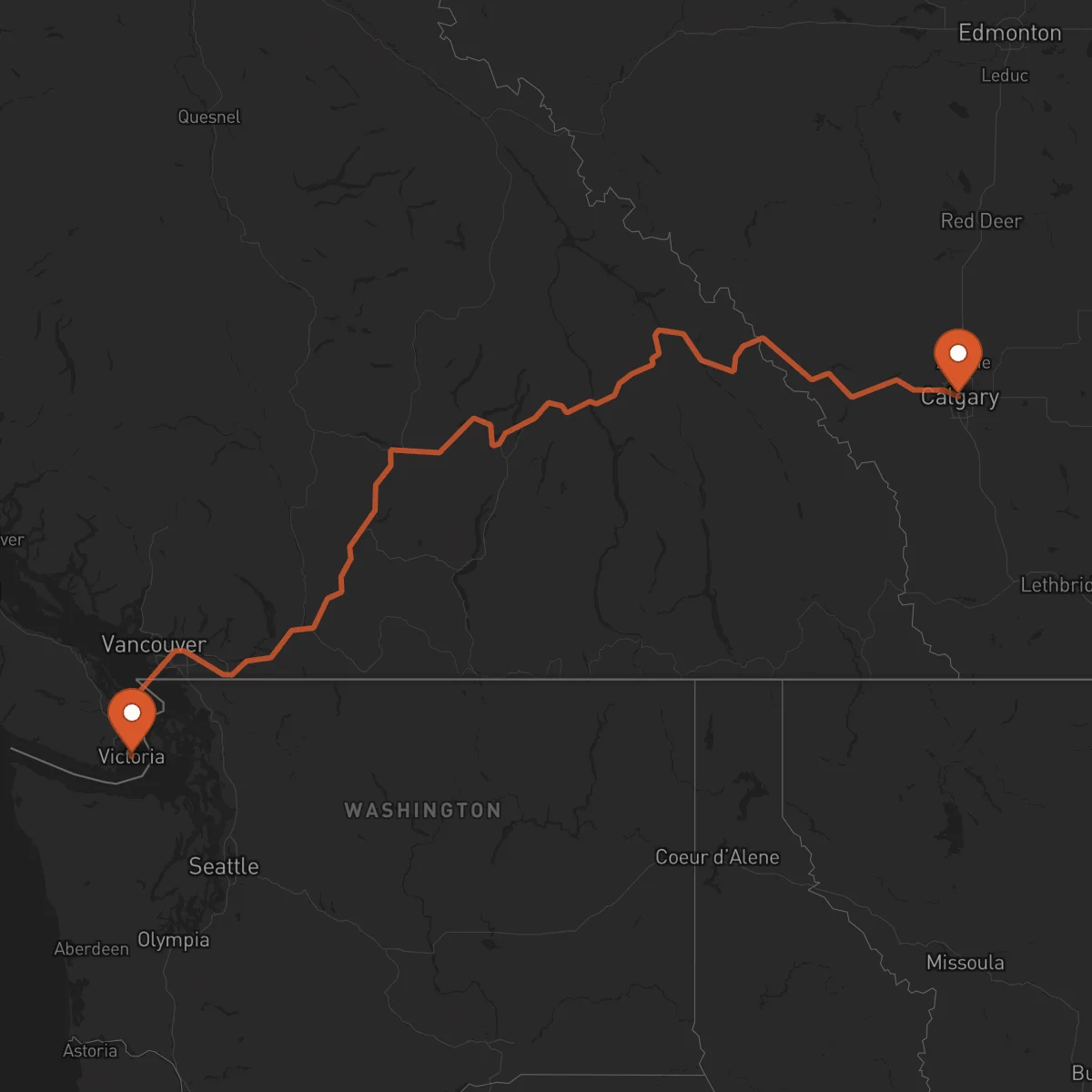
Calgary to Victoria
Victoria → CalgaryFTL freight transportation service between Calgary and Victoria. Reliable logistics solutions for your business.
Route Description
Everything you need to know about the corridor Calgary - Victoria
The Calgary to Victoria corridor represents a vital domestic logistics route in Western Canada, connecting Alberta's economic powerhouse with British Columbia's capital city. This 728 km corridor traverses diverse landscapes, from the foothills of the Rockies to the coastal regions of Vancouver Island, making it a critical link for interprovincial commerce. The route facilitates the movement of goods between two major Canadian provinces, supporting both regional and national supply chains.
This corridor serves as a backbone for several key industries, including energy, technology, agriculture, and manufacturing. Calgary's position as a major energy hub means that equipment, materials, and supplies frequently move between these two cities. The technology sector also benefits from this connection, with many Calgary-based tech companies maintaining operations or partnerships in Victoria. Additionally, the corridor supports the agricultural industry, with food products and farming equipment moving in both directions.
Control Terrestre optimizes operations on this corridor through our specialized FTL services, ensuring reliable and efficient transportation. Our experienced network of carriers understands the unique challenges of this route, including weather conditions and terrain variations. We provide dedicated solutions that meet the specific needs of each shipment, whether it's time-sensitive technology equipment or temperature-controlled agricultural products.
Services for this Route
Available services for the corridor Calgary - Victoria
 Origin
Calgary stands as a major logistics hub in Western Canada, strategically positioned at the intersection of key transportation routes. The city's location provides excellent connectivity to both domestic and international markets, with proximity to major highways and rail networks. Calgary International Airport further enhances its logistics capabilities, offering air cargo services for time-sensitive shipments. The city's robust infrastructure includes modern warehousing facilities and distribution centers that support efficient freight operations.
The economic landscape of Calgary is dominated by the energy sector, with numerous oil and gas companies headquartered in the city. However, the economy has diversified significantly in recent years, with growing technology, finance, and manufacturing sectors. This economic diversity creates varied logistics demands, from heavy equipment transport to specialized technology shipments. Calgary's skilled workforce and business-friendly environment continue to attract companies that require sophisticated logistics solutions.
 Destination
Victoria
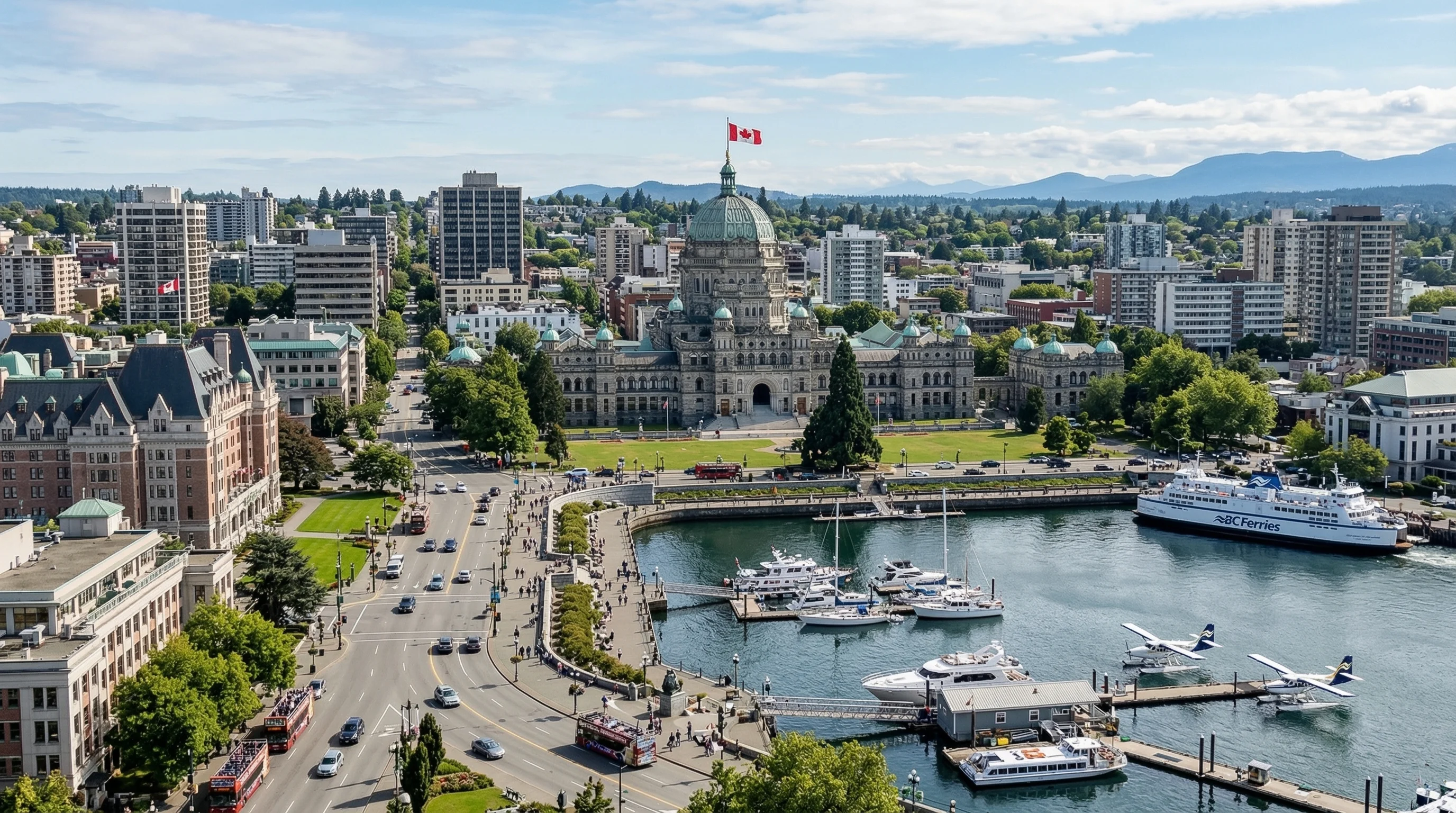
Victoria, located on Vancouver Island, serves as the capital city of British Columbia and a significant logistics node in the region. Despite its island location, Victoria maintains strong connectivity through ferry services and air transportation, making it accessible for freight operations. The city's port facilities handle both commercial and passenger traffic, providing an essential link between Vancouver Island and the mainland. Victoria International Airport supports air cargo operations, adding another dimension to the city's logistics capabilities.
The local economy in Victoria is characterized by government services, technology, tourism, and education sectors. The technology industry has experienced substantial growth, with many companies specializing in software development, telecommunications, and digital services. This economic profile creates specific logistics needs, particularly for technology equipment and specialized cargo. The city's role as a government center also generates consistent demand for secure and reliable freight transportation services.










