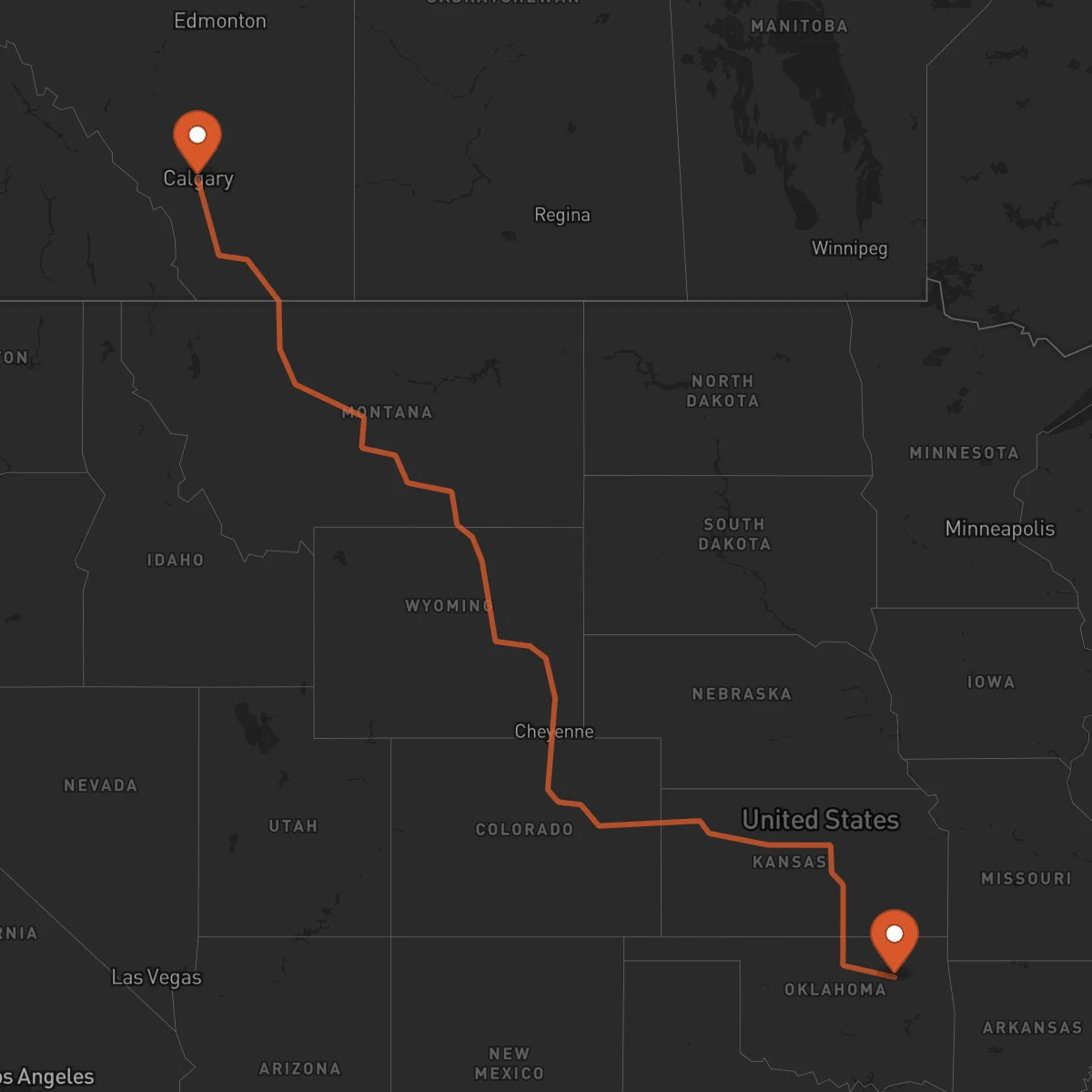
Calgary to Tulsa
Tulsa → CalgaryFTL freight transportation service between Calgary and Tulsa. Reliable logistics solutions for your business.
Route Description
Everything you need to know about the corridor Calgary - Tulsa
The Calgary to Tulsa corridor represents a vital cross-border logistics route connecting Canada's energy capital with the industrial heartland of Oklahoma. This 2,193 km transportation corridor traverses the North American continent, linking Alberta's booming oil and gas sector with Tulsa's diverse manufacturing and energy industries. The route primarily follows Interstate 29 South through Montana and North Dakota, then transitions to Interstate 29 South and Interstate 44 East, crossing the international border at various points depending on the specific route chosen.
This corridor serves as a critical supply chain link for the energy sector, with Calgary's oil and gas equipment and technology flowing south to support Tulsa's refining and petrochemical operations. The route also facilitates the movement of industrial machinery, construction materials, and agricultural products between these two economic powerhouses. Companies in both cities rely on efficient cross-border transportation to maintain their competitive edge in the global marketplace.
Control Terrestre specializes in managing the complexities of this cross-border route, ensuring seamless customs clearance and compliance with both Canadian and US regulations. Our expertise in handling full truckload (FTL) shipments means we can provide dedicated transportation solutions that minimize handling and reduce transit times. We understand the unique challenges of cross-border freight, including documentation requirements, duty calculations, and potential delays at border crossings, allowing our clients to focus on their core business while we handle the logistics.
Services for this Route
Available services for the corridor Calgary - Tulsa
 Origin
Calgary, located in Alberta, Canada, serves as a strategic logistics hub for Western Canada's energy sector. The city's proximity to the Canadian Rockies and its position as the gateway to Alberta's oil sands make it a critical point for outbound freight, particularly for the energy and industrial sectors. Calgary benefits from excellent transportation infrastructure, including the Calgary International Airport, extensive rail connections through Canadian Pacific Railway, and direct access to major highways such as the Trans-Canada Highway (Highway 1) and Deerfoot Trail (Highway 2). The city's logistics network is well-developed to support the movement of heavy equipment, machinery, and industrial supplies that are essential to the region's energy-driven economy.
 Destination
Tulsa
Tulsa, Oklahoma, strategically positioned in the heart of the United States, serves as a major logistics and distribution center for the South-Central region. Known historically as the "Oil Capital of the World," Tulsa has diversified its economy while maintaining strong ties to the energy sector. The city boasts excellent transportation infrastructure, including Tulsa International Airport, extensive rail connections through BNSF and Union Pacific railroads, and direct access to major highways such as Interstate 44, US Route 75, and the Creek Turnpike. Tulsa's central location provides efficient access to major markets across the United States, making it an ideal destination for cross-border freight from Canada. The city's robust industrial base, including aerospace, manufacturing, and logistics companies, creates consistent demand for full truckload transportation services.










