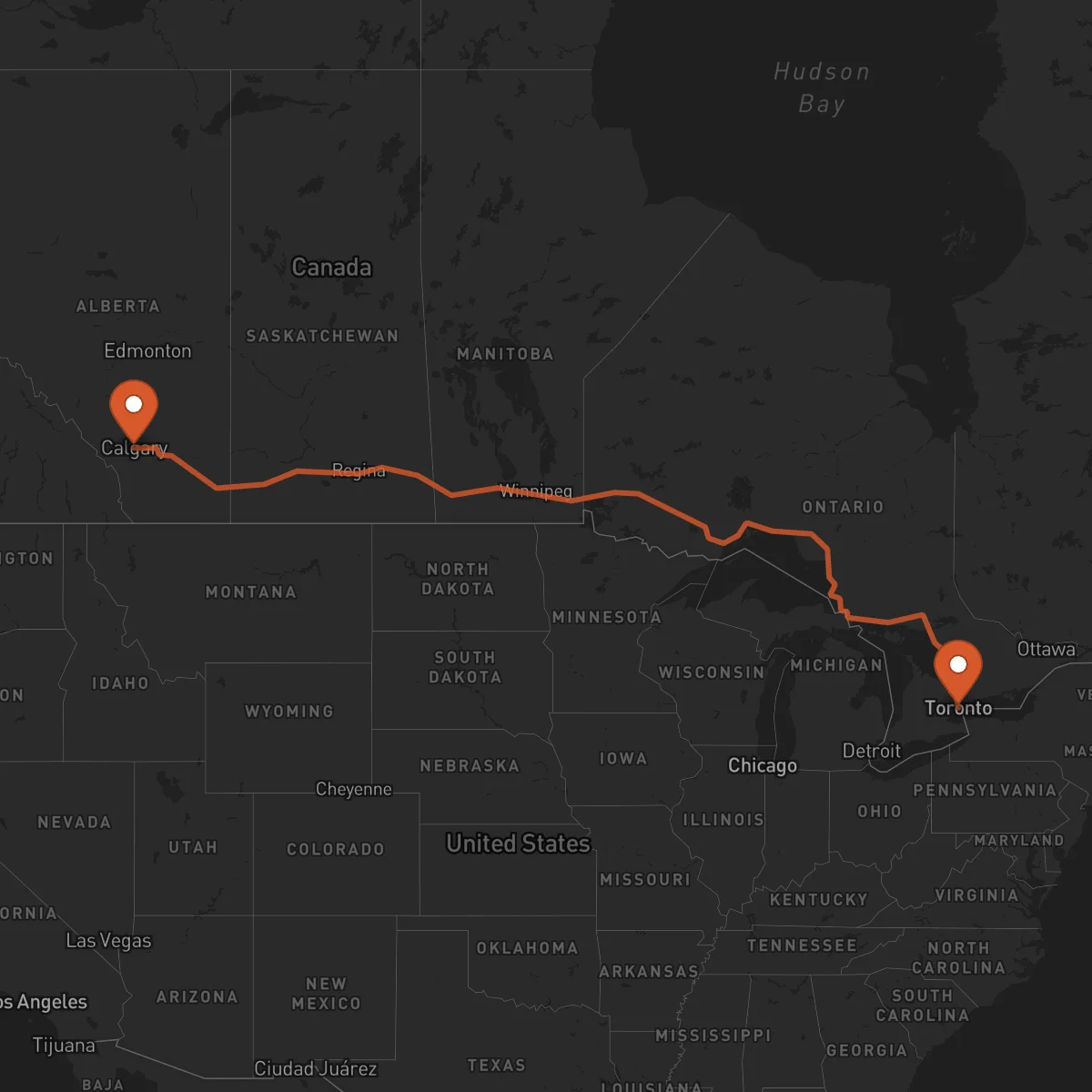
Calgary to Toronto
Toronto → CalgaryFTL freight transportation service between Calgary and Toronto. Reliable logistics solutions for your business.
Route Description
Everything you need to know about the corridor Calgary - Toronto
The Calgary to Toronto corridor represents one of Canada's most vital domestic freight transportation routes, spanning approximately 2,710 kilometers across the country's heartland. This east-west connection links Alberta's energy and agricultural powerhouse with Ontario's manufacturing and commercial hub, creating a critical supply chain artery for Canadian commerce. The route traverses diverse Canadian landscapes, from the prairies of Saskatchewan through the forests of Manitoba and into the Great Lakes region of Ontario, requiring specialized logistics expertise to ensure reliable cargo movement.
The economic significance of this corridor cannot be overstated. Calgary serves as the epicenter of Canada's energy sector and agricultural exports, while Toronto stands as the nation's financial capital and manufacturing center. This creates a dynamic flow of goods including petroleum products, agricultural commodities, industrial equipment, and manufactured goods. The corridor supports Canada's largest industries, facilitating the movement of resources from Western production centers to Eastern markets and distribution networks.
Control Terrestre provides comprehensive FTL (Full Truckload) services along this crucial corridor, leveraging our extensive network of certified carriers and deep understanding of Canadian transportation regulations. Our dedicated fleet ensures your cargo moves efficiently across provincial boundaries, with real-time tracking and professional handling throughout the journey. Whether you're shipping industrial equipment from Calgary's energy sector or agricultural products to Toronto's distribution centers, our specialized services guarantee your freight arrives on time and in perfect condition.
Services for this Route
Available services for the corridor Calgary - Toronto
 Origin
Calgary stands as a strategic logistics hub in Western Canada, benefiting from its position at the crossroads of major transportation networks. The city's location near the Rocky Mountains provides access to both domestic and international markets, with excellent connectivity to the Pacific coast and U.S. border crossings. Calgary's robust infrastructure includes extensive highway systems, rail connections, and proximity to Calgary International Airport, creating multiple transportation options for freight movement. The city's logistics ecosystem is supported by numerous warehousing facilities, distribution centers, and specialized handling capabilities for various cargo types.
The economic foundation of Calgary is built on its energy sector dominance, with numerous oil and gas companies headquartered in the city. This creates a strong demand for specialized freight services, including heavy equipment transport, hazardous materials handling, and oversized cargo movement. Additionally, Calgary's agricultural sector contributes significantly to the local economy, requiring reliable transportation for grain, livestock, and agricultural equipment. The city's growing technology and manufacturing sectors further diversify the logistics needs, creating year-round demand for full truckload services across various industries.
 Destination
Toronto represents Canada's premier logistics and commercial center, strategically positioned in the heart of the Great Lakes region. The city's location provides unparalleled access to major markets across Eastern Canada and the Northeastern United States, with extensive transportation infrastructure including major highways, rail networks, and the Port of Toronto. Toronto's logistics advantages are enhanced by its status as Canada's largest metropolitan area, offering sophisticated warehousing solutions, advanced distribution capabilities, and multimodal transportation options. The city's infrastructure supports efficient cargo handling and rapid distribution throughout the region.
The economic diversity of Toronto creates substantial freight transportation demands across multiple sectors. As Canada's financial capital, the city drives significant manufacturing activity, requiring consistent movement of raw materials and finished goods. Toronto's automotive industry, pharmaceutical sector, and food processing facilities generate substantial full truckload shipping needs. The city's role as a major retail and e-commerce hub further amplifies demand for reliable freight services, with distribution centers requiring regular deliveries from Western Canadian suppliers. Toronto's position as a gateway to both Canadian and U.S. markets makes it an essential destination for comprehensive logistics operations.










