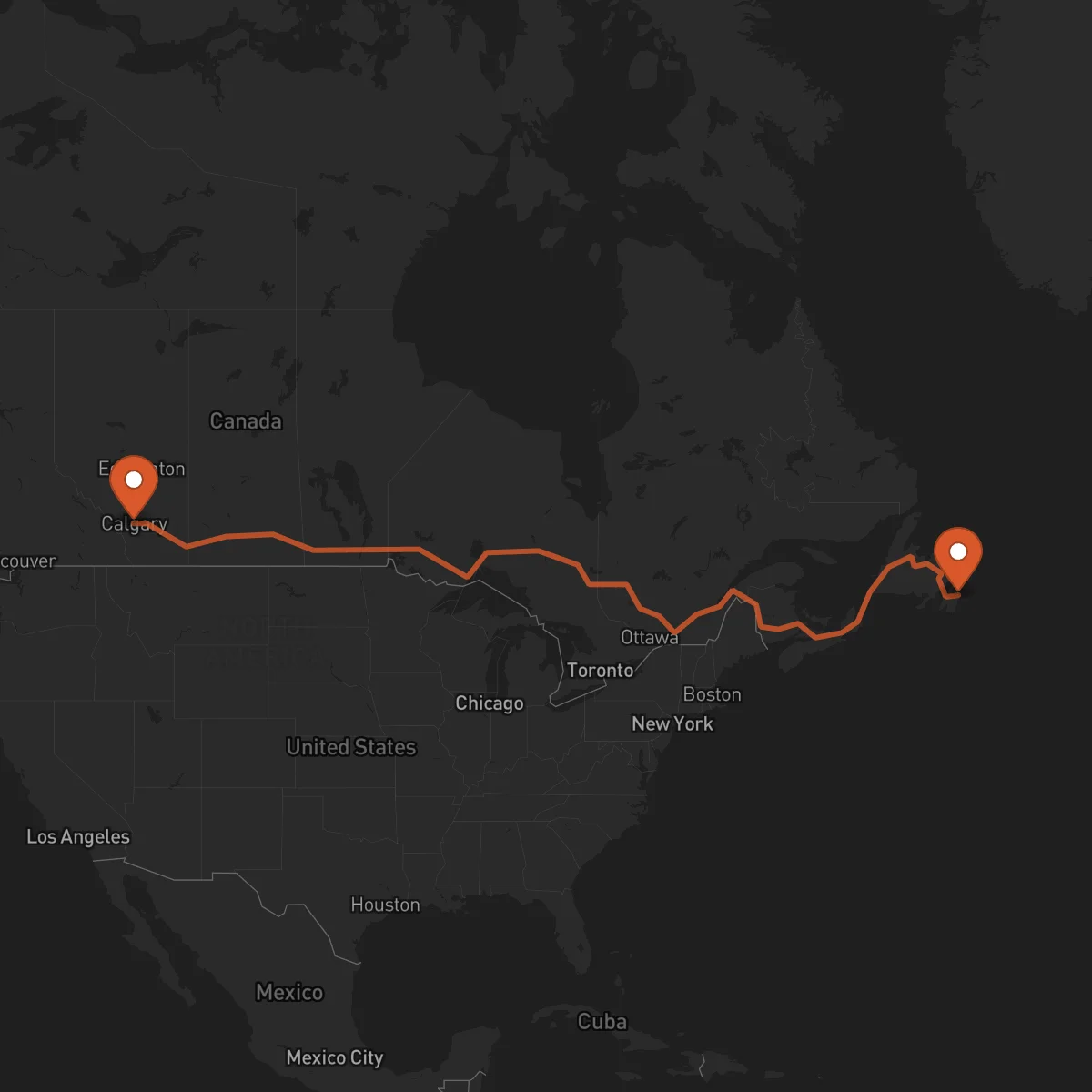
Calgary to St. John's
St. John's → CalgaryFTL freight transportation service between Calgary and St. John's. Reliable logistics solutions for your business.
Route Description
Everything you need to know about the corridor Calgary - St. John's
The Calgary to St. John's corridor represents a critical domestic freight transportation route spanning over 4,300 kilometers across Canada's vast landscape. This east-west connection links Alberta's economic powerhouse with Newfoundland and Labrador's Atlantic gateway, facilitating the movement of goods between Canada's western energy sector and eastern maritime industries. The corridor traverses diverse terrains and crosses multiple provincial boundaries, making it essential for national supply chain continuity.
The economic significance of this route cannot be overstated, as it connects Calgary's thriving energy, technology, and manufacturing sectors with St. John's growing ocean technology, fisheries, and tourism industries. This transportation link supports the exchange of specialized equipment, industrial materials, and consumer goods that drive both regional economies. The corridor serves as a vital artery for businesses operating across Canada's six time zones, enabling just-in-time delivery and maintaining inventory flow throughout the national market.
Control Terrestre specializes in managing the complexities of this extensive domestic route through our network of certified transportation providers. Our full truckload (FTL) services ensure dedicated capacity for your freight, eliminating the delays and handling risks associated with consolidated shipping. We understand the unique challenges of cross-country transportation, including varying provincial regulations, weather conditions, and infrastructure requirements. Our team coordinates every aspect of your shipment, providing reliable door-to-door service that keeps your supply chain moving efficiently from the Canadian Rockies to the Atlantic coast.
Services for this Route
Available services for the corridor Calgary - St. John's
 Origin
Calgary stands as a strategic logistics hub in Western Canada, benefiting from its position at the crossroads of major transportation networks. The city's location provides direct access to the Trans-Canada Highway and proximity to the Calgary International Airport, creating multiple freight movement options. Calgary's robust infrastructure includes extensive warehousing facilities, intermodal yards, and a well-maintained road network designed to handle heavy industrial traffic. The city's logistics ecosystem is supported by a skilled workforce and advanced technology systems that optimize freight operations.
The Calgary economy thrives on its energy sector dominance, with oil and gas companies requiring specialized transportation for equipment and materials. Beyond energy, the city hosts a growing technology sector, manufacturing facilities, and agricultural businesses that depend on reliable freight services. Calgary's strategic position near the Rocky Mountains and its role as Alberta's commercial center make it an ideal origin point for shipments destined across Canada. The city's logistics providers are experienced in handling diverse cargo types, from oversized industrial equipment to time-sensitive consumer goods.
 Destination
St. John's
St. John's serves as Newfoundland and Labrador's primary logistics gateway, offering unique strategic advantages for Atlantic Canada trade. Located on the eastern tip of the Avalon Peninsula, the city provides the closest North American port to Europe, making it a crucial node for international maritime commerce. The region's transportation infrastructure includes the St. John's International Airport, the Port of St. John's, and connections to the provincial highway system that links to the Trans-Canada Highway. This multimodal capability allows for flexible freight movement and efficient cargo handling.
The St. John's economy is anchored by ocean technology, fisheries, offshore oil and gas, and a growing tourism sector. These industries require specialized logistics support for equipment transport, perishable goods, and materials handling. The city's role as the provincial capital also generates significant government and institutional freight traffic. St. John's logistics providers are adept at managing the unique challenges of island logistics, including weather-related delays and the coordination of ferry services for certain cargo types. The region's focus on sustainable development and innovation in ocean industries creates opportunities for specialized freight transportation services.










