Calgary to Montreal
Montreal → CalgaryFTL freight transportation service between Calgary and Montreal. Reliable logistics solutions for your business.
Route Description
Everything you need to know about the corridor Calgary - Montreal
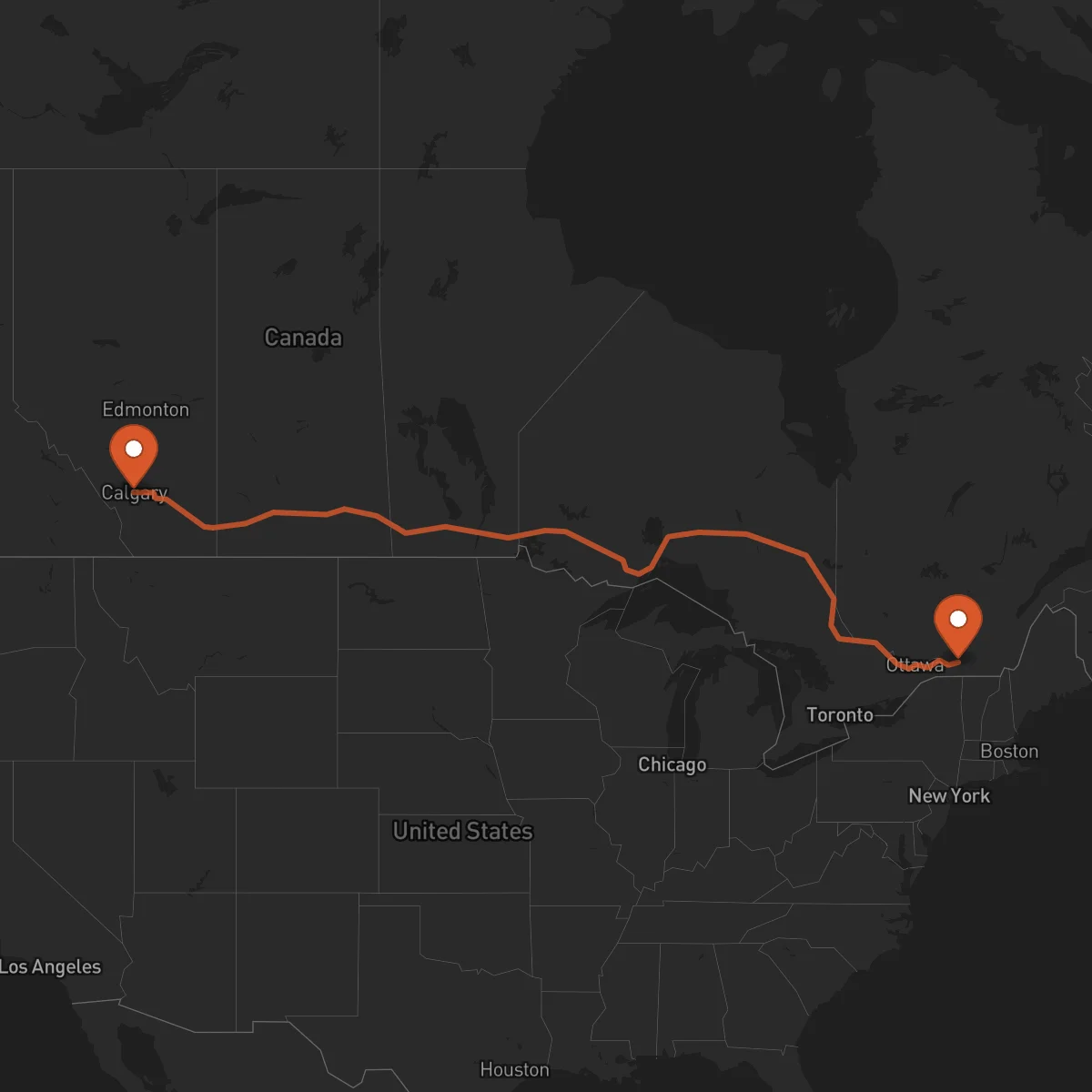
The Calgary-Montreal corridor represents one of Canada's most vital freight transportation routes, connecting the economic powerhouse of Alberta with Quebec's industrial and commercial hub. This east-west route spans approximately 3,020 kilometers through the heart of Canada, traversing diverse landscapes from the Canadian Rockies to the Great Lakes region. The corridor serves as a critical link in Canada's supply chain, facilitating the movement of goods between the country's major economic centers.
The economic significance of this corridor cannot be overstated. Calgary, as the center of Canada's energy sector, generates substantial freight volume that requires efficient transportation to eastern markets. Montreal, with its extensive port facilities and manufacturing base, serves as both a destination and a gateway for goods destined for international markets. This corridor supports industries ranging from energy and natural resources to manufacturing, agriculture, and retail distribution.
Control Terrestre specializes in optimizing freight operations along this crucial route. Our network of certified carriers and strategic partnerships ensures reliable, full truckload (FTL) transportation services that meet the demanding requirements of cross-country shipping. We understand the unique challenges of this corridor, including varying weather conditions, regulatory requirements across provinces, and the need for precise scheduling to maintain supply chain integrity.
Services for this Route
Available services for the corridor Calgary - Montreal
 Origin
Calgary stands as a strategic logistics hub in Western Canada, serving as the gateway to the Canadian Prairies and the energy-rich province of Alberta. The city's location at the intersection of major transportation routes makes it an ideal origin point for freight distribution across the country. Calgary's economy, heavily influenced by the energy sector, generates substantial freight volume requiring efficient transportation solutions to eastern markets.
The city boasts excellent transportation infrastructure, including direct access to the Trans-Canada Highway (Highway 1), which provides a direct route to Montreal. Calgary International Airport and extensive rail connections complement the road network, offering multimodal transportation options. The surrounding industrial areas provide ample facilities for freight consolidation and distribution, making Calgary an efficient starting point for long-haul shipments to eastern Canada.
 Destination
Montreal represents a critical logistics and economic center in Eastern Canada, strategically positioned at the intersection of major transportation corridors. As Canada's second-largest city and Quebec's economic capital, Montreal serves as a vital destination for freight from western regions. The city's extensive port facilities on the St. Lawrence River make it a crucial gateway for international trade, while its manufacturing and distribution sectors create substantial demand for inbound freight services.
The city's transportation infrastructure is among the most developed in Canada, featuring direct access to Highway 20 (Autoroute du Souvenir) and Highway 40 (Autoroute 40), which connect to the broader Canadian highway network. Montreal's central location in the Quebec-Windsor corridor provides efficient access to major markets in both Canada and the northeastern United States. The city's logistics facilities, including numerous warehouses and distribution centers, support the efficient handling and distribution of freight arriving from western Canada.










