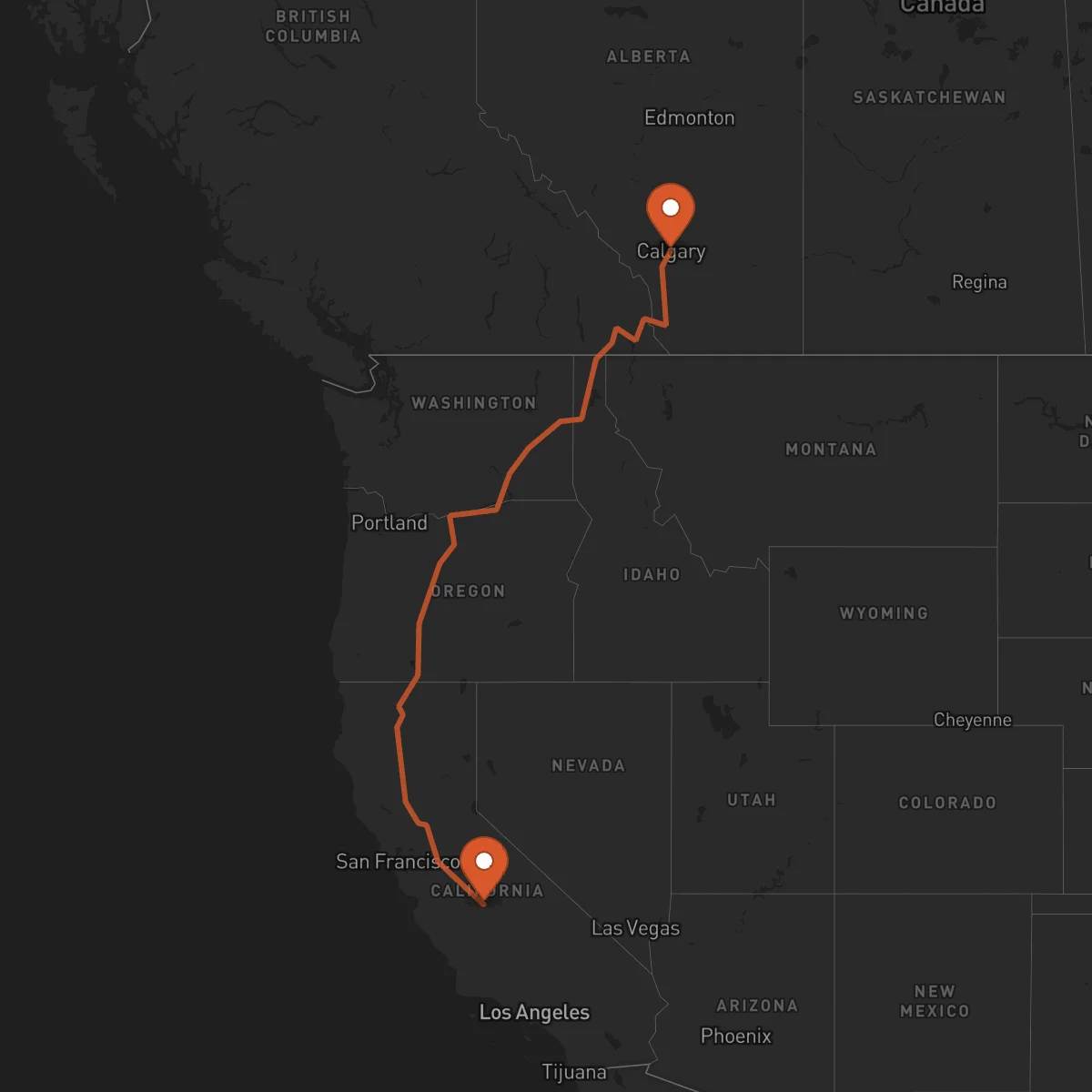
Calgary to Fresno
Fresno → CalgaryFTL freight transportation service between Calgary and Fresno. Reliable logistics solutions for your business.
Route Description
Everything you need to know about the corridor Calgary - Fresno
The Calgary-Fresno corridor represents a vital cross-border freight transportation link between Canada and the United States, spanning approximately 1,654 kilometers through diverse terrain and economic zones. This route connects Alberta's energy and agricultural powerhouse with California's agricultural heartland and technology-driven economy, making it essential for industries requiring reliable full truckload (FTL) transportation solutions.
The corridor traverses major transportation infrastructure including the Trans-Canada Highway (Highway 1) and Interstate 15, connecting through key border crossings such as Coutts-Sweetgrass or other strategic points depending on cargo requirements. The route passes through Montana and Nevada before reaching California's Central Valley, where Fresno serves as a critical logistics hub for the region's agricultural and manufacturing sectors.
Control Terrestre facilitates seamless operations on this corridor through our network of certified transportation providers who understand the complexities of cross-border freight. Our team manages customs documentation, ensures compliance with both Canadian and U.S. regulations, and provides real-time tracking capabilities throughout the journey. The corridor serves industries including agriculture, energy equipment, manufacturing components, and technology products, with our specialized equipment options ensuring safe transport of various cargo types.
This cross-border route requires expertise in handling different regulatory environments, seasonal weather conditions, and varying infrastructure standards. Our experience in managing these challenges allows us to provide reliable FTL services that maintain the integrity of your supply chain between Calgary and Fresno.
Services for this Route
Available services for the corridor Calgary - Fresno
 Origin
Calgary stands as Alberta's largest city and a major logistics hub in Western Canada, strategically positioned near the Canadian Rockies and major transportation corridors. The city serves as a gateway to Canada's energy sector, with proximity to oil sands operations in northern Alberta and agricultural production in the surrounding prairies. Calgary's logistics infrastructure includes the Calgary International Airport, extensive rail connections through Canadian Pacific Railway, and major highway networks including the Trans-Canada Highway and Highway 2.
The city's economic diversity spans energy, agriculture, technology, and manufacturing sectors, creating consistent freight demand for cross-border transportation. Calgary's location provides efficient access to both Pacific ports and U.S. markets, making it an ideal origin point for freight destined for California and other western U.S. states. The region's industrial base generates substantial full truckload cargo volumes, particularly in energy equipment, agricultural products, and manufactured goods requiring reliable transportation solutions.
 Destination
Fresno
Fresno serves as the economic center of California's Central Valley, one of the most productive agricultural regions in the world. Located in the heart of the San Joaquin Valley, Fresno provides strategic access to major agricultural production areas, food processing facilities, and distribution centers. The city's logistics infrastructure includes the Fresno Yosemite International Airport, extensive rail connections through Union Pacific and BNSF, and major highway networks including State Route 99 and Interstate 5.
The region's economy centers on agriculture, food processing, and manufacturing, with Fresno acting as a distribution hub for products throughout California and beyond. The city's location provides efficient access to major California ports, Los Angeles markets, and cross-border connections to Mexico. Fresno's industrial base generates consistent demand for full truckload transportation, particularly for agricultural products, food items, and manufactured goods requiring temperature-controlled or specialized handling capabilities.










