Calgary to Columbus
Columbus → CalgaryFTL freight transportation service between Calgary and Columbus. Reliable logistics solutions for your business.
Route Description
Everything you need to know about the corridor Calgary - Columbus
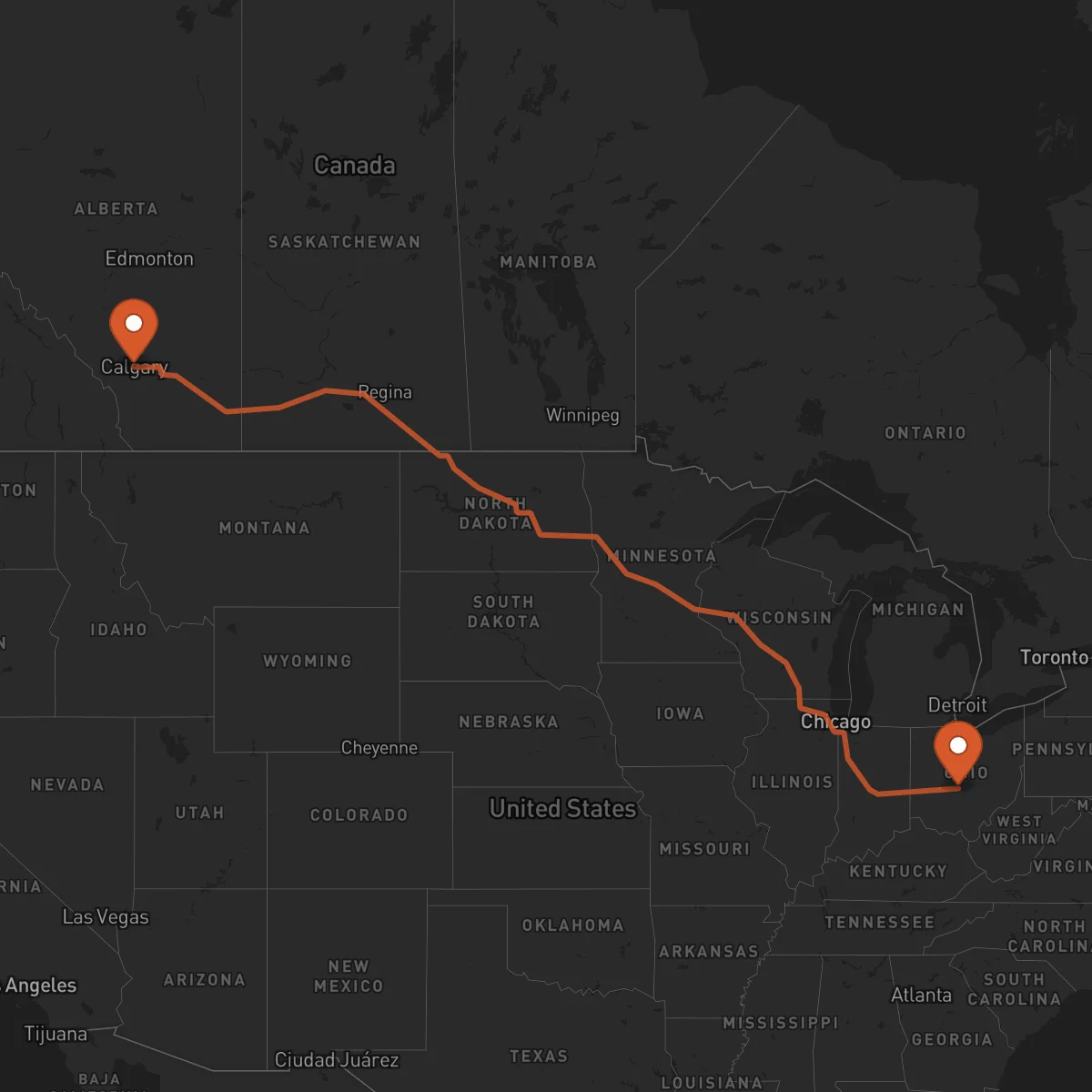
The Calgary-Columbus corridor represents a vital cross-border logistics route connecting Alberta, Canada, with Ohio, United States. This 2,689 km route traverses diverse terrain and connects two major economic regions, facilitating the movement of goods between Canada's energy sector and the industrial heartland of the Midwest. The corridor passes through key transportation hubs and agricultural regions, making it essential for industries requiring reliable freight movement between these markets.
This route serves as a critical link for businesses operating in both countries, particularly those involved in manufacturing, energy, and agricultural supply chains. The corridor's strategic importance has grown with increasing trade between Canada and the United States, supporting industries that rely on just-in-time delivery and specialized freight services. Control Terrestre's expertise in cross-border operations ensures seamless transportation across this international boundary.
Major transportation infrastructure along this corridor includes the Trans-Canada Highway (Highway 1) and Interstate 29, providing reliable access through key cities and industrial centers. The corridor benefits from well-maintained highways and established logistics networks. Control Terrestre's comprehensive service offering includes dedicated full truckload solutions, ensuring your cargo moves efficiently from origin to destination with minimal handling and maximum security.
Services for this Route
Available services for the corridor Calgary - Columbus
 Origin
Calgary serves as a strategic logistics hub in western Canada, positioned at the crossroads of major transportation routes connecting the Pacific coast with central Canada and the United States. The city's location provides excellent access to rail networks and highways, making it an ideal starting point for cross-border freight operations. Calgary's robust infrastructure includes multiple freight terminals, warehousing facilities, and a well-developed transportation network that supports efficient cargo movement.
The Calgary economy is anchored by the energy sector, with significant contributions from technology, manufacturing, and logistics industries. The region's industrial base includes oil and gas equipment, agricultural products, and manufactured goods, creating diverse freight opportunities. Calgary's proximity to major Canadian markets and its direct connections to U.S. transportation networks make it an optimal origin point for businesses requiring reliable cross-border shipping solutions.
 Destination
Columbus
Columbus, Ohio stands as a strategic logistics center in the Midwest United States, offering exceptional connectivity to major markets across the eastern and central regions. The city's central location provides access to over half of the U.S. population within a day's drive, making it an ideal destination for freight distribution. Columbus features a comprehensive transportation infrastructure including major highways, rail connections, and the Port Columbus International Airport, supporting diverse logistics operations.
The Columbus economy is characterized by advanced manufacturing, healthcare, education, and technology sectors. The region's industrial base includes automotive parts, food processing, medical devices, and consumer goods, creating consistent demand for reliable freight transportation. Columbus's strategic position as a distribution hub, combined with its business-friendly environment and skilled workforce, makes it an optimal destination for companies seeking efficient supply chain solutions in the Midwest market.










