Calgary to Cheyenne
Cheyenne → CalgaryFTL freight transportation service between Calgary and Cheyenne. Reliable logistics solutions for your business.
Route Description
Everything you need to know about the corridor Calgary - Cheyenne
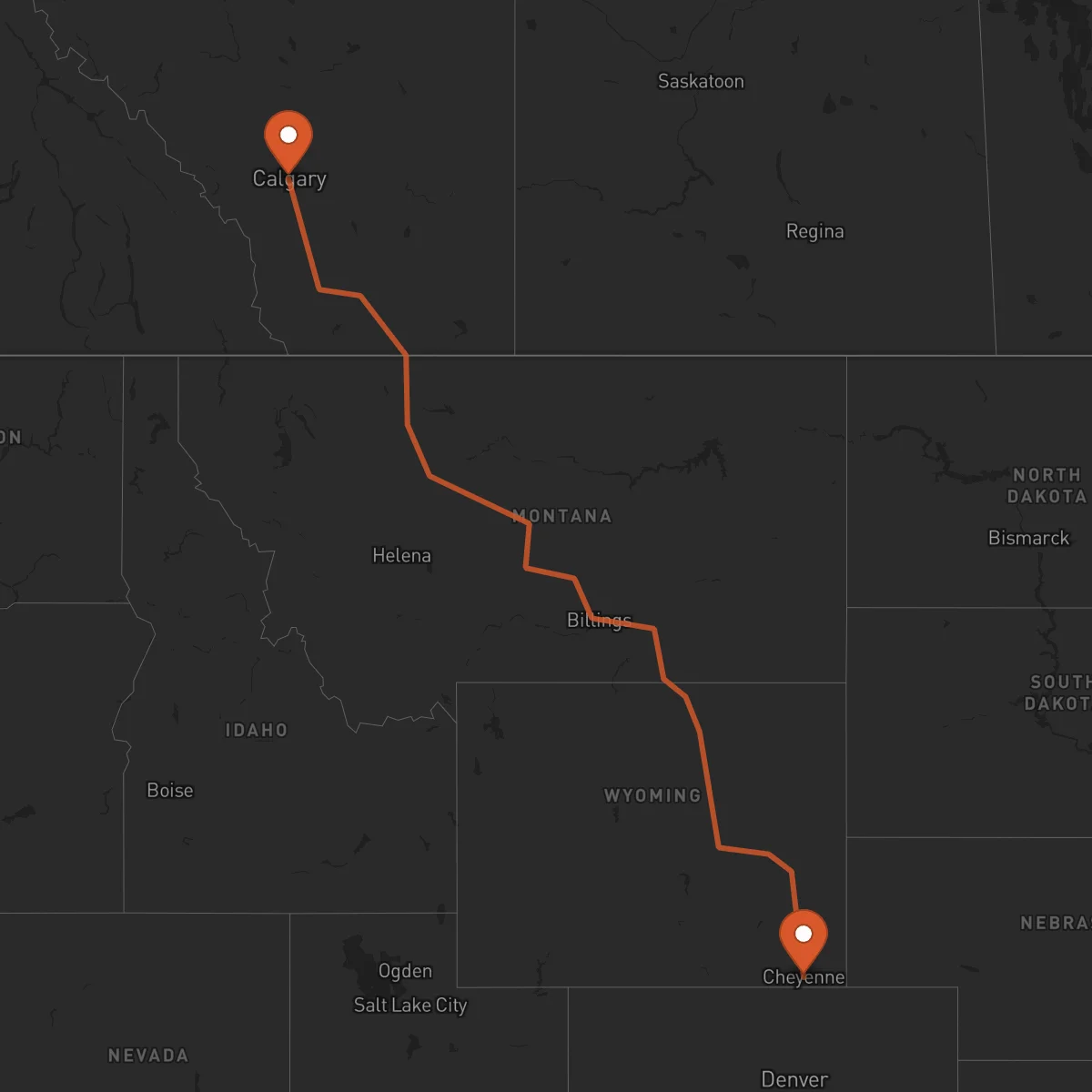
The Calgary to Cheyenne corridor represents a vital cross-border freight transportation route connecting the energy-rich province of Alberta with the strategic logistics hub of Wyoming. This 1,310-kilometer corridor serves as a critical link for the energy, mining, and agricultural sectors, facilitating the movement of specialized equipment, raw materials, and finished products between Canada and the United States. The route traverses diverse terrain, from the Canadian Rockies foothills to the Great Plains, requiring experienced carriers with specialized equipment and cross-border expertise.
The economic significance of this corridor is substantial, supporting industries such as oil and gas equipment manufacturing, mining operations, agricultural machinery, and energy sector logistics. Calgary, known as the energy capital of Canada, produces and exports significant volumes of specialized equipment and technology to Wyoming's energy sector. Meanwhile, Cheyenne serves as a major distribution center for agricultural products and industrial supplies moving throughout the Mountain West region.
Transportation infrastructure along this corridor includes major highways such as Alberta Highway 2 connecting to Interstate 25 in the United States, providing efficient north-south movement. Key border crossings include Coutts/Sweetgrass and other strategic points, each with specific customs requirements and processing capabilities. Control Terrestre's expertise in cross-border operations ensures seamless customs clearance, proper documentation handling, and compliance with both Canadian and U.S. transportation regulations, minimizing delays and optimizing transit times for our clients.
Services for this Route
Available services for the corridor Calgary - Cheyenne
 Origin
Calgary, located in Alberta, Canada, serves as a strategic logistics hub for the energy and industrial sectors in Western Canada. The city's location provides direct access to major transportation networks, including the Trans-Canada Highway and proximity to the Port of Vancouver for international shipping. Calgary's economy is dominated by the energy sector, with numerous oil and gas companies headquartered in the city, creating substantial demand for specialized freight transportation services. The city's logistics infrastructure includes multiple industrial parks, warehousing facilities, and a robust network of transportation providers equipped to handle oversized and specialized cargo typical of the energy industry.
 Destination
Cheyenne
Cheyenne, Wyoming, functions as a critical logistics and distribution center in the American Mountain West region. Its strategic location at the intersection of major interstate highways (I-25, I-80, and I-90) makes it an ideal hub for freight distribution throughout the western United States. Cheyenne's economy benefits from its role as a transportation nexus, with significant warehousing and distribution facilities supporting various industries including energy, agriculture, and manufacturing. The city's proximity to major energy-producing regions in Wyoming, combined with its excellent rail and highway connections, positions it as a key gateway for freight movement throughout the region.










