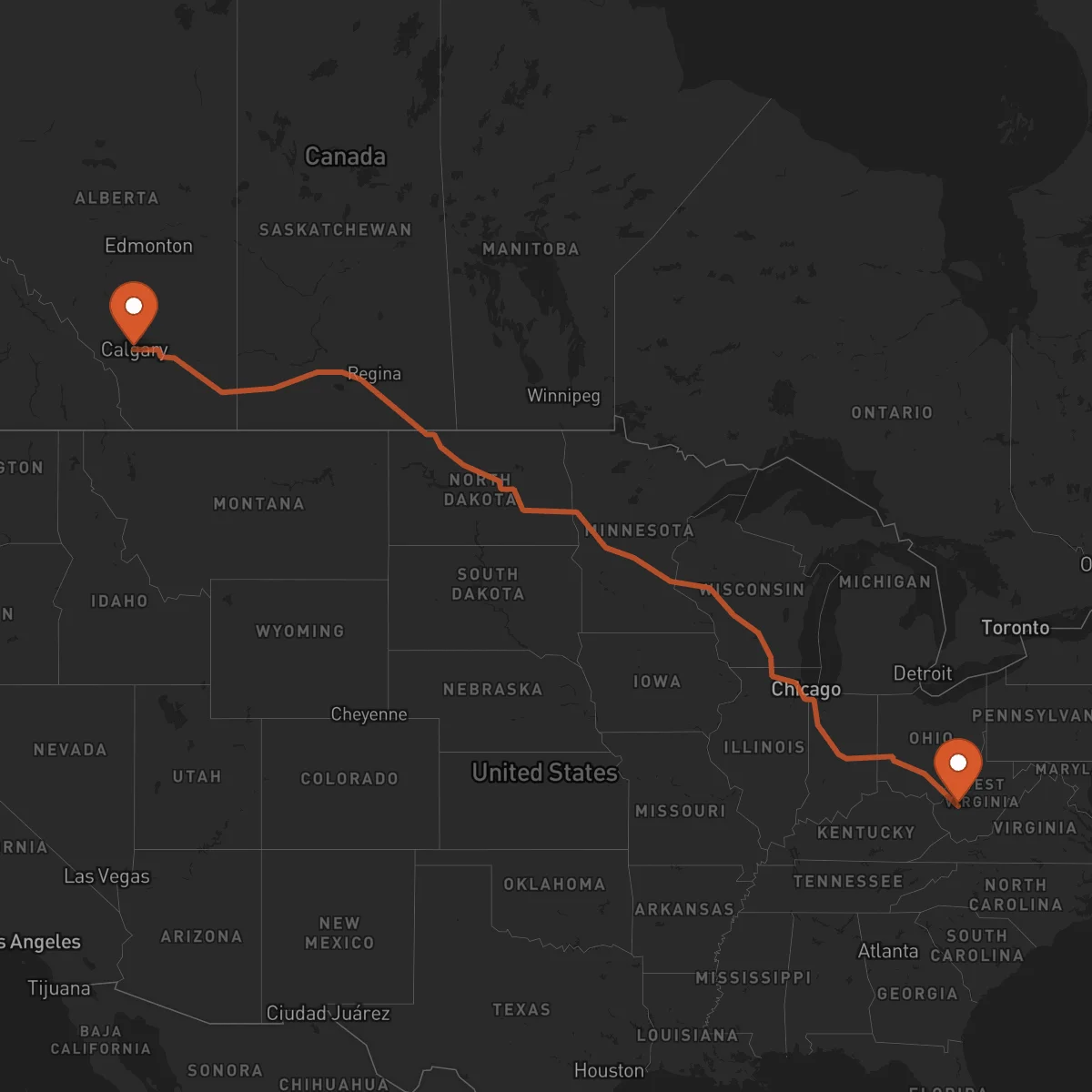
Calgary to Charleston
Charleston → CalgaryFTL freight transportation service between Calgary and Charleston. Reliable logistics solutions for your business.
Route Description
Everything you need to know about the corridor Calgary - Charleston
The Calgary to Charleston corridor represents a vital cross-border freight route connecting Alberta's energy and industrial hub with West Virginia's manufacturing and chemical industries. This 2,894 km route traverses diverse terrain through the Canadian Rockies, the Great Plains, and the Appalachian Mountains, requiring specialized logistics expertise to ensure efficient cargo movement. The corridor serves as a critical link between Canada's western resource extraction sector and the eastern United States' industrial base.
Major industries utilizing this corridor include energy equipment, industrial machinery, chemicals, automotive parts, and specialized manufacturing components. The route primarily follows major highways including Alberta Highway 2, Interstate 94, Interstate 64, and Interstate 77, providing reliable access through key economic centers. The cross-border nature of this route necessitates expertise in customs documentation, NAFTA/USMCA compliance, and efficient border crossing procedures, particularly at major ports of entry.
Control Terrestre facilitates seamless operations on this corridor through our extensive network of certified carriers and strategic partnerships. Our team manages all aspects of cross-border freight, including customs brokerage coordination, documentation preparation, and compliance with both Canadian and US regulations. We provide dedicated full truckload services with real-time tracking capabilities, ensuring your cargo moves efficiently between Calgary and Charleston while maintaining the highest standards of safety and reliability.
Services for this Route
Available services for the corridor Calgary - Charleston
 Origin
Calgary serves as a strategic logistics hub in western Canada, positioned at the intersection of major transportation routes and near the Alberta oil sands. The city's economy is driven by the energy sector, technology, and manufacturing, with a robust industrial base supporting resource extraction and processing. Calgary's transportation infrastructure includes the Calgary International Airport, extensive rail connections via Canadian Pacific Railway and Canadian National Railway, and direct highway access through the Trans-Canada Highway and Alberta Highway 2. The city's proximity to major energy resources and its well-developed logistics network make it an ideal origin point for cross-border freight movements.
 Destination
Charleston
Charleston, West Virginia, is strategically located in the heart of the Appalachian region, serving as a key logistics and industrial center. The city's economy is anchored by chemical manufacturing, healthcare, education, and government services, with a strong presence of energy-related industries. Charleston benefits from its location at the confluence of major transportation routes, including Interstate 64 and Interstate 77, providing efficient access to the eastern United States. The city's Yeager Airport offers air cargo services, while the Kanawha River provides additional barge transportation options. Charleston's central location in the Mid-Atlantic region makes it an important destination for cross-border freight traffic.










