Calgary to Brampton
Brampton → CalgaryFTL freight transportation service between Calgary and Brampton. Reliable logistics solutions for your business.
Route Description
Everything you need to know about the corridor Calgary - Brampton
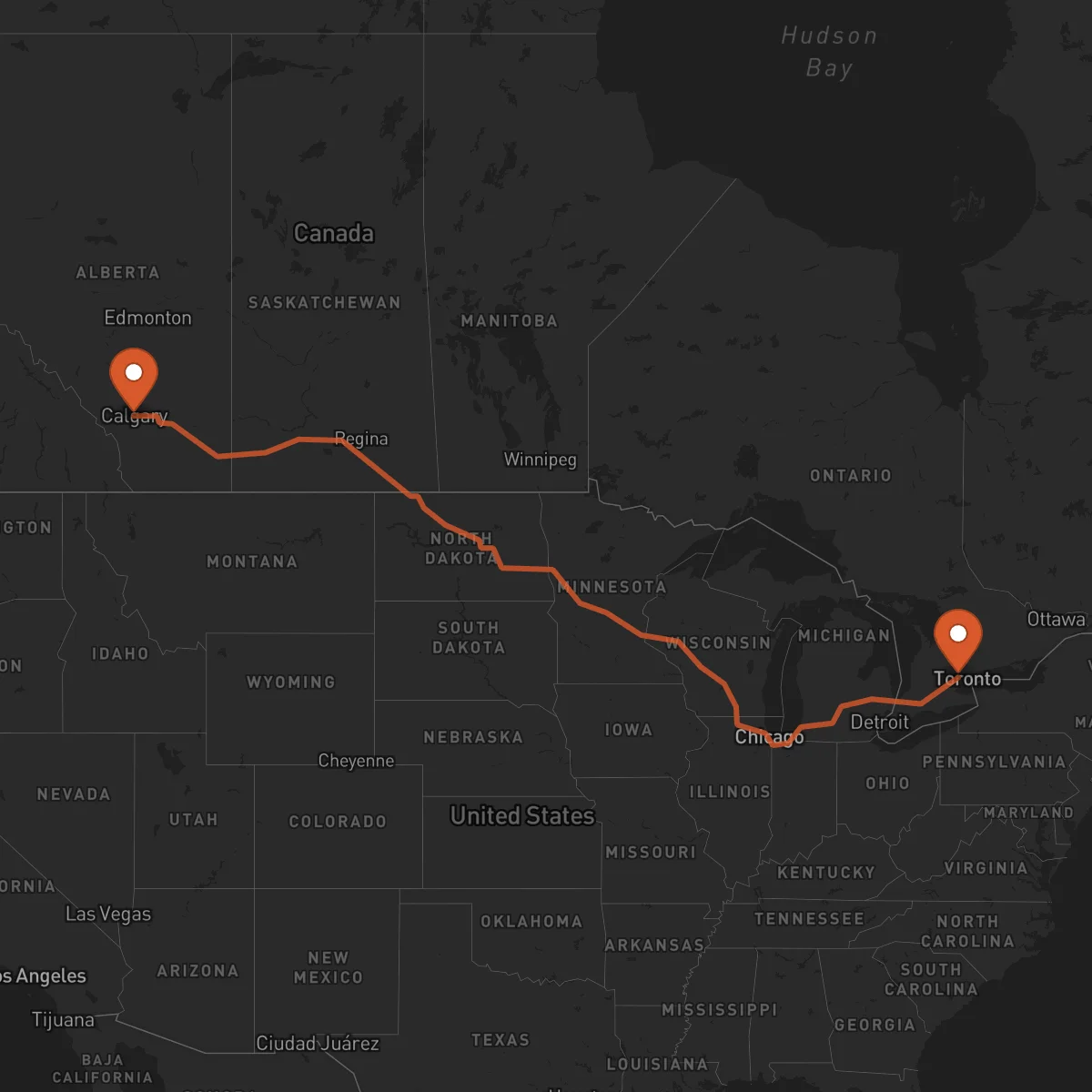
The Calgary to Brampton corridor represents one of Canada's most critical freight transportation routes, spanning approximately 2,682 kilometers across the country's heartland. This east-west connection links Alberta's energy and agricultural powerhouse with Ontario's manufacturing and distribution hub, creating an essential supply chain artery for Canadian commerce. The route traverses diverse landscapes and crosses multiple provincial boundaries, making it a strategic link for businesses operating between Western and Central Canada.
The economic significance of this corridor cannot be overstated. Calgary serves as the headquarters for Canada's energy sector and a major center for agricultural processing, while Brampton has established itself as one of North America's leading manufacturing and logistics centers. This complementary economic relationship drives substantial freight volumes between these two cities, with industries ranging from automotive parts to energy equipment requiring reliable transportation solutions. The corridor supports the movement of everything from raw materials and industrial equipment to finished consumer goods and perishable products.
Transportation infrastructure along this route includes major highways such as the Trans-Canada Highway (Highway 1) and the Queen Elizabeth Way, providing multiple routing options for freight carriers. Control Terrestre leverages this robust infrastructure to offer comprehensive FTL (Full Truckload) services between Calgary and Brampton. Our network of certified carriers ensures consistent capacity and reliable service across this extensive route, with real-time tracking and dedicated support throughout the journey. Whether you're shipping industrial machinery from Calgary's energy sector or automotive components to Brampton's manufacturing facilities, our specialized FTL solutions are designed to meet the unique demands of this critical Canadian corridor.
Services for this Route
Available services for the corridor Calgary - Brampton
 Origin
Calgary stands as a strategic logistics hub in Western Canada, benefiting from its position at the crossroads of major transportation networks. The city's location provides direct access to the Canadian Pacific Railway and proximity to the Port of Vancouver, creating multimodal shipping opportunities. Calgary International Airport supports air freight operations, while the city's extensive highway system connects seamlessly to national freight corridors. This infrastructure foundation makes Calgary an ideal origin point for domestic freight movements across Canada's vast geography.
The economic landscape of Calgary is dominated by the energy sector, with numerous oil and gas companies headquartered in the city. Beyond energy, Calgary has developed strong agricultural processing, technology, and manufacturing sectors. The city's diverse industrial base creates consistent demand for freight transportation services, particularly for specialized equipment, machinery, and bulk commodities. Calgary's position as Alberta's economic center ensures a steady flow of goods requiring reliable transportation to markets across Canada.
 Destination
Brampton has emerged as one of Canada's most important logistics and manufacturing centers, strategically located in the Greater Toronto Area. The city's proximity to Toronto Pearson International Airport, Canada's busiest cargo airport, and its extensive highway network, including the 400-series highways, provides exceptional connectivity for freight movements. Brampton's infrastructure includes modern warehousing facilities and distribution centers, making it a natural destination for freight shipments from across the country.
The industrial composition of Brampton reflects its manufacturing heritage, with automotive parts production, advanced manufacturing, and food processing among the dominant sectors. The city hosts numerous international companies and serves as a key node in North American supply chains. Brampton's diverse economy creates demand for various freight transportation services, from specialized industrial equipment to consumer goods and perishable products. The city's role as a major distribution point for the Greater Toronto Area and surrounding regions ensures consistent freight activity throughout the year.










