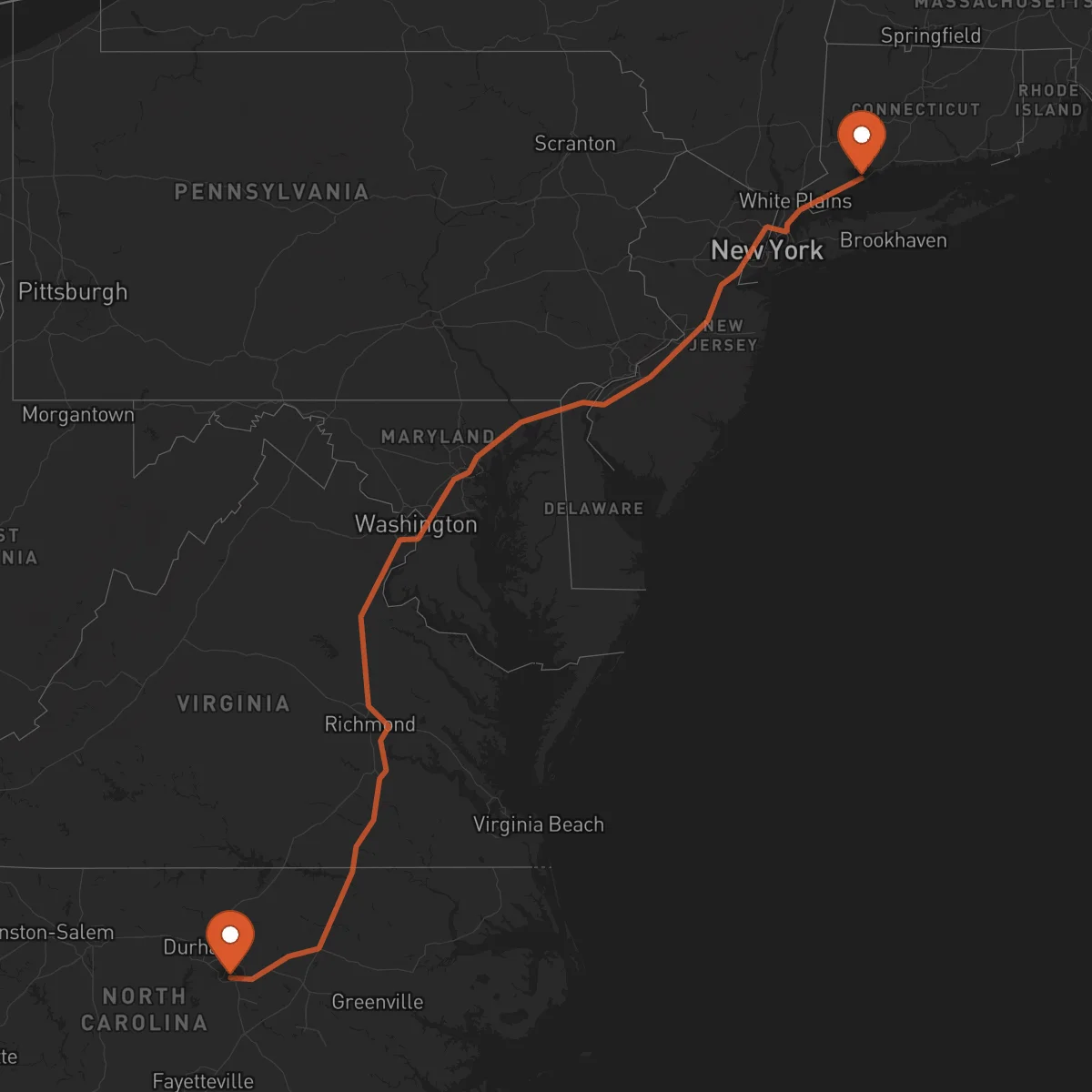
Bridgeport to Raleigh
Raleigh → BridgeportFTL freight transportation service between Bridgeport and Raleigh. Reliable logistics solutions for your business.
Route Description
Everything you need to know about the corridor Bridgeport - Raleigh
The Bridgeport-Raleigh corridor connects two key economic hubs in the northeastern United States, spanning approximately 765 kilometers through a strategic transportation route. This domestic corridor links Connecticut's industrial coast with North Carolina's thriving Research Triangle, facilitating the movement of goods between major manufacturing and technology centers. The route traverses several states, crossing diverse economic regions that contribute to the corridor's importance in national logistics.
The corridor serves a wide range of industries, with manufacturing, technology, pharmaceuticals, and retail sectors being the primary users. Bridgeport's industrial heritage and Raleigh's emergence as a technology and research center create a complementary economic relationship that drives freight demand. The route benefits from proximity to major ports and airports, enhancing its role in both domestic and international supply chains.
Key transportation infrastructure along this corridor includes I-95, I-91, and I-85, providing efficient north-south connectivity. These highways offer multiple routing options to optimize transit times and avoid congestion. The corridor also connects with major intermodal facilities and distribution centers, supporting various freight transportation modes.
Control Terrestre leverages this strategic corridor through our extensive network of certified carriers, offering reliable full truckload (FTL) services between Bridgeport and Raleigh. Our expertise in managing complex logistics operations ensures that your freight moves efficiently through this important economic artery, supporting your supply chain needs with professional transportation solutions.
Services for this Route
Available services for the corridor Bridgeport - Raleigh
 Origin
Bridgeport
Bridgeport, Connecticut serves as a strategic logistics hub on the northeastern coast, offering excellent connectivity to major markets in the Northeast. The city's proximity to New York and Boston, combined with its port facilities on Long Island Sound, makes it an ideal origin point for freight distribution. Bridgeport's industrial infrastructure includes multiple freight terminals, warehousing facilities, and direct access to I-95, facilitating efficient cargo movement to inland destinations.
The local economy is anchored by manufacturing, healthcare, and financial services sectors, with a strong presence of industrial operations that generate consistent freight volume. The city's location within the New York metropolitan area provides access to one of the largest consumer markets in the United States, while its port facilities enable international trade connections. Bridgeport's transportation infrastructure includes the Sikorsky Memorial Airport and rail connections through Metro-North, complementing its road network for comprehensive logistics solutions.
 Destination
Raleigh
Raleigh, North Carolina stands as a major logistics destination in the southeastern United States, serving as the anchor of the Research Triangle metropolitan area. The city's strategic location provides access to growing markets in the Southeast while offering excellent connectivity through major highways including I-40 and I-85. Raleigh's infrastructure includes the Raleigh-Durham International Airport and multiple freight rail terminals, supporting diverse transportation options for inbound and outbound freight.
The local economy is dominated by technology, research, education, and healthcare sectors, with the Research Triangle Park hosting numerous high-tech companies and research institutions. This economic diversity creates consistent demand for logistics services, particularly for specialized freight and time-sensitive shipments. Raleigh's growing population and business community continue to expand the need for reliable freight transportation, making it a key destination for supply chain operations throughout the eastern United States.










