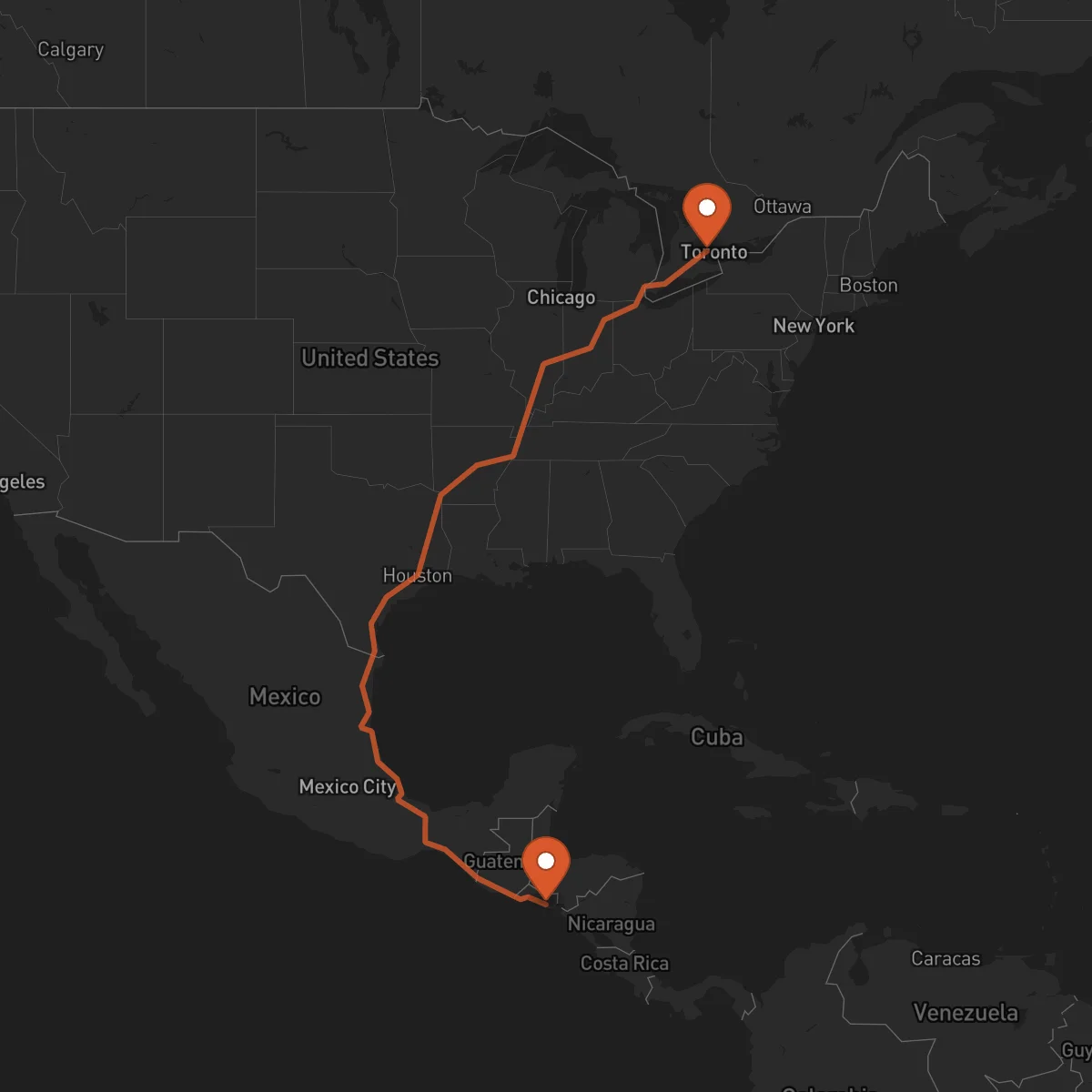
Brampton to Usulután
Usulután → BramptonFTL freight transportation service between Brampton and Usulután. Reliable logistics solutions for your business.
Route Description
Everything you need to know about the corridor Brampton - Usulután
The logistics corridor connecting Brampton, Ontario, Canada, to Usulután, El Salvador, represents a critical cross-border route spanning approximately 3474 kilometers. This corridor serves as a vital commercial artery, linking major industrial hubs in North America with key markets in Central America, and is strategically important for businesses engaged in international trade. The corridor facilitates the seamless movement of goods between the highly regulated, high-volume manufacturing centers of Canada and the growing industrial and agricultural sectors of Central America.
The economic and industrial context of this region is robust, driven by advanced manufacturing and distribution in Southern Ontario and dynamic agricultural and light industrial activity in El Salvador. Main industries utilizing this corridor include automotive parts, agricultural products, manufacturing components, and consumer goods. The transportation infrastructure relies on major highways such as Ontario Highway 401 and 400 in Canada, transitioning through key US corridors to eventually reach the Pan-American Highway network in Central America. Relevant border crossings involve significant customs considerations, particularly moving through US ports of entry where compliance with C-TPAT and other security measures is integral to smooth transit. Control Terrestre facilitates operations on this corridor by leveraging our exclusive Full Truckload (FTL) network of certified providers, ensuring specialized cargo requirements are met while navigating complex cross-border protocols with our trusted resources.
This corridor demands a partner with expertise in North American and Central American logistics. Control Terrestre’s alliance of experienced providers, certified in C-TPAT, FAST, and Responsible Care, ensures that shipments move efficiently and securely. We manage the intricacies of cross-border freight, utilizing appropriate equipment such as dry vans and refrigerated units as needed, to deliver specialized cargo solutions from the heart of Canada to the industrial zones of El Salvador.
Services for this Route
Available services for the corridor Brampton - Usulután
 Origin
Brampton, Ontario, stands as a strategic logistics hub in Southern Ontario, offering exceptional connectivity for FTL transportation. Its proximity to major population centers and key manufacturing zones makes it an ideal origin point for domestic and international freight. The region boasts a strong industrial base, including advanced manufacturing, technology, and agricultural processing sectors, driving consistent demand for specialized logistics solutions. Brampton's transportation infrastructure is supported by direct access to major provincial highways like the 401 and 400, providing efficient routes to primary distribution centers and border crossings. This infrastructure, combined with the presence of skilled logistics providers, ensures that goods can be consolidated and prepared for cross-border transit with a high degree of efficiency, forming the essential North American starting point of the corridor.
 Destination
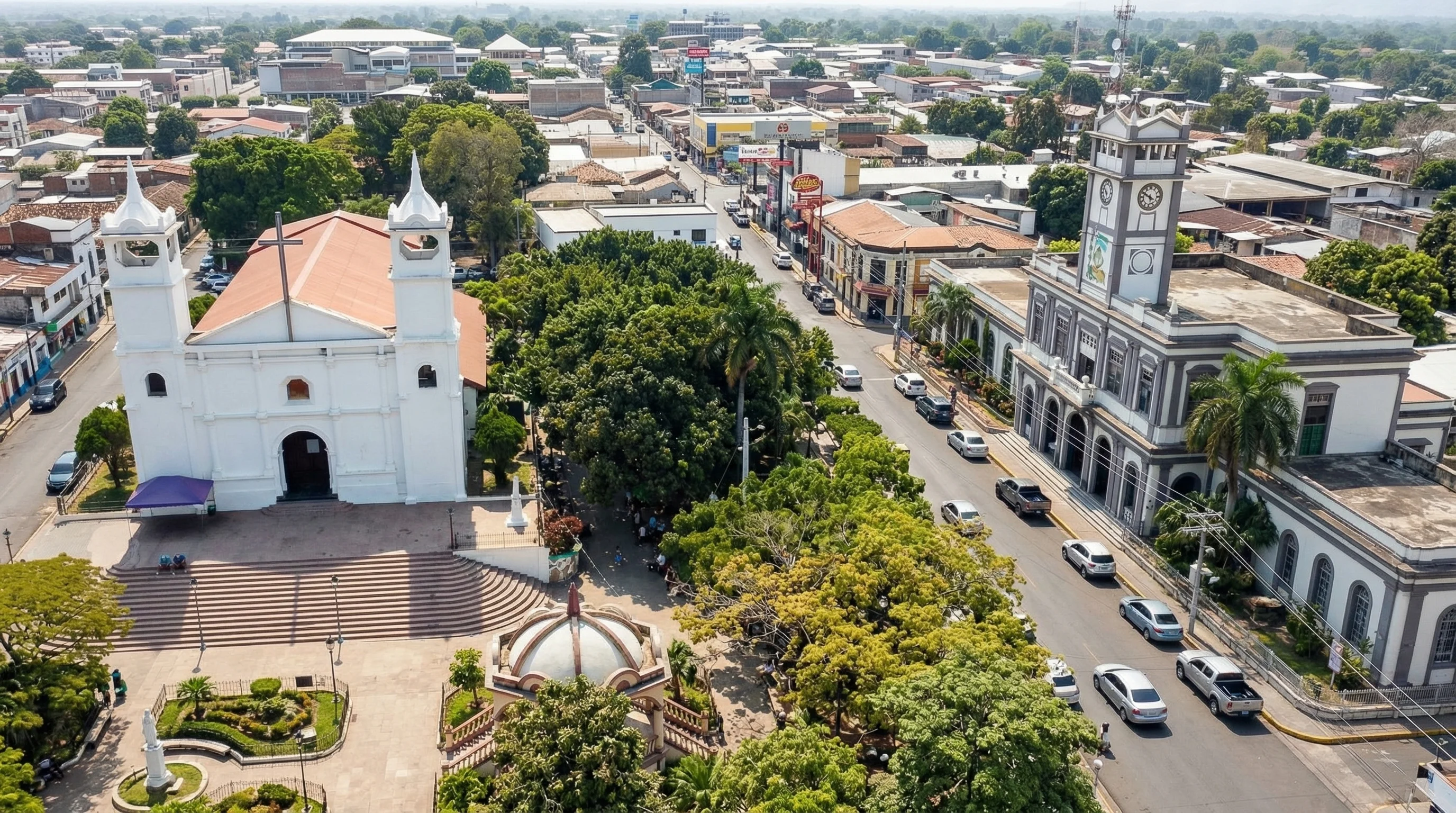
Usulután
Usulután, located in the eastern region of El Salvador, serves as a strategically important destination for logistics within Central America. Its location provides access to key agricultural and industrial markets across the country and the isthmus region. The main economic sectors driving demand in Usulután include agriculture, manufacturing, and light industry, creating a steady flow of goods requiring reliable transportation. The transportation infrastructure in the region is developing, with the city served by national highways that connect to the broader Central American network, including the Pan-American Highway. For logistics operations, this means Control Terrestre can extend our specialized FTL services, utilizing equipment such as dry vans and tankers, to ensure cargo reaches this vital Central American destination efficiently and in compliance with regional requirements.










