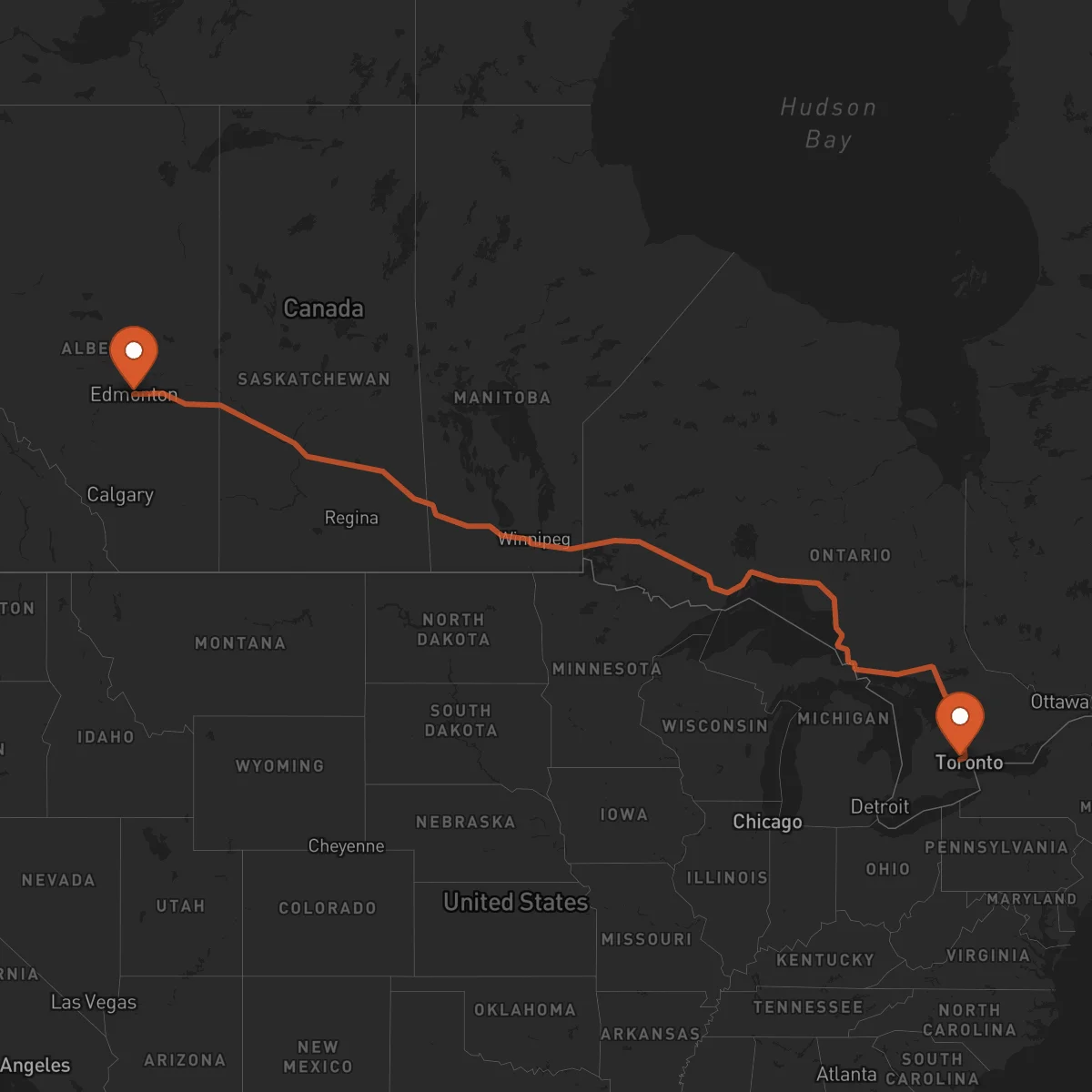
Brampton to Edmonton
Edmonton → BramptonFTL freight transportation service between Brampton and Edmonton. Reliable logistics solutions for your business.
Route Description
Everything you need to know about the corridor Brampton - Edmonton
The logistics corridor between Brampton and Edmonton represents one of the most critical freight transportation routes in Canada, spanning approximately 2,679 kilometers across the country's heartland. This east-west connection links Ontario's manufacturing powerhouse with Alberta's energy and resource sectors, creating a vital supply chain artery that supports the Canadian economy. The route traverses diverse landscapes and connects major urban centers, making it essential for industries requiring reliable, time-sensitive freight movement across provincial boundaries.
The economic significance of this corridor cannot be overstated. Brampton serves as a major logistics hub for the Greater Toronto Area, while Edmonton functions as Alberta's capital and a key distribution center for western Canada. This connection facilitates the movement of manufactured goods, industrial equipment, agricultural products, and energy-related materials between Canada's most populous provinces. The corridor supports numerous industries including automotive, aerospace, construction, and technology sectors, all of which rely on efficient transportation to maintain their competitive edge in both domestic and international markets.
Control Terrestre specializes in optimizing freight operations along this crucial corridor, offering dedicated full truckload (FTL) services that ensure your cargo moves efficiently from origin to destination. Our strategic partnerships with certified carriers provide access to a diverse fleet of equipment types, including dry vans and refrigerated units, capable of handling various cargo requirements. We understand the unique challenges of cross-province transportation, including weather conditions, regulatory compliance, and time-sensitive deliveries, allowing us to provide tailored solutions that keep your supply chain running smoothly.
Services for this Route
Available services for the corridor Brampton - Edmonton
 Origin
Brampton, located in the Greater Toronto Area of Ontario, stands as one of Canada's most strategically positioned logistics hubs. Its proximity to major international airports, including Toronto Pearson International Airport, and its extensive network of highways (401, 407, and 410) make it an ideal origin point for freight distribution. The city's robust infrastructure supports seamless connections to both domestic and international markets, with easy access to the U.S. border and major shipping ports.
The economic landscape of Brampton is diverse and dynamic, with strong representation from advanced manufacturing, retail distribution, pharmaceuticals, and technology sectors. The city hosts numerous warehouses, distribution centers, and industrial parks that serve as critical nodes in the supply chain network. Brampton's skilled workforce and business-friendly environment have attracted major corporations, making it a key player in Canada's logistics and manufacturing ecosystem.
 Destination
Edmonton, the capital city of Alberta, serves as a strategic logistics gateway to western Canada and beyond. Its location along the North Saskatchewan River and proximity to major transportation routes, including the Yellowhead Highway (Highway 16), positions it as a crucial distribution center for the prairie provinces. Edmonton's transportation infrastructure includes extensive rail connections, major highways, and air cargo facilities that facilitate efficient freight movement throughout the region.
The city's economy is anchored by the energy sector, with significant contributions from oil and gas industries, but also encompasses manufacturing, construction, and technology. Edmonton's role as a supply hub for northern Canada and its connections to the Alaska Highway make it a vital link in the national logistics network. The city's industrial parks and warehousing facilities provide the necessary infrastructure to support complex supply chain operations, serving both local businesses and national distribution networks.










