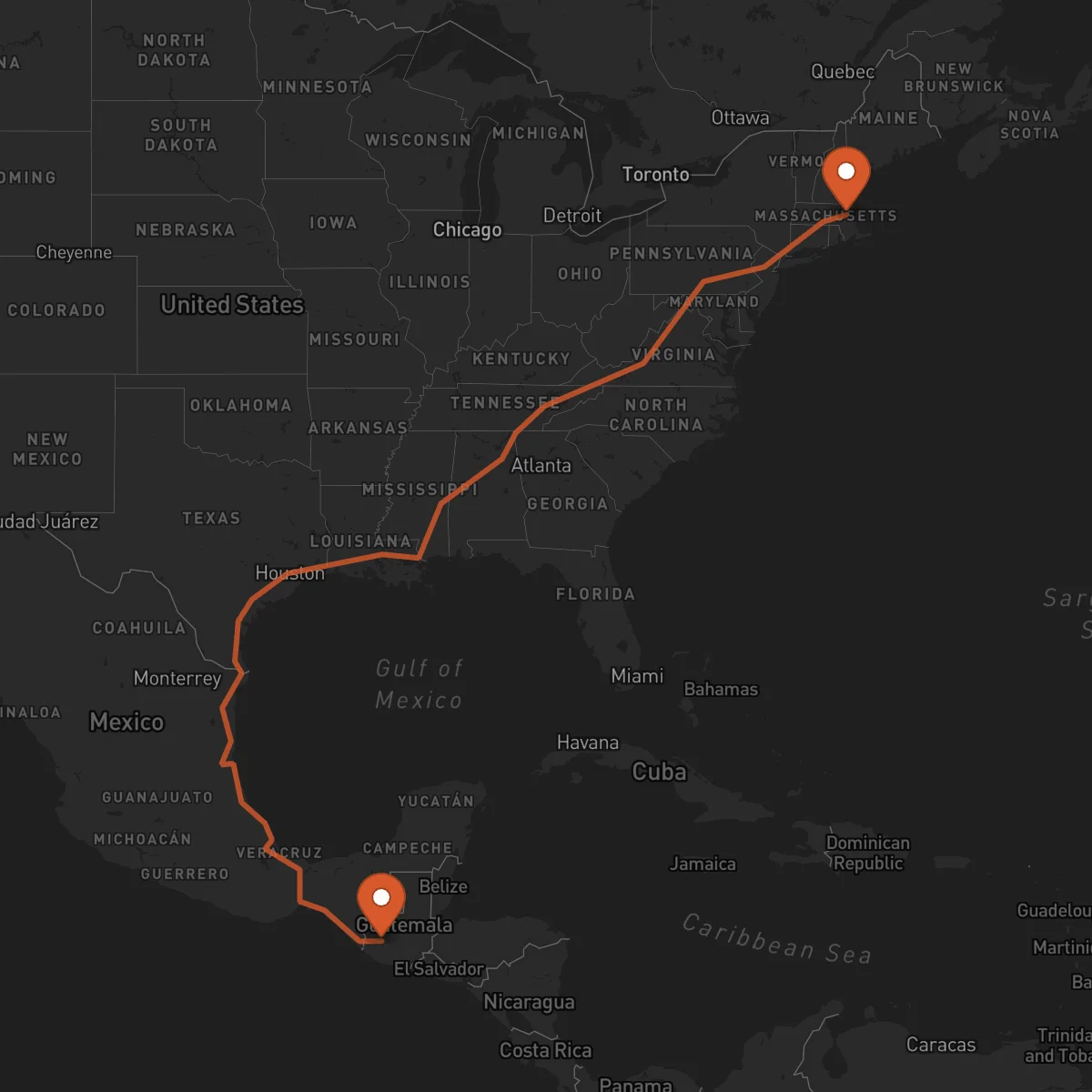
Boston to Totonicapán
Totonicapán → BostonFTL freight transportation service between Boston and Totonicapán. Reliable logistics solutions for your business.
Route Description
Everything you need to know about the corridor Boston - Totonicapán
The logistics corridor connecting Boston, Massachusetts, with Totonicapán, Guatemala, represents a vital cross-border freight transportation route spanning approximately 3,617 kilometers. This corridor serves as a crucial link between the northeastern United States and the highlands of Guatemala, facilitating the movement of goods between two economically significant regions. The route traverses major transportation networks including the I-95 corridor through the eastern United States, connecting with key border crossings at Laredo or El Paso before continuing through Mexico and into Guatemala via the CA-1 Pan-American Highway. Control Terrestre's expertise in managing cross-border operations ensures seamless freight movement through complex customs procedures and varying regulatory environments along this extensive route.
Services for this Route
Available services for the corridor Boston - Totonicapán
 Origin
Boston
Boston, Massachusetts, stands as a major logistics hub on the East Coast of the United States, offering strategic access to the northeastern market and international shipping routes. The city's Logan International Airport and Port of Boston provide multimodal transportation capabilities, while its extensive highway network, including I-90 and I-93, ensures efficient ground transportation connections. Boston's economy is driven by technology, education, healthcare, and biotechnology sectors, with numerous manufacturing and distribution centers supporting diverse freight transportation needs. The region's infrastructure includes modern warehousing facilities, intermodal yards, and specialized logistics centers that handle everything from standard commercial goods to sensitive medical and scientific equipment.
 Destination
Totonicapán
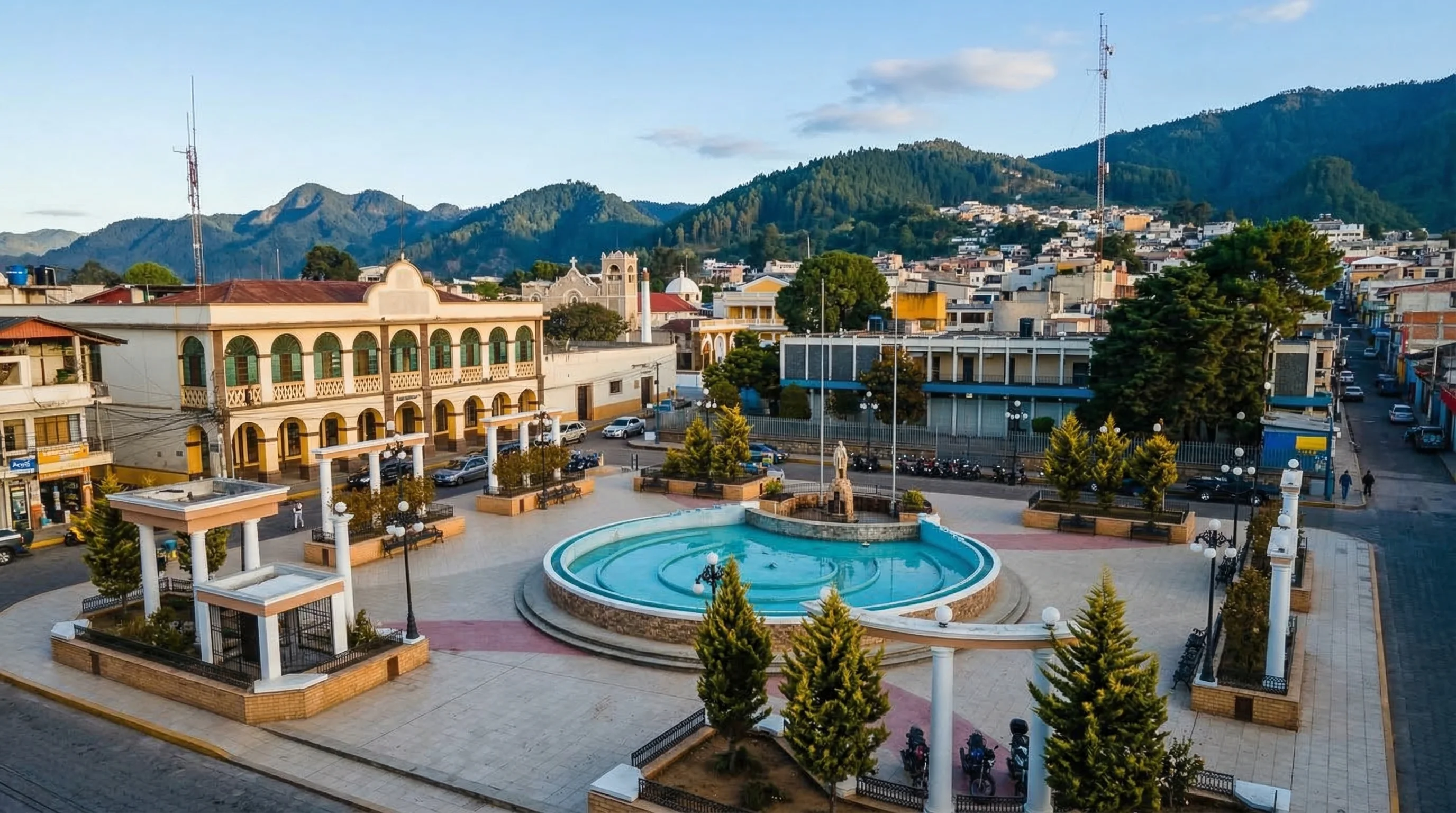
Totonicapán, located in the western highlands of Guatemala, serves as an important commercial center for the surrounding agricultural and textile regions. The city's strategic position along the CA-1 Pan-American Highway provides crucial connections to Guatemala City and the Mexican border, facilitating regional trade and commerce. Totonicapán's economy is characterized by traditional textile manufacturing, agriculture, and emerging industrial activities, creating demand for reliable freight transportation services. The area's infrastructure includes local distribution networks and connections to Guatemala's national transportation system, though mountainous terrain requires specialized handling and experienced logistics providers to ensure safe and efficient cargo delivery.










