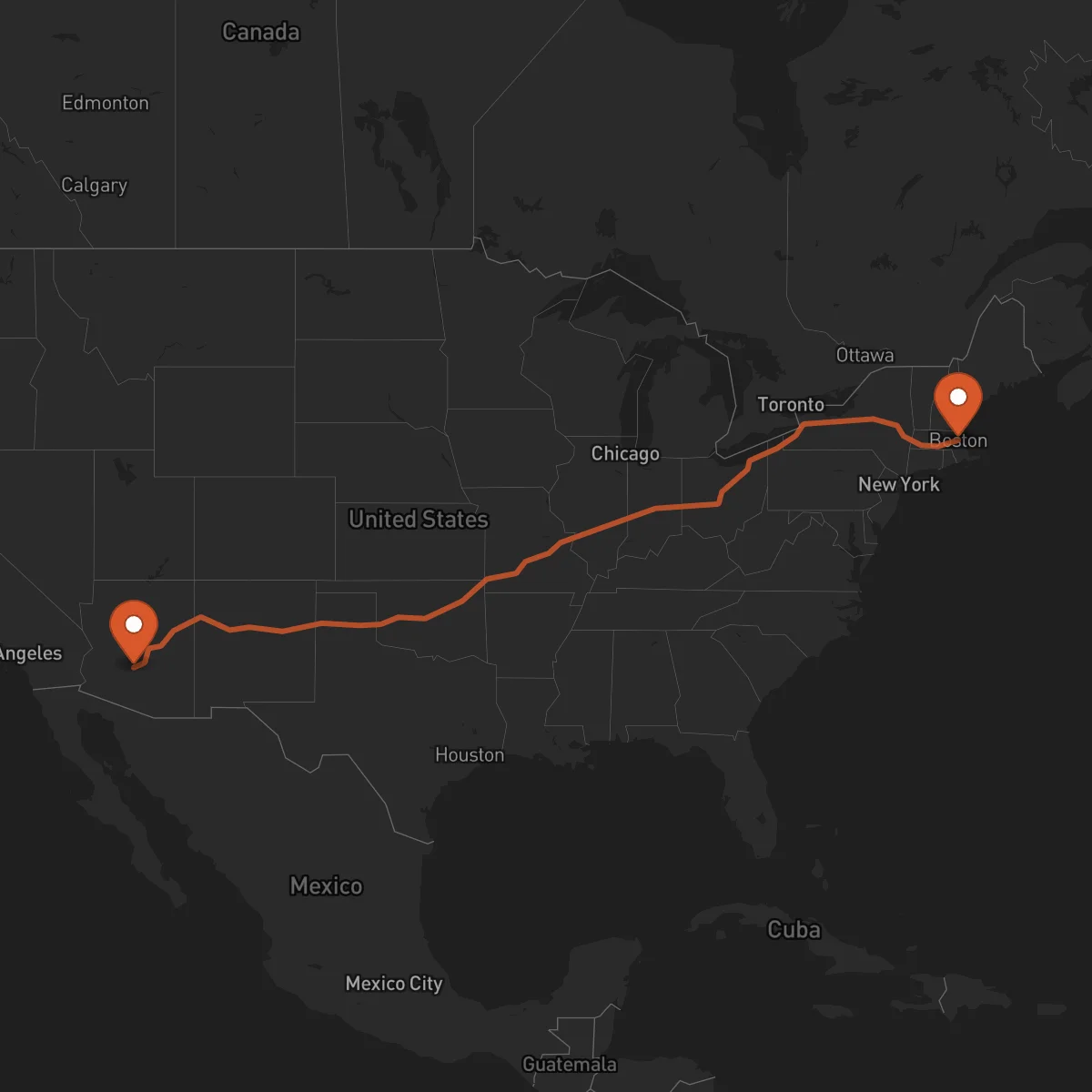
Boston to Phoenix
Phoenix → BostonFTL freight transportation service between Boston and Phoenix. Reliable logistics solutions for your business.
Route Description
Everything you need to know about the corridor Boston - Phoenix
The Boston-Phoenix corridor represents one of the most important freight transportation routes in the United States, connecting the economic heart of New England with the dynamic Southwest region. This 3,694 km route traverses the entire country from east to west, crossing multiple states and linking two major metropolitan areas with distinct industrial profiles. The corridor is vital for the movement of goods between the manufacturing, technology, and healthcare sectors of the Northeast and the aerospace, electronics, and agricultural industries of the Southwest.
The transportation infrastructure along this corridor is robust, primarily utilizing major interstate highways such as I-90 (Massachusetts Turnpike) westward through I-80 across the Midwest, and I-17 southward into Phoenix. This route offers multiple options for freight carriers to optimize delivery times and costs depending on specific cargo requirements. Control Terrestre leverages this infrastructure through our network of certified carriers, ensuring reliable and efficient full truckload (FTL) transportation services that meet the highest standards of safety and compliance.
This corridor serves a diverse range of industries including automotive parts, medical equipment, high-tech electronics, and consumer goods. The complementary economic profiles of Boston and Phoenix create a balanced flow of goods in both directions, making it an ideal route for companies seeking consistent and reliable freight transportation solutions. Our expertise in managing cross-country shipments ensures that your cargo moves seamlessly from origin to destination, regardless of the challenges presented by the varying terrain and weather conditions along the route.
Services for this Route
Available services for the corridor Boston - Phoenix
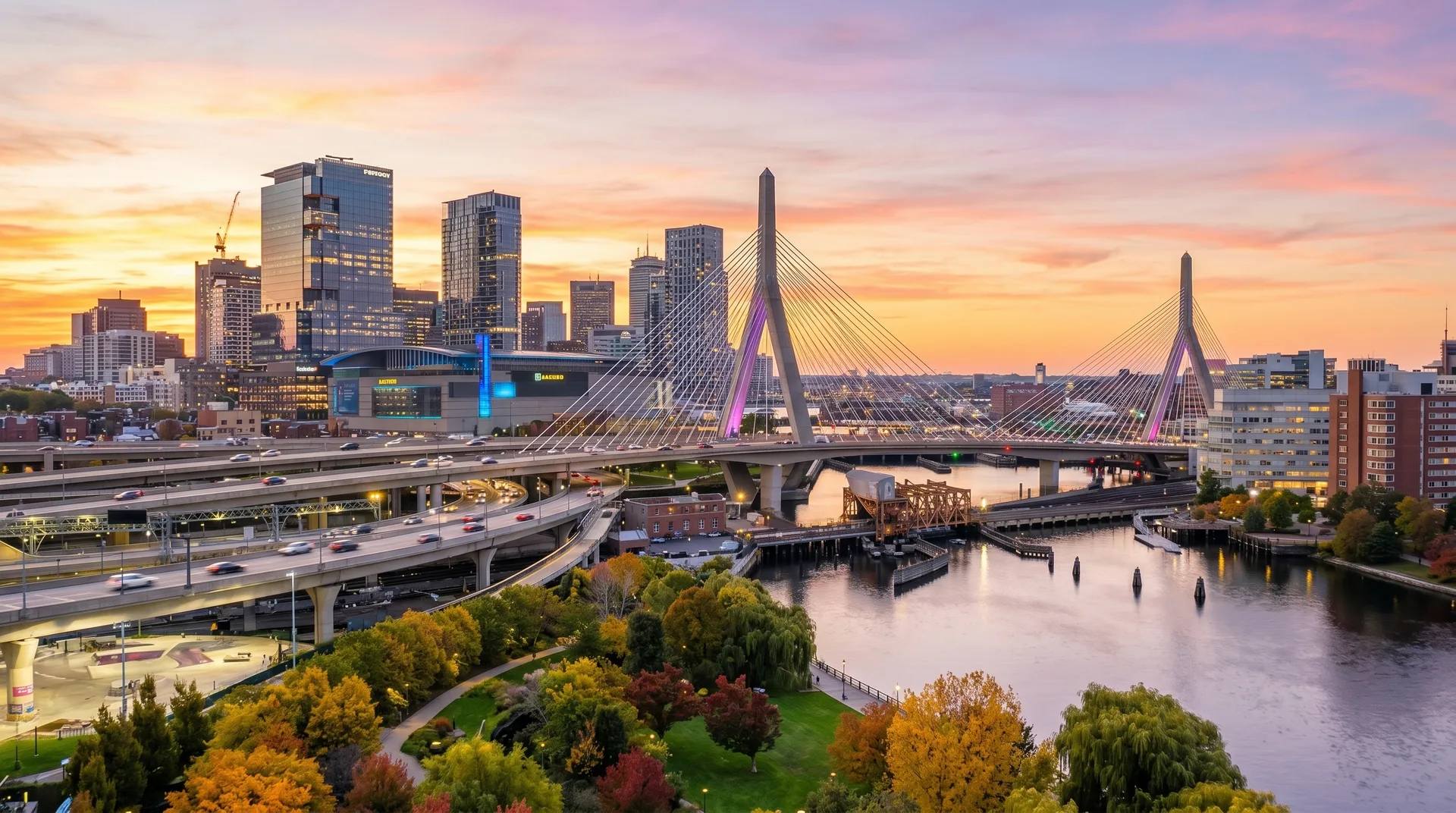 Origin
Boston
Boston stands as a major logistics hub on the East Coast, strategically positioned to serve the New England region and beyond. The city's port facilities, including the Port of Boston, provide ocean freight connections that complement its extensive ground transportation network. Boston's Logan International Airport further enhances its logistics capabilities, offering air cargo services for time-sensitive shipments. The city's central location in the Northeast Corridor, with access to major highways like I-90 and I-95, makes it an ideal origin point for nationwide freight distribution.
The Boston metropolitan area is home to a diverse industrial base, with particular strengths in healthcare, education, technology, and financial services. The region hosts numerous biotechnology firms, research institutions, and higher education centers that generate significant freight volumes in specialized equipment and materials. Manufacturing remains important, particularly in medical devices, robotics, and advanced materials. This industrial diversity creates consistent demand for full truckload services to transport everything from delicate scientific instruments to bulk industrial components.
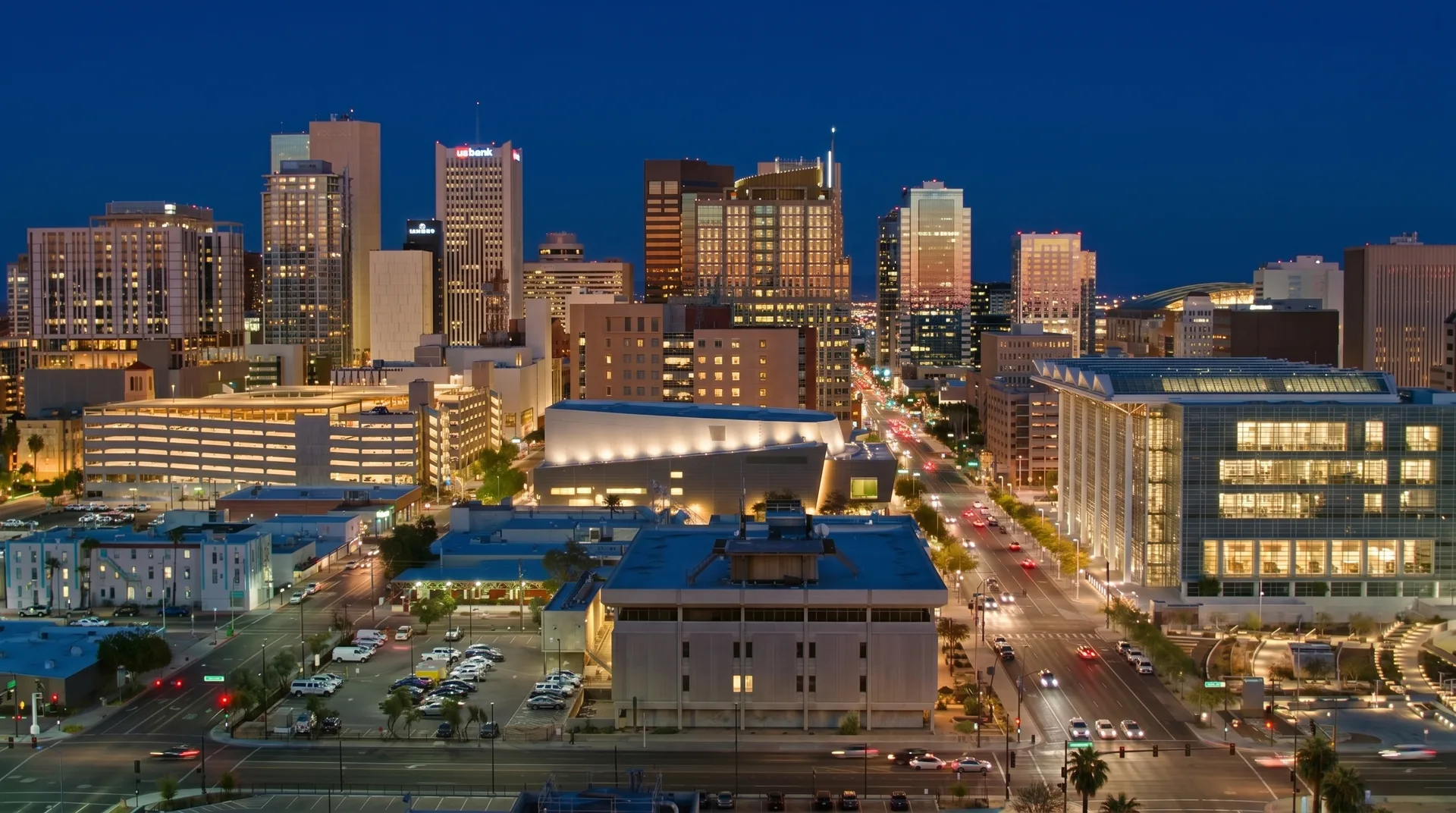 Destination
Phoenix
Phoenix serves as a strategic logistics gateway to the Southwest United States, offering unique advantages for freight transportation and distribution. Located in the Sonoran Desert, Phoenix benefits from its proximity to major transportation corridors including I-10, I-17, and I-8, providing direct access to California, Texas, and Mexico. The city's Sky Harbor International Airport ranks among the busiest cargo airports in the nation, complementing its extensive ground transportation network. Phoenix's geographic position makes it an ideal distribution center for the Southwest region and a critical link in cross-country freight movements.
The Phoenix metropolitan area has experienced significant industrial growth, particularly in aerospace and defense, electronics manufacturing, and renewable energy sectors. The region is home to major semiconductor facilities, aerospace companies, and a growing tech industry that demands reliable freight transportation services. Additionally, Phoenix's agricultural sector, including winter vegetable production and cattle ranching, creates diverse freight needs throughout the year. The city's role as a distribution hub for the Southwest, combined with its growing industrial base, generates consistent demand for full truckload transportation services connecting to both coastal and inland markets.










