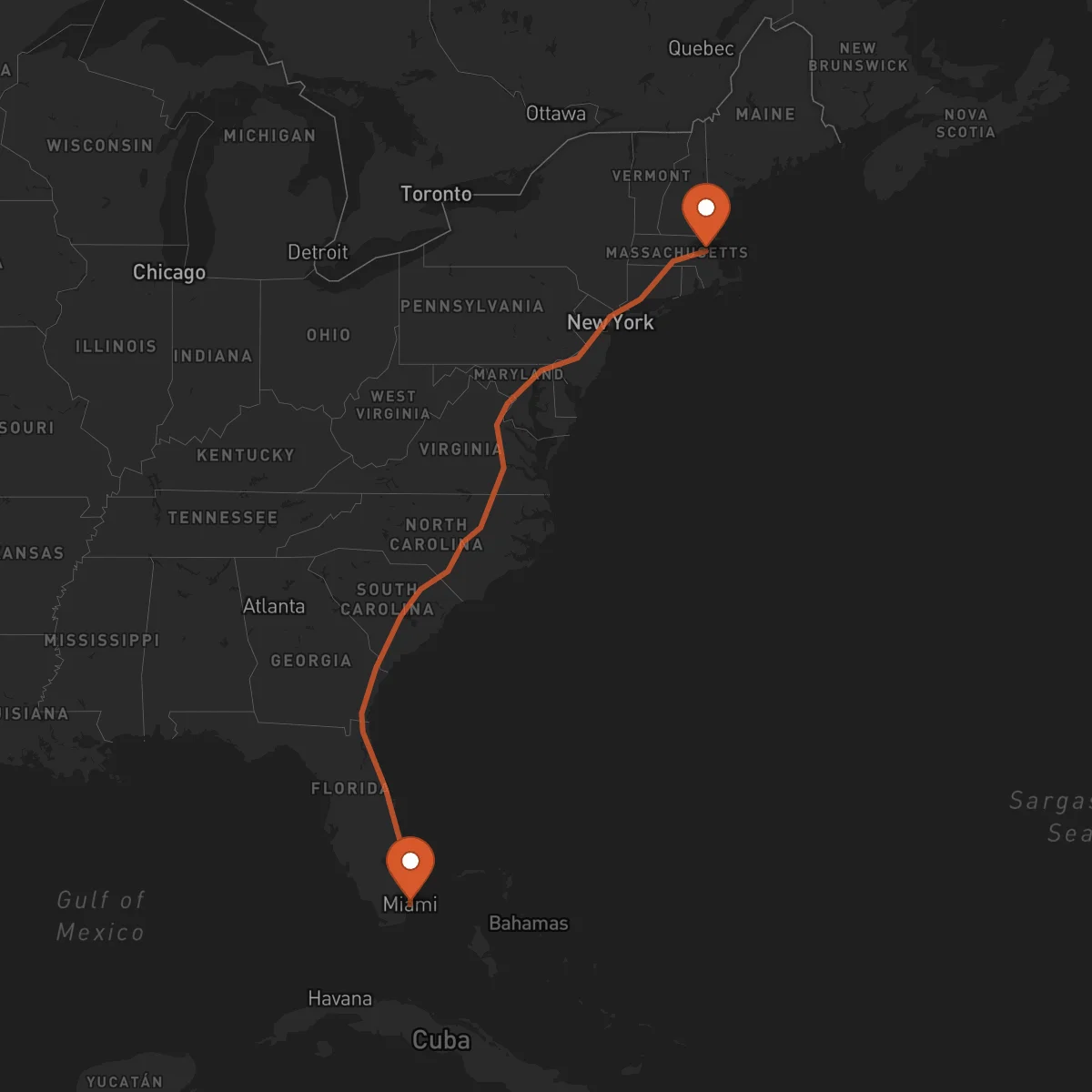
Boston to Miami
Miami → BostonFTL freight transportation service between Boston and Miami. Reliable logistics solutions for your business.
Route Description
Everything you need to know about the corridor Boston - Miami
The Boston-Miami corridor represents one of the most dynamic freight transportation routes on the East Coast of the United States, connecting two major economic hubs separated by approximately 2,025 kilometers. This north-south axis traverses a diverse industrial landscape, linking the financial and technological powerhouse of the Northeast with the international trade gateway of the Southeast. The corridor facilitates the movement of high-value goods, electronics, pharmaceuticals, and manufactured products between these complementary markets.
The transportation infrastructure along this route is robust, primarily utilizing I-95, the main interstate highway running parallel to the Atlantic coast. This major freight artery connects with other key highways including I-90, I-84, I-91, and I-93 in the Northeast, transitioning through I-4 in Florida. The route passes through major metropolitan areas including New York, Philadelphia, Washington D.C., and Jacksonville, offering multiple logistical nodes and distribution opportunities.
Control Terrestre provides specialized FTL (Full Truckload) transportation services along this strategic corridor, ensuring dedicated capacity for your cargo from origin to destination. Our network of certified carriers offers the reliability and security needed for time-sensitive shipments, with options for specialized equipment including refrigerated units for temperature-sensitive products and dedicated services for high-value or critical cargo. We understand the specific requirements of this route and provide tailored solutions to optimize your supply chain between Boston and Miami.
Services for this Route
Available services for the corridor Boston - Miami
 Origin
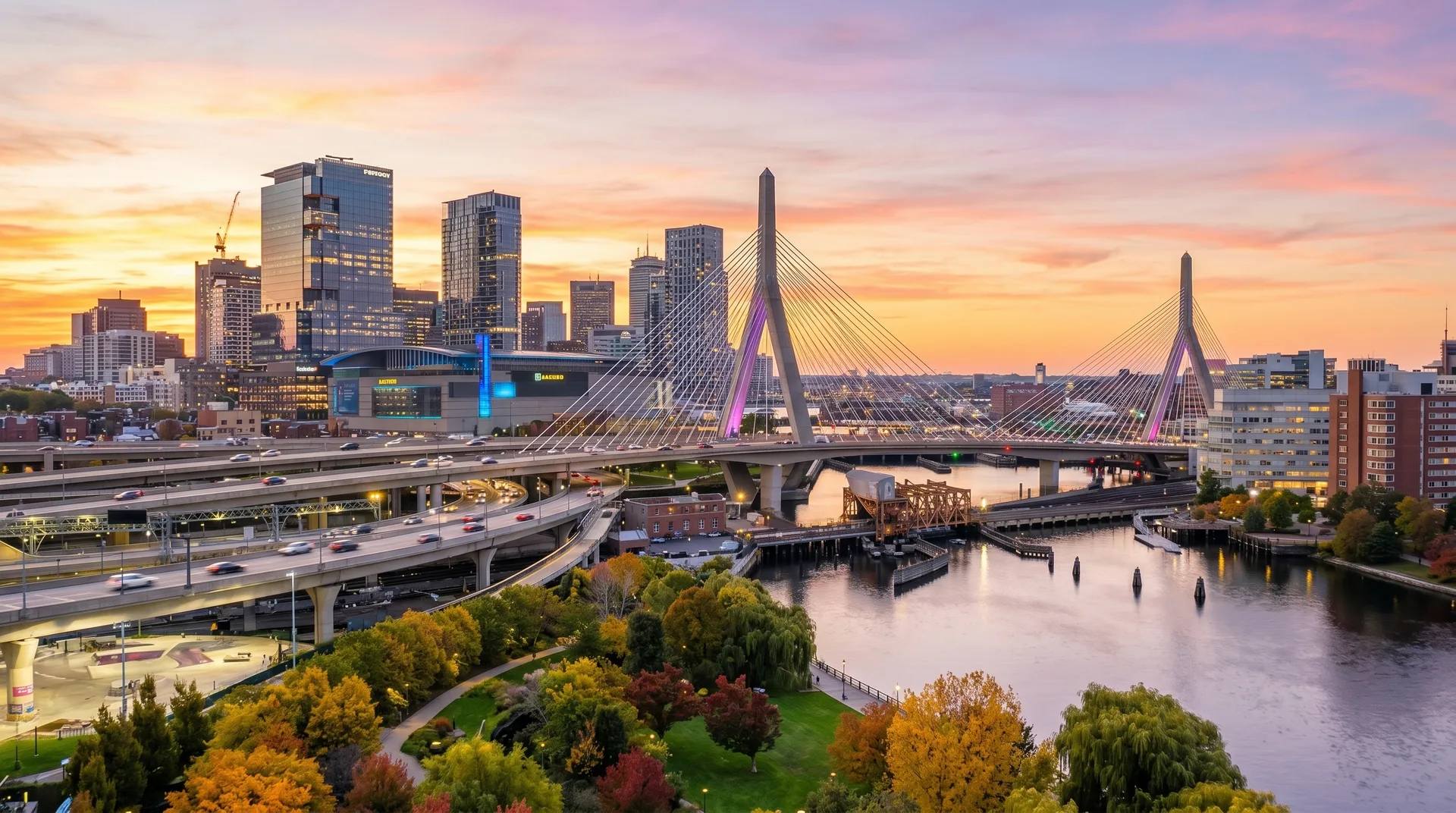
Boston
Boston stands as a major logistics hub on the East Coast, strategically positioned in the northeastern United States with access to both domestic markets and international trade routes through the Port of Boston. The city serves as a center for advanced industries including biotechnology, medical research, higher education, financial services, and technology. Boston's economy is characterized by high-value manufacturing, particularly in the medical and electronics sectors, making it a key origin point for specialized and sensitive cargo.
The transportation infrastructure supporting Boston includes Logan International Airport, the Port of Boston for maritime freight, and an extensive network of highways including I-90 (Massachusetts Turnpike) and I-93. The city's proximity to other major Northeast markets like New York and Philadelphia enhances its strategic importance in regional logistics. Boston's concentration of research institutions and innovative companies creates consistent demand for reliable FTL transportation services to connect with markets throughout the East Coast and beyond.
 Destination
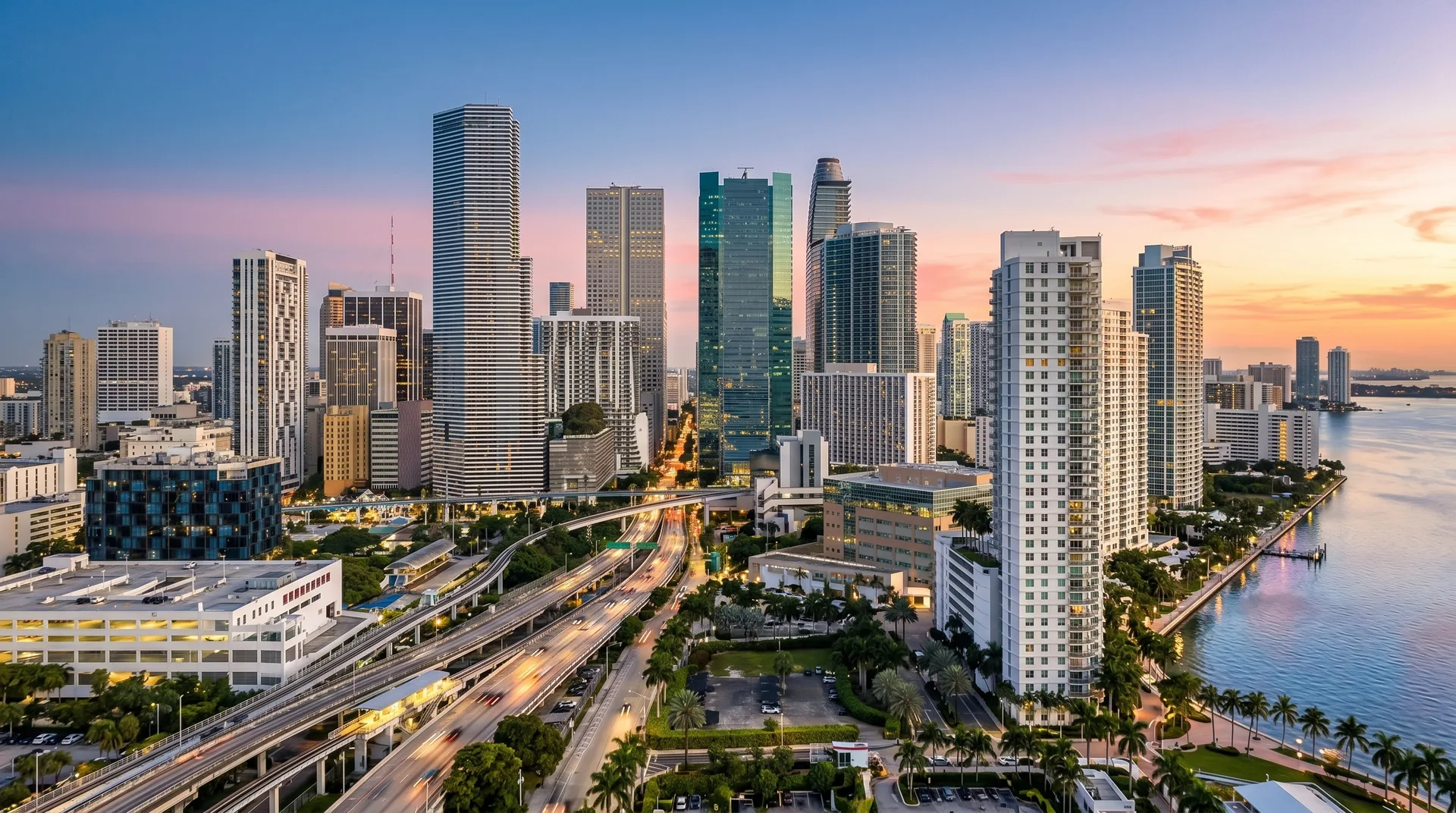
Miami
Miami serves as a critical logistics gateway for both domestic and international trade, strategically positioned at the southeastern tip of Florida. The city is renowned for its role as the primary entry point for Latin American trade, with the Port of Miami and Miami International Airport handling significant volumes of cargo from the Caribbean and South America. Miami's economy is diverse, encompassing international trade, tourism, agriculture (particularly fresh produce), pharmaceuticals, and electronics, creating substantial demand for efficient freight transportation services.
The transportation infrastructure in Miami is exceptionally well-developed, featuring the Port of Miami (known as the "Cargo Gateway of the Americas"), Miami International Airport (one of the busiest for international freight in the United States), and major highway connections including I-95, I-75, and the Florida Turnpike. The city's location makes it an ideal consolidation point for goods destined throughout Florida, the Southeast, and beyond. Miami's role as a distribution hub for perishable goods, particularly fresh produce and seafood, creates specific requirements for refrigerated transportation and time-sensitive deliveries that are well-served by dedicated FTL services.










