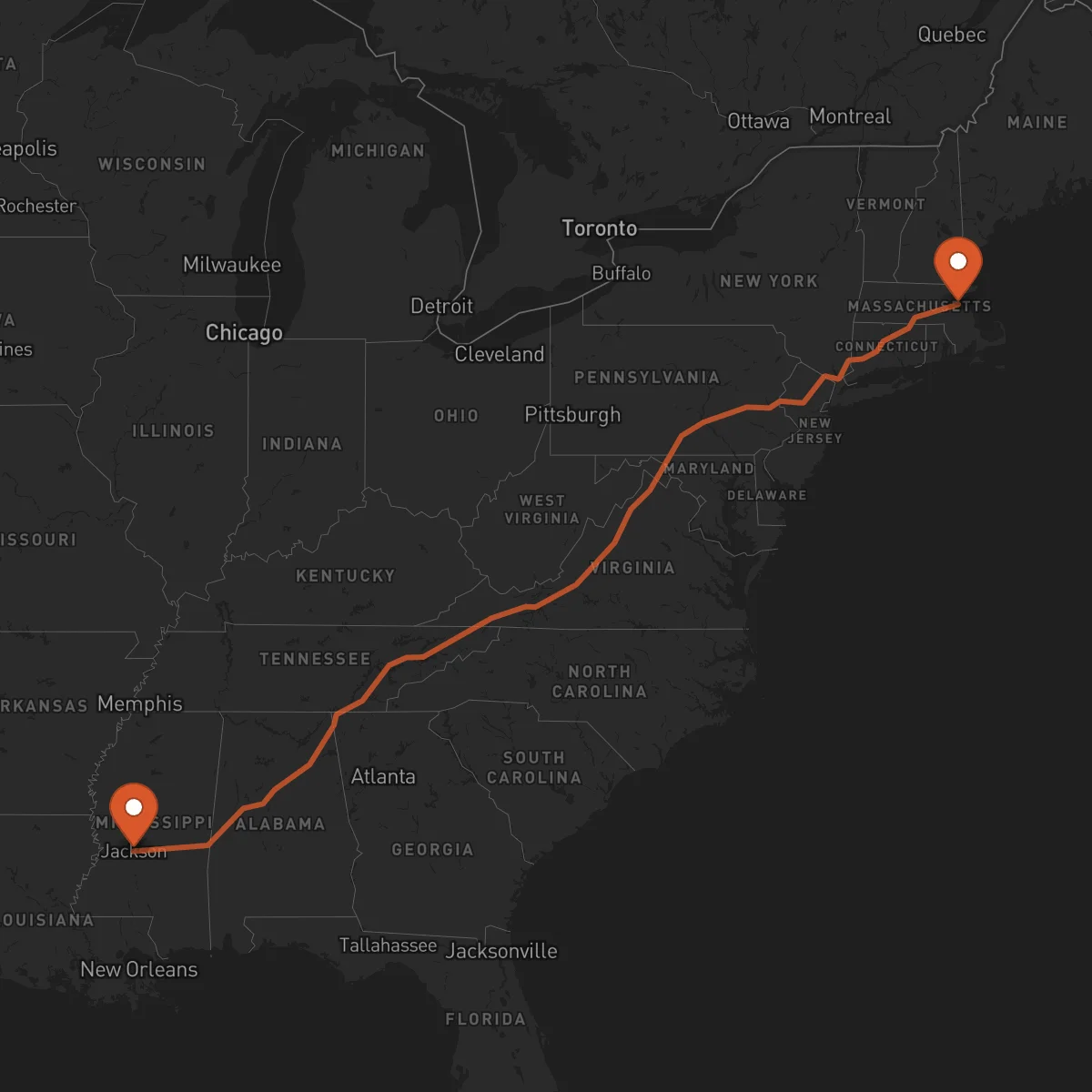
Boston to Jackson
Jackson → BostonFTL freight transportation service between Boston and Jackson. Reliable logistics solutions for your business.
Route Description
Everything you need to know about the corridor Boston - Jackson
The Boston to Jackson corridor represents a critical freight transportation route connecting the Northeast's economic powerhouse with the growing logistics hub of the Southeastern United States. This 2,020-kilometer domestic corridor traverses diverse terrain and crosses multiple state lines, requiring specialized knowledge of regional regulations and infrastructure. The route serves as a vital link between Boston's sophisticated manufacturing and technology sectors and Jackson's expanding industrial base, creating essential supply chain connections for businesses operating across these distinct economic regions.
The corridor passes through major metropolitan areas including New York, Philadelphia, Washington D.C., Atlanta, and Birmingham, offering numerous transloading and distribution opportunities. Key transportation infrastructure includes Interstate 95 South to Interstate 85 South, connecting to Interstate 20 West toward Jackson. This route provides access to major ports, rail terminals, and distribution centers that facilitate efficient freight movement between the Northeast and Southeast.
Control Terrestre specializes in full truckload (FTL) transportation along this corridor, leveraging our network of certified carriers and strategic partnerships to ensure reliable, timely delivery. Our expertise in cross-state regulations, permit requirements, and route optimization allows us to navigate this complex corridor efficiently. We provide dedicated equipment options including dry vans, refrigerated units, and specialized trailers to meet diverse cargo requirements, ensuring your freight moves seamlessly from origin to destination.
Services for this Route
Available services for the corridor Boston - Jackson
 Origin
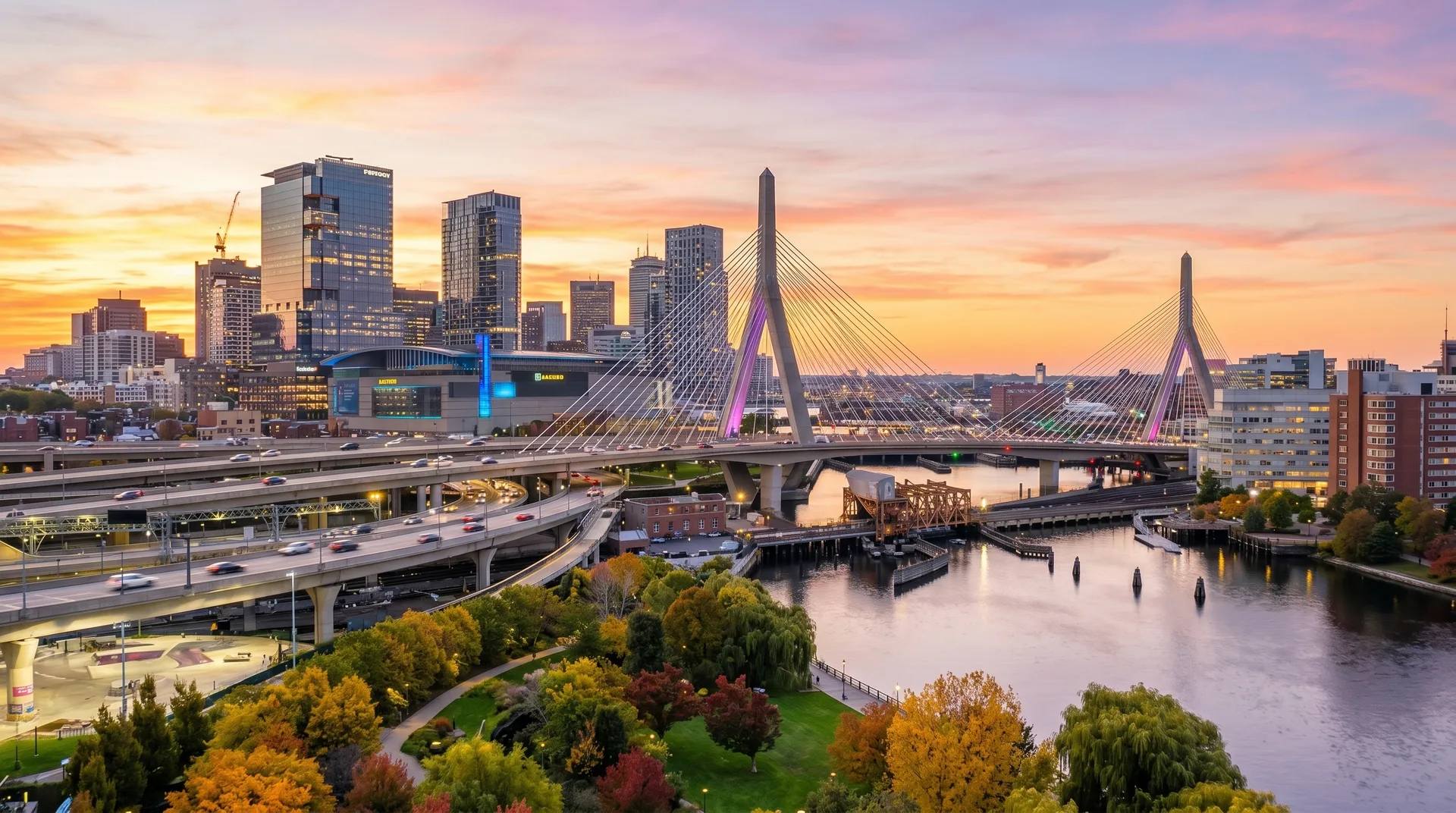
Boston
Boston, Massachusetts serves as a strategic logistics hub on the East Coast, offering unparalleled access to major Northeast markets and international trade routes. The city's Logan International Airport and Port of Boston provide multimodal transportation options, while its central location in the Northeast corridor connects to major highways including I-90, I-93, and I-95. Boston's sophisticated infrastructure supports efficient freight movement to both coastal and inland destinations, making it an ideal origin point for nationwide distribution.
The Boston metropolitan area is home to advanced manufacturing, biotechnology, medical devices, and technology sectors that generate significant freight volume. Major employers include pharmaceutical companies, research institutions, and high-tech manufacturers requiring specialized transportation services. The region's strong educational institutions and innovation ecosystem create consistent demand for reliable freight transportation to support research, development, and commercial operations across the United States.
 Destination
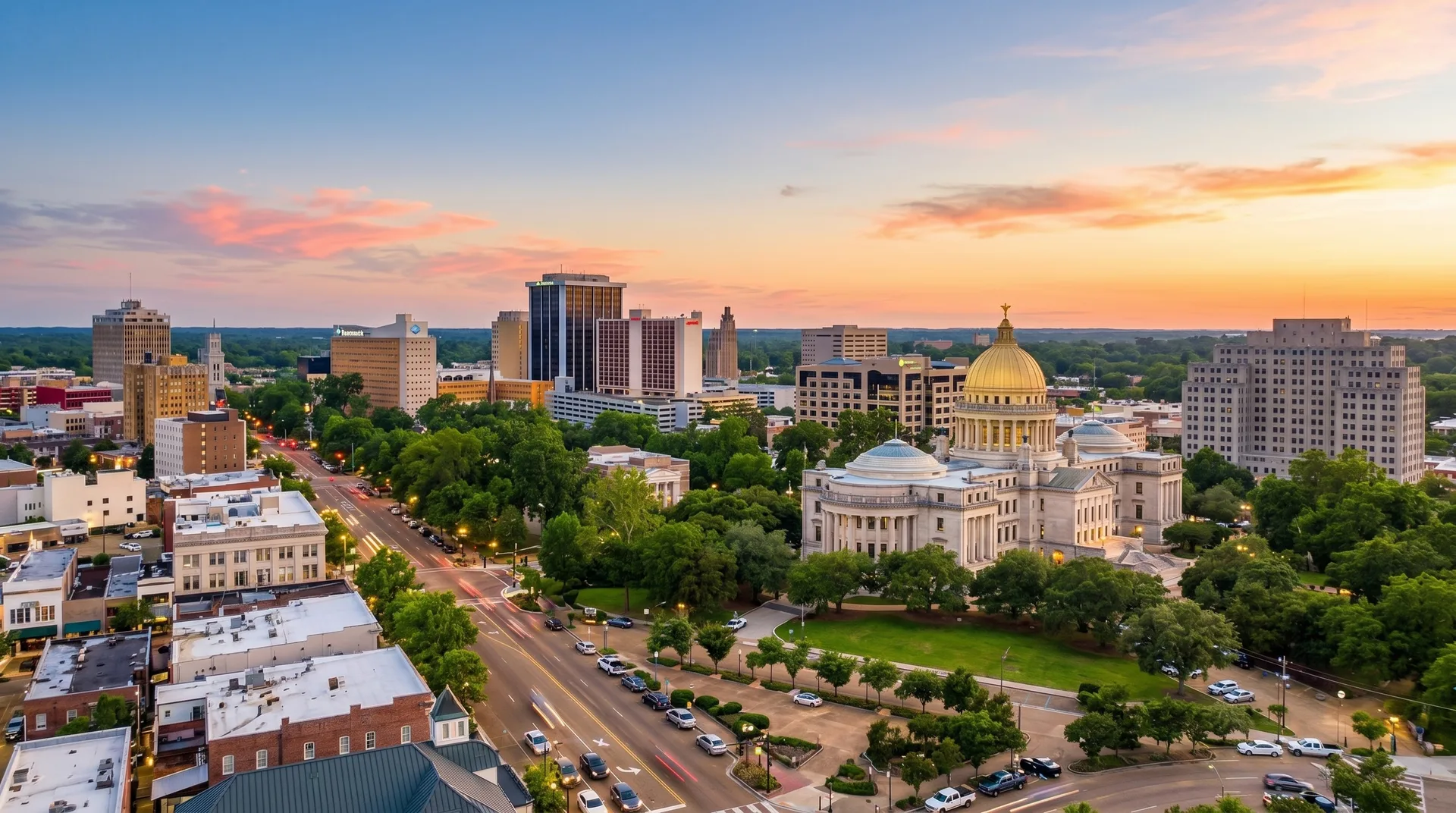
Jackson
Jackson, Mississippi represents a strategic logistics center in the Southeastern United States, offering excellent connectivity to major Southern markets and distribution networks. The city's location at the intersection of I-20 and I-55 provides direct access to regional transportation corridors, while Jackson-Medgar Wiley Evers International Airport and nearby Gulf Coast ports expand multimodal capabilities. Jackson's central location makes it an ideal distribution point for freight moving throughout the Southeast and beyond.
The Jackson metropolitan area features diverse economic sectors including automotive manufacturing, aerospace, food processing, and logistics services. Major employers in the region include Nissan's manufacturing facility, Continental Tire, and numerous food processing plants that generate consistent freight volume. The city's growing industrial base and strategic location make it an increasingly important destination for freight transportation, particularly for companies seeking to establish distribution networks in the Southeastern United States.










