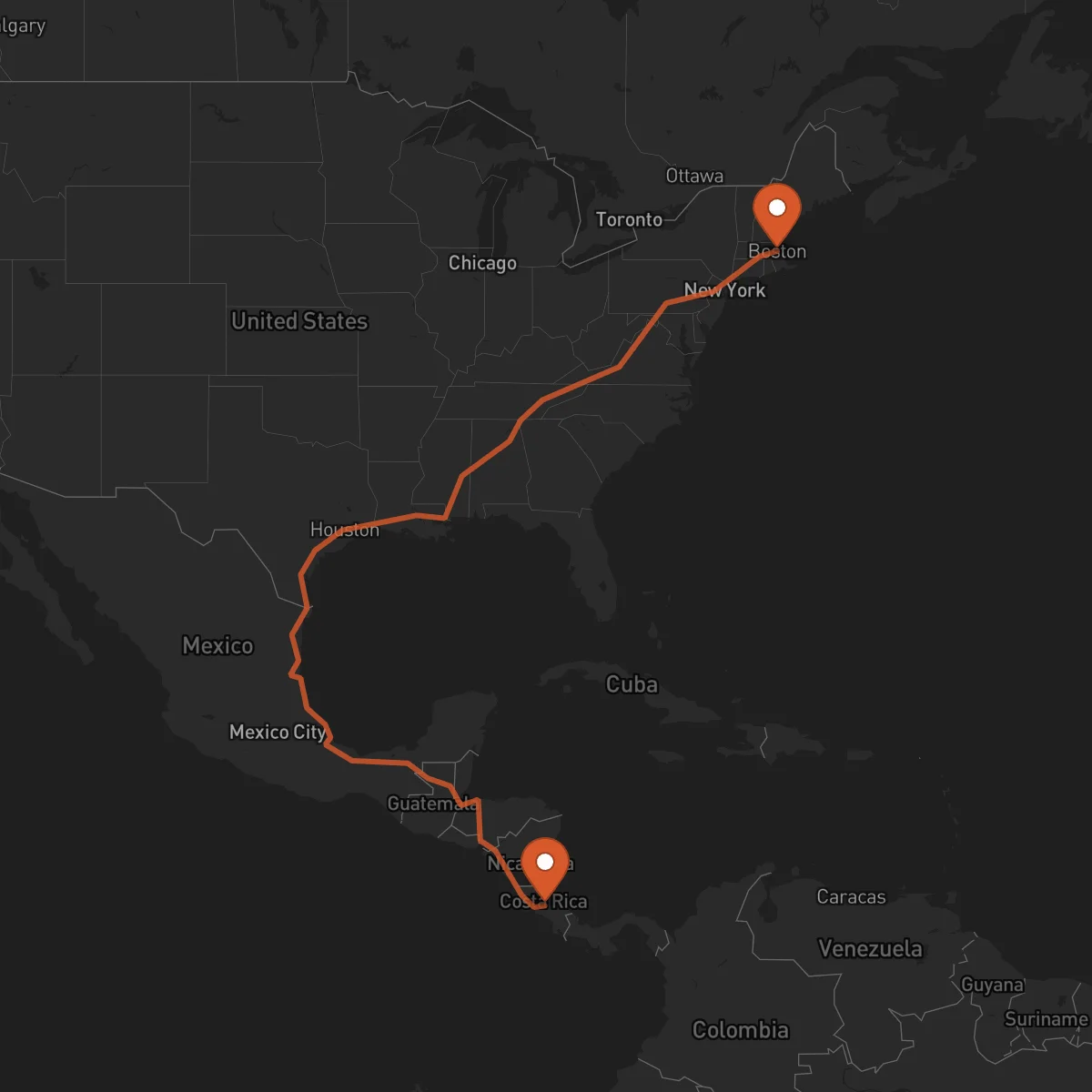
Boston to Heredia
Heredia → BostonFTL freight transportation service between Boston and Heredia. Reliable logistics solutions for your business.
Route Description
Everything you need to know about the corridor Boston - Heredia
The Boston to Heredia logistics corridor represents a vital connection between the northeastern United States and Central America, spanning approximately 3,816 kilometers. This cross-border route facilitates the movement of goods between two dynamic economic regions, connecting Massachusetts' industrial hub with Costa Rica's growing manufacturing and technology sectors. The corridor traverses multiple countries and requires seamless coordination across different transportation networks and customs jurisdictions.
The route primarily utilizes major interstate highways in the United States, including I-95 South and I-10 West, transitioning through Mexico's comprehensive road network before entering Central America via established border crossings. Key transportation infrastructure includes modern highways, intermodal facilities, and strategic border points that enable efficient cargo movement. The corridor serves as a critical link for companies engaged in North American and Central American trade, supporting just-in-time manufacturing and supply chain operations.
Control Terrestre specializes in managing the complexities of this extensive cross-border route, providing dedicated full truckload services that ensure cargo moves efficiently from origin to destination. Our experienced team navigates the regulatory requirements, documentation needs, and logistical challenges inherent in international freight transportation. We maintain strong relationships with customs authorities and transportation partners throughout the corridor, enabling us to provide reliable, end-to-end logistics solutions for businesses operating between Boston and Heredia.
Services for this Route
Available services for the corridor Boston - Heredia
 Origin
Boston
Boston serves as a strategic logistics hub in the northeastern United States, positioned along the Atlantic coast with excellent access to major transportation networks. The city's Logan International Airport and Port of Boston provide multimodal freight capabilities, while extensive highway connections including I-90 and I-93 facilitate efficient ground transportation. Boston's location within the Boston-Worcester-Providence Combined Statistical Area creates a dense economic zone with significant manufacturing, technology, and healthcare industries that generate substantial freight volumes.
The region's advanced infrastructure includes modern warehousing facilities, distribution centers, and intermodal yards that support complex supply chain operations. Boston's proximity to other major northeastern markets like New York, Philadelphia, and Washington D.C. enhances its role as a freight consolidation point. The area's diverse economy, encompassing biotechnology, higher education, financial services, and advanced manufacturing, creates consistent demand for reliable transportation services to international destinations including Central America.
 Destination
Heredia
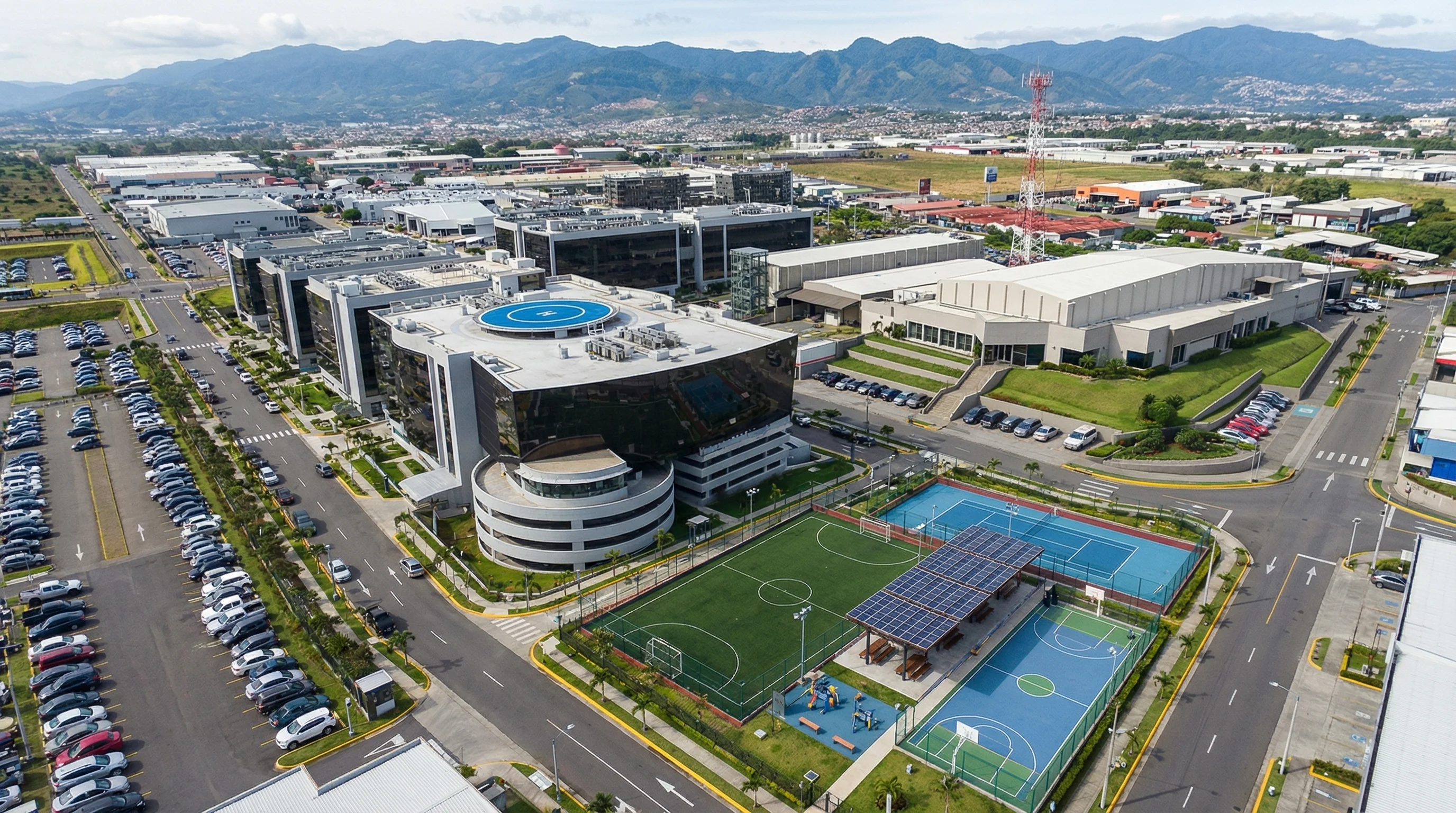
Heredia, located in the heart of Costa Rica's Central Valley, represents a strategic logistics point for Central American trade and manufacturing. The city's proximity to Juan Santamaría International Airport and major highways connecting to the Pacific and Atlantic coasts provides excellent multimodal transportation options. Heredia's location within Costa Rica's most industrialized region, combined with its educated workforce and business-friendly environment, has attracted significant foreign investment in technology, medical devices, and electronics manufacturing.
The area benefits from Costa Rica's investment in transportation infrastructure, including the modernization of the Inter-American Highway and development of industrial parks with integrated logistics services. Heredia's position relative to San José, the capital city, and other Central Valley urban centers creates an efficient distribution network for both domestic and international markets. The region's growing export-oriented economy generates consistent demand for cross-border freight services connecting to North American markets.










