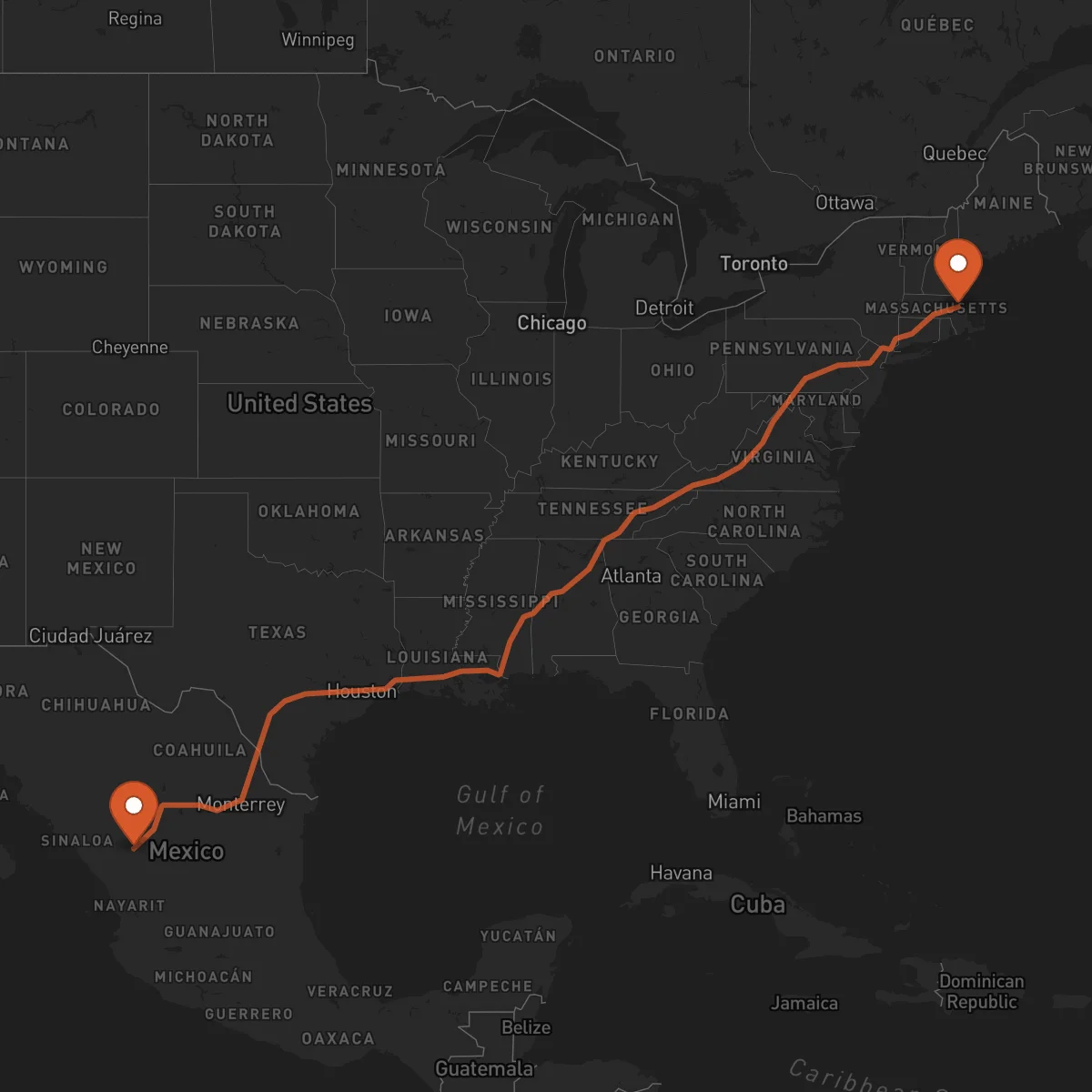
Boston to Durango
Durango → BostonFTL freight transportation service between Boston and Durango. Reliable logistics solutions for your business.
Route Description
Everything you need to know about the corridor Boston - Durango
The Boston-Durango logistics corridor represents a vital connection between the industrial Northeast of the United States and the growing manufacturing hub of northern Mexico. This 3,695 km cross-border route facilitates the movement of goods between two major economic regions, supporting the supply chains of companies operating in both countries. The corridor passes through key industrial and commercial zones, connecting the Boston metropolitan area with the city of Durango and its surrounding industrial parks.
The economic significance of this corridor lies in its ability to transport specialized cargo between the advanced manufacturing and technology sectors of Massachusetts and the automotive, mining, and aerospace industries of Durango. Companies in Boston's life sciences, medical devices, and precision manufacturing sectors rely on this route to export high-value equipment and components to their manufacturing partners in Mexico. Meanwhile, Durango's industrial base, which includes companies like Volkswagen's manufacturing plant and various mining operations, depends on this corridor for importing specialized machinery, tools, and raw materials from the United States.
The transportation infrastructure along this route includes major interstate highways such as I-90, I-80, and I-35, connecting through strategic border crossings like Laredo/Nuevo Laredo or El Paso/Juárez. Control Terrestre facilitates seamless operations on this corridor by providing dedicated full truckload services, managing customs documentation, and ensuring compliance with cross-border regulations. Our C-TPAT certified carriers and experienced logistics team handle the complexities of international shipping, providing reliable transportation solutions that keep your supply chain moving efficiently between Boston and Durango.
Services for this Route
Available services for the corridor Boston - Durango
 Origin
Boston
Boston, Massachusetts serves as a strategic logistics hub on the East Coast, with its location providing access to major ports, airports, and an extensive highway network. The city's Logan International Airport and the Port of Boston facilitate international trade connections, while I-90 and I-95 provide direct access to the national highway system. Boston's robust infrastructure supports the efficient movement of goods to and from the region, making it an ideal origin point for cross-border shipments to Mexico.
The Boston area is home to a diverse industrial base, with particular strengths in life sciences, medical devices, biotechnology, and advanced manufacturing. The region hosts numerous research institutions and universities that drive innovation in these sectors, creating a demand for specialized equipment and components. Additionally, Boston's technology and electronics industries require reliable transportation solutions to move high-value, sensitive cargo to manufacturing partners and customers across North America.
 Destination
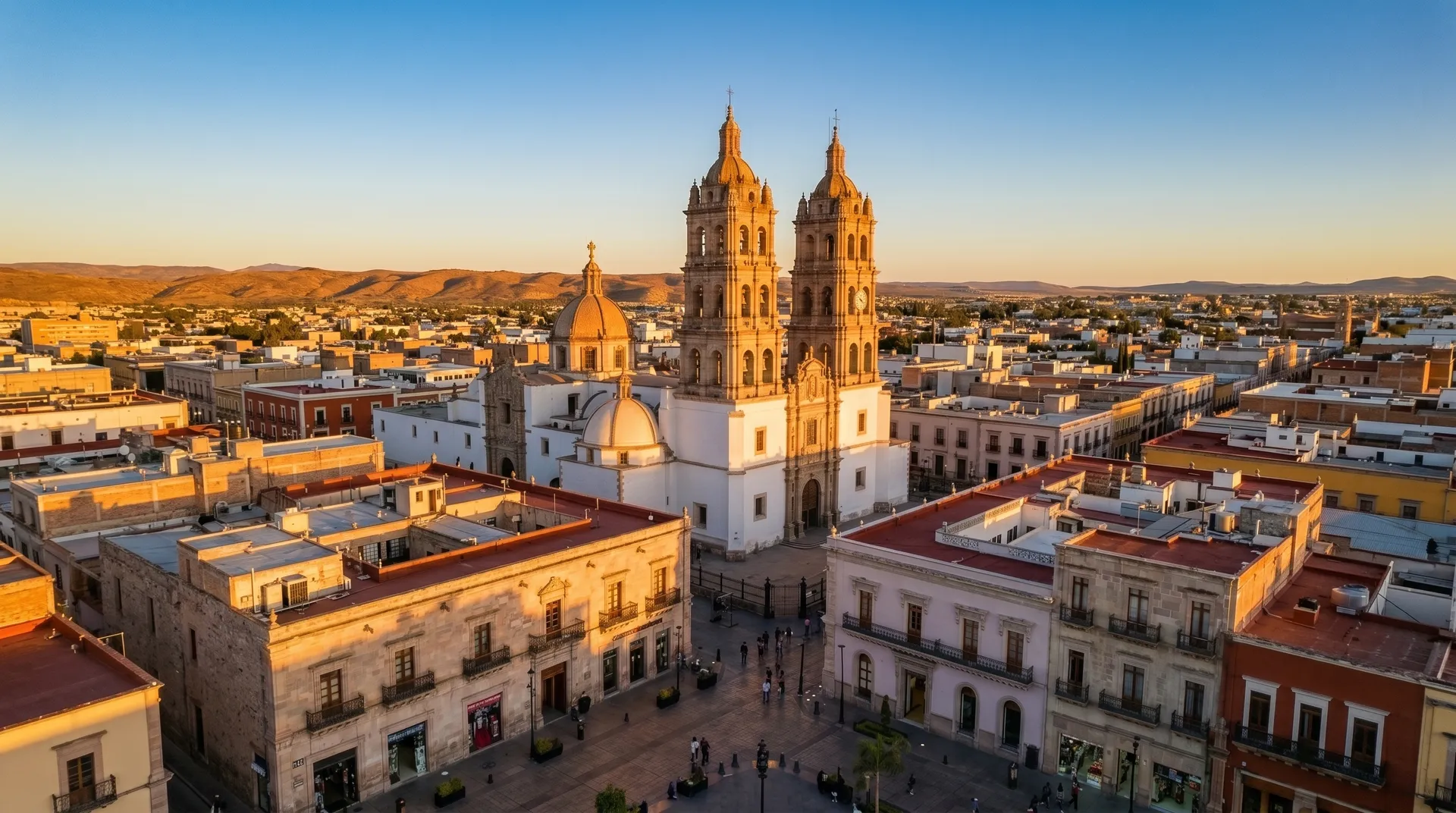
Durango, located in northern Mexico, has established itself as an important industrial center with strategic access to major transportation routes. The city's location provides connections to the national highway system and proximity to other industrial hubs in northern Mexico. Durango's infrastructure includes industrial parks with modern facilities designed to accommodate manufacturing and distribution operations, supporting the efficient movement of goods throughout the region.
The city's main industries include automotive manufacturing, mining, aerospace, and electronics. Volkswagen's manufacturing plant is a significant employer and economic driver in the region, while the mining sector requires specialized equipment and materials for operations. Durango's growing aerospace industry and electronics manufacturing base create demand for high-tech components and machinery from suppliers in the United States, making cross-border transportation essential for these industries' supply chains.










