Boston to Cancún
Cancún → BostonFTL freight transportation service between Boston and Cancún. Reliable logistics solutions for your business.
Route Description
Everything you need to know about the corridor Boston - Cancún
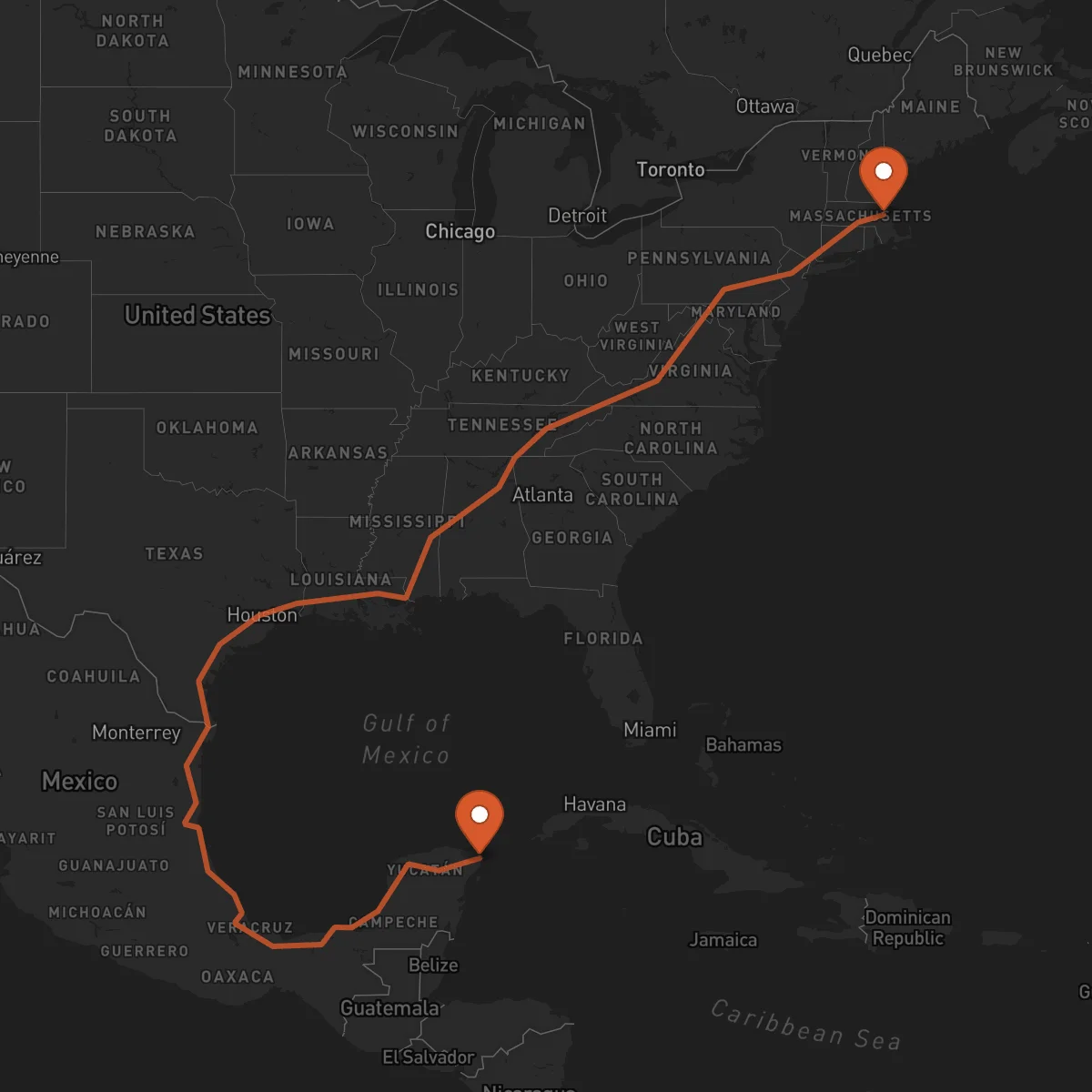
The Boston to Cancún logistics corridor represents a strategic connection between the northeastern United States and Mexico's Caribbean coast. This route spans approximately 2,779 kilometers and serves as a vital link for trade between these two important economic regions. The corridor facilitates the movement of goods between Boston's industrial and technological hub and Cancún's growing manufacturing and tourism sectors, creating opportunities for businesses to optimize their supply chains across North America.
This cross-border route connects two distinct economic ecosystems. Boston, with its strong presence in biotechnology, medical devices, and advanced manufacturing, requires efficient logistics solutions to reach growing markets in Mexico. Meanwhile, Cancún has evolved beyond its tourism roots to become an emerging industrial center, particularly in aerospace, automotive components, and electronics manufacturing. The corridor supports this economic integration by providing reliable transportation for both raw materials and finished products.
Transportation along this route relies primarily on major highway networks, including I-95 South through the eastern United States, connecting to I-10 and Mexican Federal Highways. Key border crossings such as Laredo or El Paso provide entry points into Mexico, where cargo continues south through Monterrey and Veracruz before reaching the Yucatán Peninsula. Control Terrestre facilitates seamless operations across this entire journey, managing cross-border documentation, customs clearance, and the coordination of specialized equipment to ensure cargo moves efficiently from origin to destination.
Services for this Route
Available services for the corridor Boston - Cancún
 Origin
Boston
Boston serves as a strategic logistics hub in the northeastern United States, offering access to major ports, international airports, and an extensive highway network. The city's location provides excellent connectivity to other major East Coast markets and serves as a gateway for international trade. Boston's robust infrastructure includes the Port of Boston, Logan International Airport, and direct access to I-90 and I-95, facilitating efficient distribution throughout the region and beyond.
 Destination
Cancún
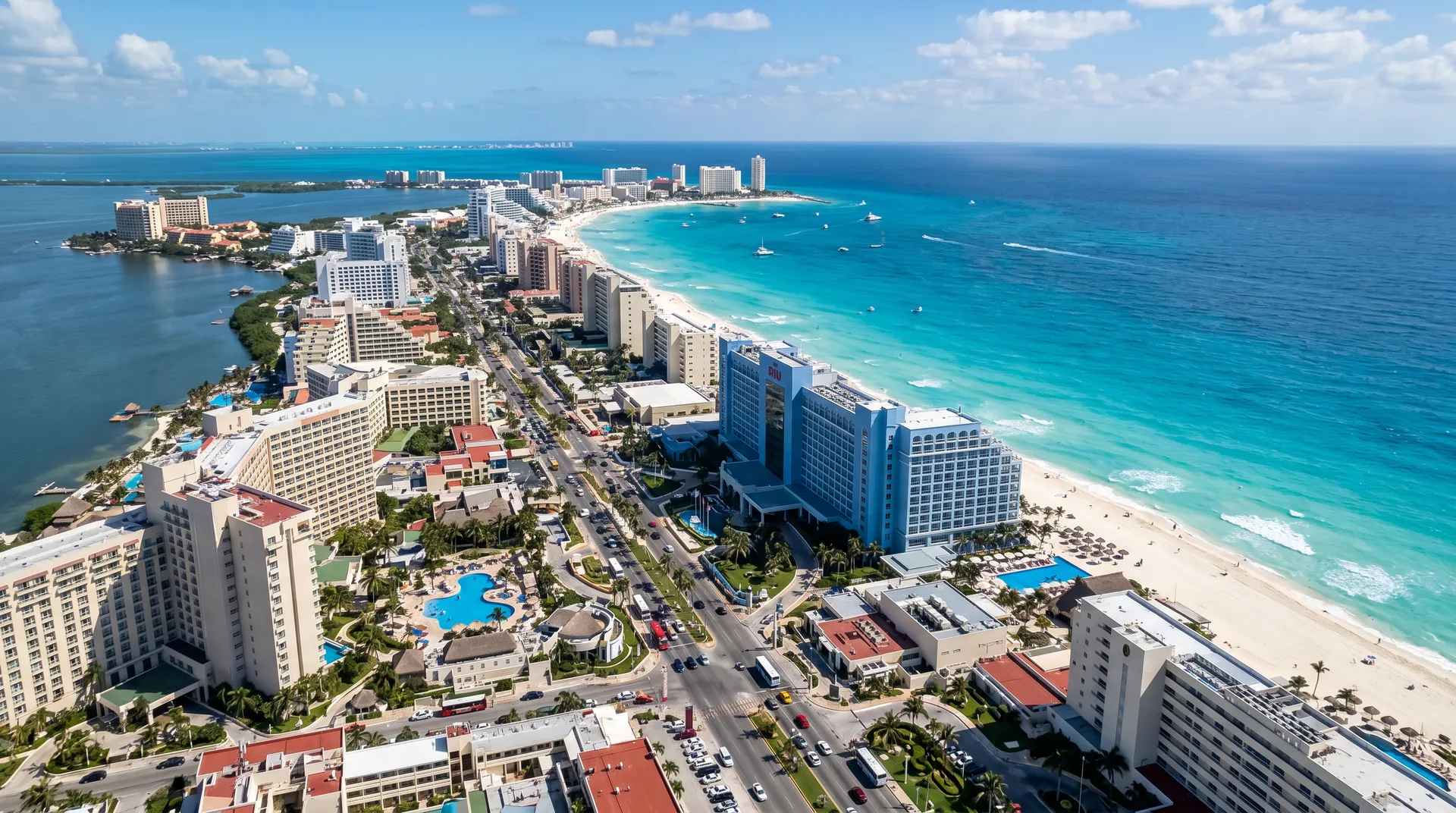
Cancún has emerged as a strategic logistics center in Mexico's Caribbean region, offering modern port facilities and proximity to growing industrial parks. The city's infrastructure includes the Puerto de Abrigo, Cancun International Airport, and access to Federal Highway 180D, connecting it to other major Mexican cities. Cancún's strategic location makes it an ideal distribution point for reaching both domestic markets and Central American destinations, supported by its developing industrial base in aerospace, automotive, and electronics sectors.










