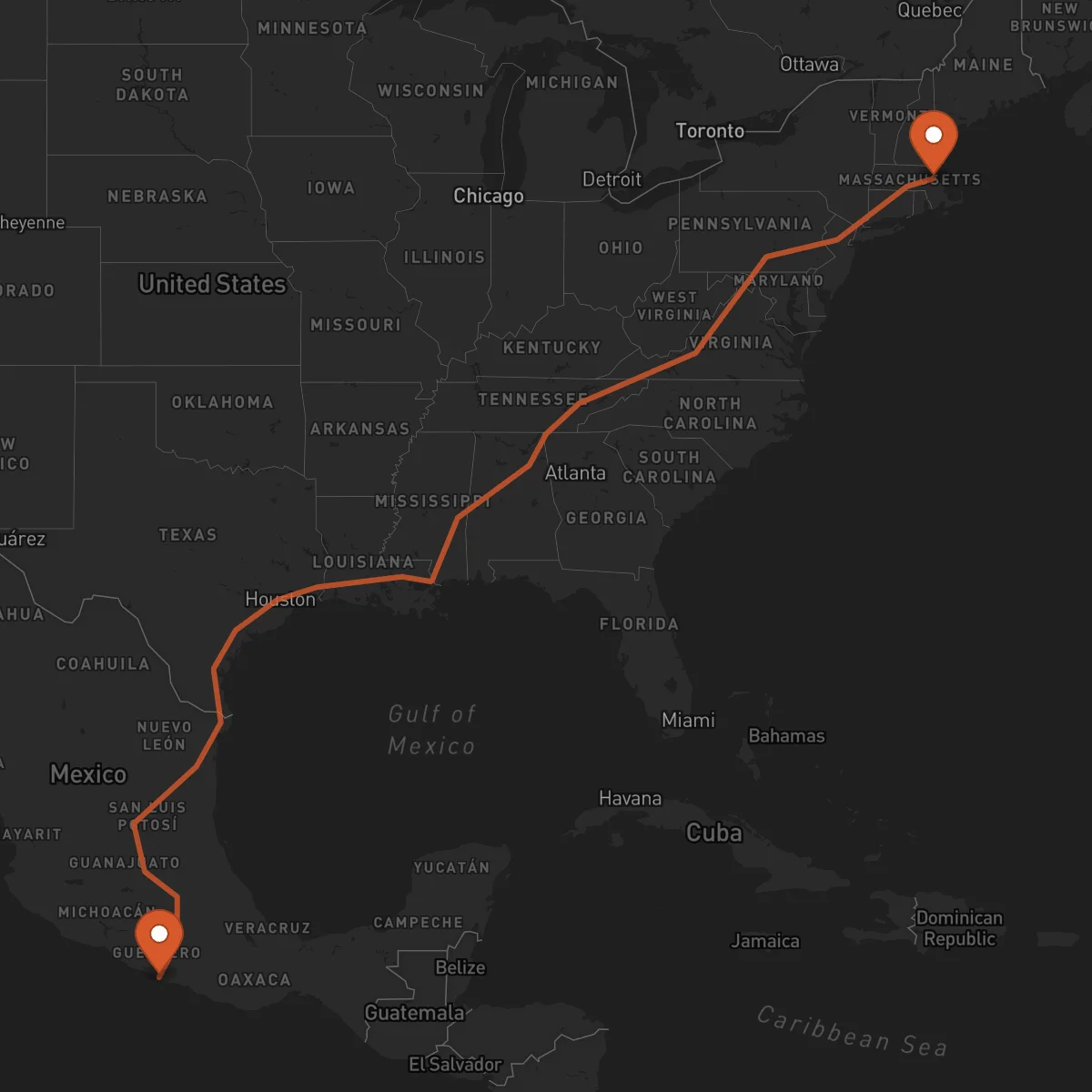
Boston to Acapulco
Acapulco → BostonFTL freight transportation service between Boston and Acapulco. Reliable logistics solutions for your business.
Route Description
Everything you need to know about the corridor Boston - Acapulco
The Boston to Acapulco corridor represents a vital cross-border logistics route connecting the industrial Northeast of the United States with Mexico's Pacific coast. This 3,937 km corridor facilitates the movement of goods between major manufacturing centers and international ports, serving as a crucial link in North American supply chains. The route traverses diverse geographic and economic regions, requiring specialized expertise in cross-border operations and compliance with both US and Mexican transportation regulations.
The corridor serves a wide range of industries, including automotive, electronics, consumer goods, and agricultural products. Boston's position as a major seaport and industrial hub complements Acapulco's role as a growing commercial center and tourist destination. This creates a dynamic trade flow where both import and export activities generate consistent freight volumes throughout the year. The route particularly benefits from Boston's access to international shipping lanes and Acapulco's developing manufacturing sector.
Key transportation infrastructure includes major interstate highways in the US (I-95, I-40) connecting to Mexico's Federal Highway 95D. The corridor requires careful coordination of cross-border operations, with primary considerations including customs clearance procedures, documentation requirements, and compliance with C-TPAT and other security programs. Control Terrestre's extensive experience in cross-border logistics ensures seamless operations, providing dedicated FTL services that maintain cargo integrity and optimize transit times across this extensive route.
Services for this Route
Available services for the corridor Boston - Acapulco
 Origin
Boston
Boston serves as a strategic logistics hub on the East Coast of the United States, combining seaport access with robust inland transportation networks. The city's Logan International Airport and Port of Boston facilitate multimodal freight operations, while extensive highway connections (I-90, I-93, I-95) provide direct access to major manufacturing centers across the Northeast. Boston's economy is driven by technology, healthcare, education, and advanced manufacturing sectors, creating consistent demand for freight transportation services.
The region benefits from a well-developed transportation infrastructure including rail connections through CSX and Pan Am Railways, extensive warehousing facilities, and a skilled logistics workforce. Boston's proximity to major consumer markets in the Northeast corridor, combined with its access to international trade routes, makes it an ideal origin point for cross-border freight operations to Mexico and beyond.
 Destination
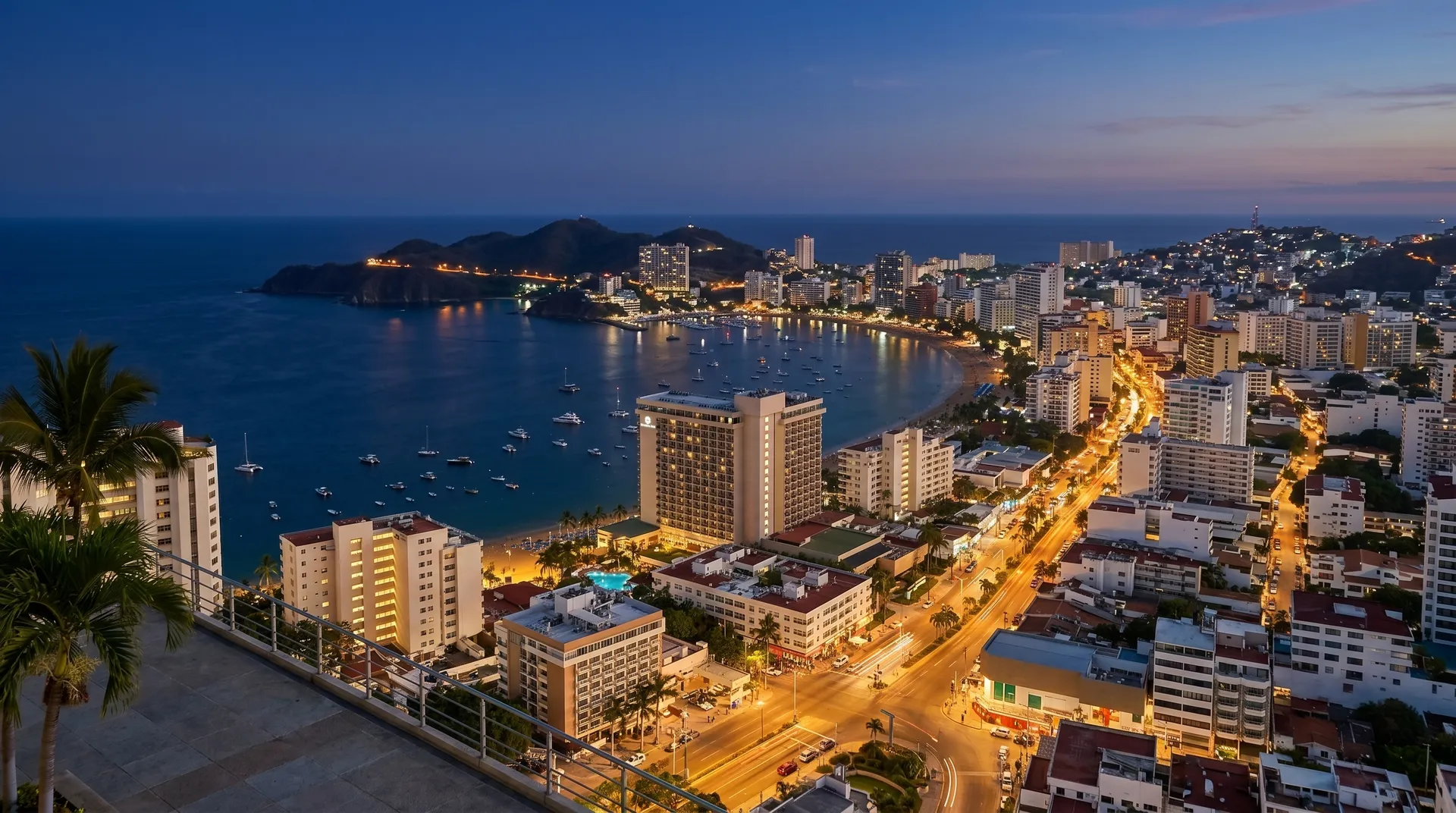
Acapulco's strategic location on Mexico's Pacific coast positions it as an emerging logistics center with growing importance in international trade. The city's port facilities, combined with its connection to Mexico's Federal Highway network, provide efficient access to both coastal shipping and inland distribution channels. Acapulco's economy is diversifying beyond tourism to include manufacturing, electronics assembly, and agricultural exports, creating increasing demand for reliable freight transportation services.
The region benefits from improving transportation infrastructure, including highway connections to Mexico City and other major industrial centers. Acapulco's proximity to growing manufacturing hubs in Guerrero and neighboring states, combined with its access to Pacific trade routes, makes it a strategic destination for cross-border freight operations. The city's developing industrial parks and logistics zones continue to attract investment, further enhancing its role in regional supply chains.










