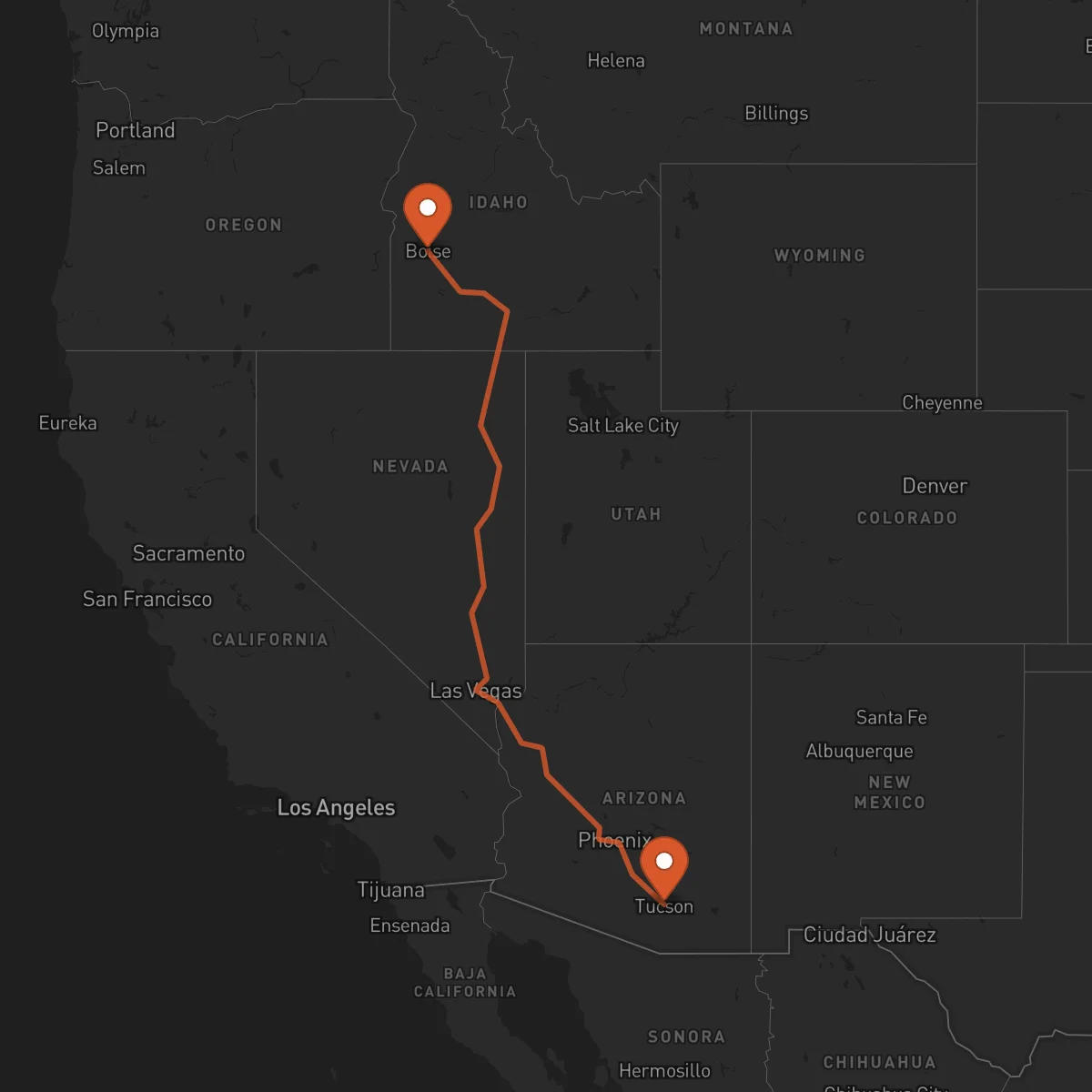
Boise to Tucson
Tucson → BoiseFTL freight transportation service between Boise and Tucson. Reliable logistics solutions for your business.
Route Description
Everything you need to know about the corridor Boise - Tucson
The Boise to Tucson corridor represents a vital logistics link connecting the Pacific Northwest with the Southwest United States. This 1343 km route traverses diverse landscapes and connects major economic hubs, facilitating the movement of goods between Idaho's capital and Arizona's second-largest city. The corridor serves as a critical artery for commerce, enabling businesses to transport goods efficiently across state lines and supporting regional economic integration.
The route primarily follows Interstate 84 West and Interstate 10 East, passing through key cities like Salt Lake City and Phoenix. This infrastructure provides reliable transportation options year-round, with modern highways designed to handle heavy freight loads. The corridor's strategic importance is underscored by its role in connecting agricultural regions of Idaho with the growing markets of Arizona and beyond.
Control Terrestre specializes in full truckload (FTL) transportation along this corridor, offering dedicated services that ensure your cargo moves directly from origin to destination without intermediate stops. Our experienced network of carriers understands the unique requirements of this route, including seasonal weather considerations and optimal scheduling to meet your supply chain needs.
Services for this Route
Available services for the corridor Boise - Tucson
 Origin
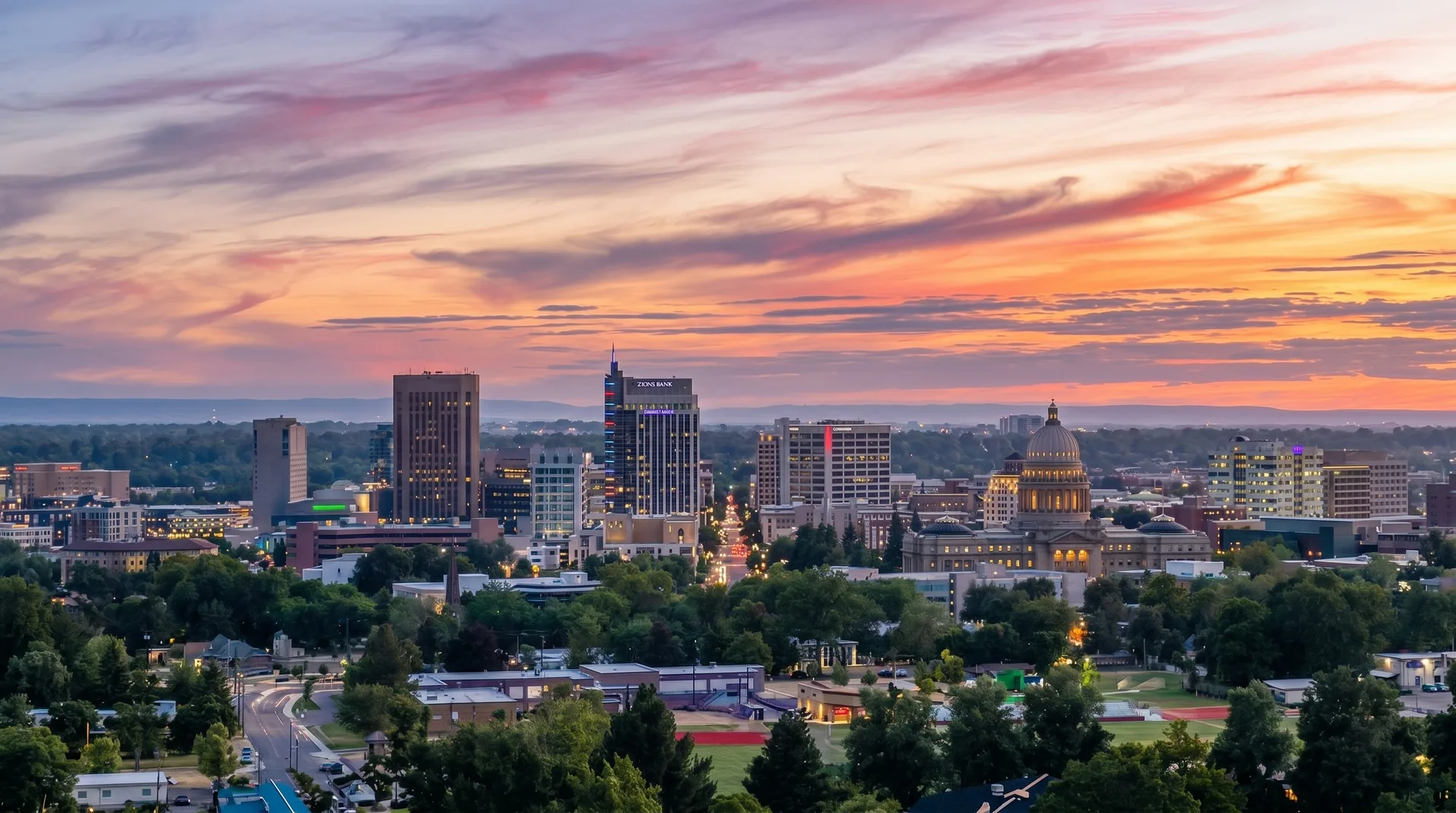
Boise
Boise, Idaho's capital and largest city, serves as a strategic logistics hub in the Pacific Northwest. Located in the Treasure Valley, Boise benefits from its position as a gateway to both Pacific ports and inland markets. The city's economy is diverse, with strong sectors in technology, agriculture, and manufacturing. Boise's proximity to major transportation routes and its growing infrastructure make it an ideal origin point for freight moving throughout the western United States.
The city is served by the Boise Airport and is connected to the national highway system via Interstate 84, providing excellent ground transportation options. Boise's industrial parks and distribution centers are equipped to handle various types of cargo, from agricultural products to manufactured goods. The region's commitment to logistics efficiency is evident in its well-maintained roads and growing intermodal facilities.
 Destination
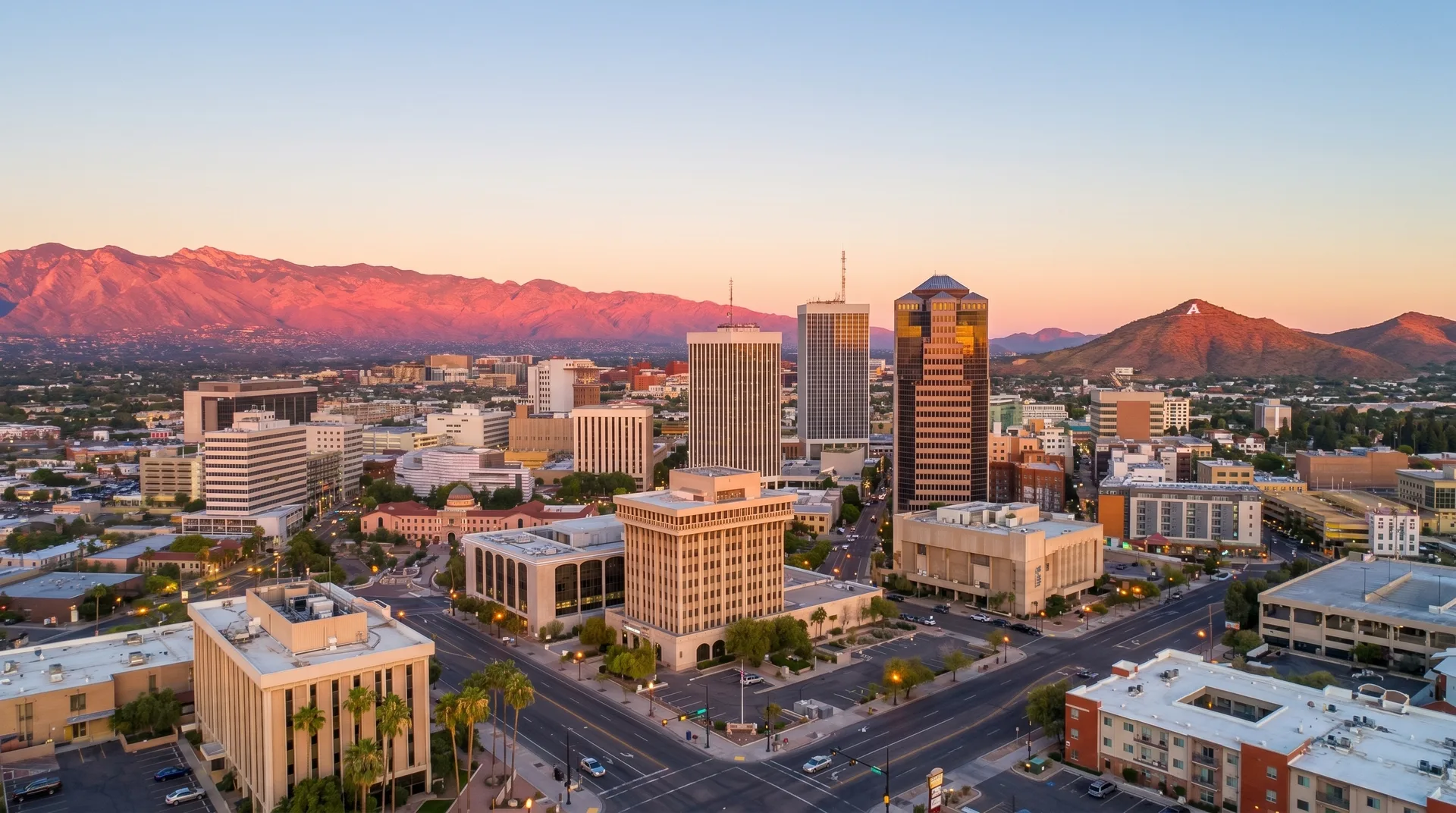
Tucson
Tucson, Arizona's second-largest city, is strategically positioned as a logistics hub for the Southwest region. Located in the Sonoran Desert, Tucson serves as a critical gateway to Mexico and the broader southwestern United States. The city's economy is anchored by aerospace and defense, technology, and tourism industries, with a growing logistics sector that supports regional distribution needs.
The Tucson International Airport and the Union Pacific Railroad provide multimodal transportation options, while Interstate 10 runs directly through the city, connecting Tucson to major markets across the country. The region's industrial infrastructure includes modern warehousing facilities and distribution centers designed to handle diverse cargo types. Tucson's proximity to the U.S.-Mexico border and its position as a logistics crossroads make it an essential destination for freight moving throughout the Southwest.










