Boise to Cancún
Cancún → BoiseFTL freight transportation service between Boise and Cancún. Reliable logistics solutions for your business.
Route Description
Everything you need to know about the corridor Boise - Cancún
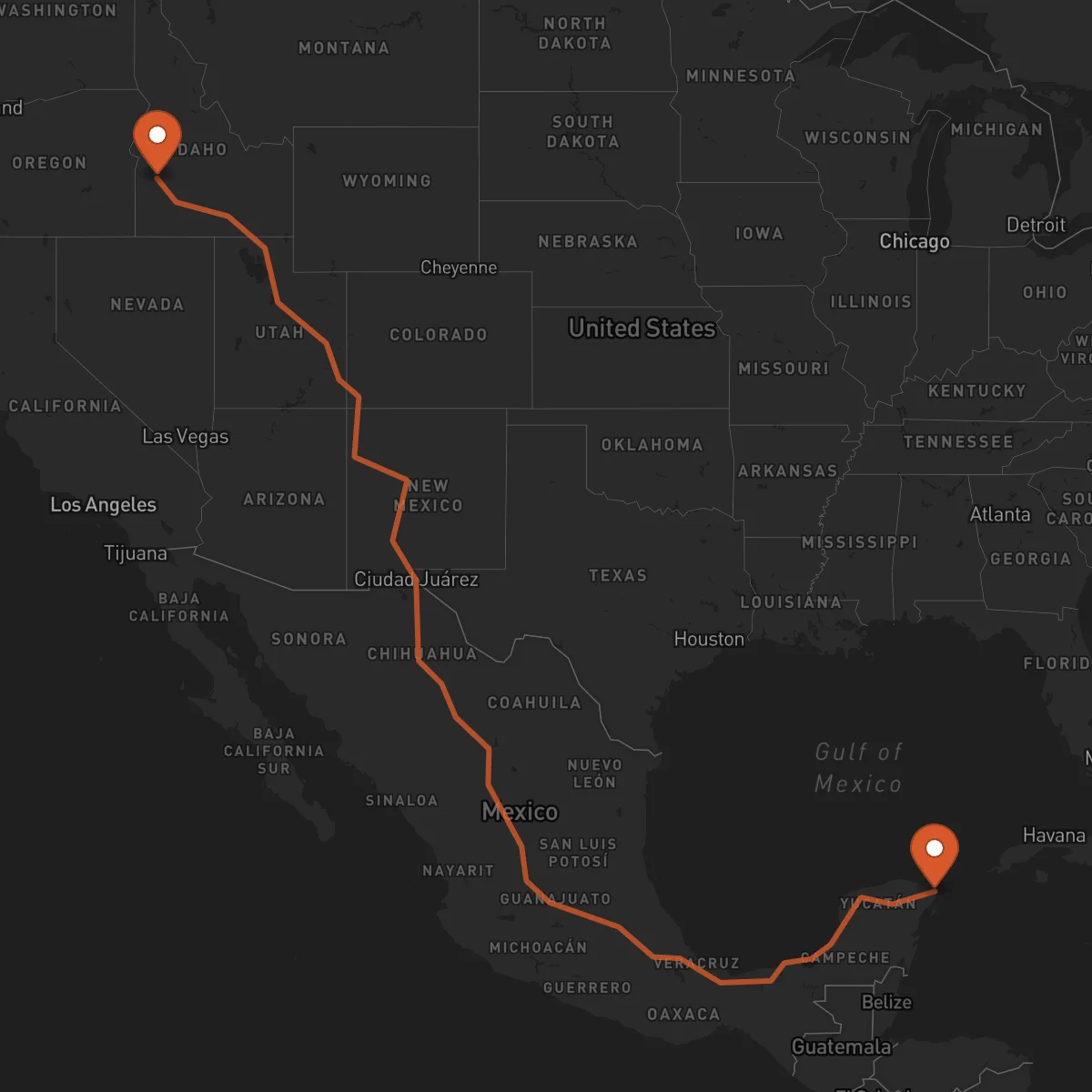
The logistics corridor between Boise, Idaho, and Cancún, Quintana Roo, represents a vital cross-border freight transportation route connecting the northwestern United States with Mexico's Caribbean coast. This 3,683 km corridor traverses diverse terrain and crosses multiple states and regions, facilitating the movement of goods between two distinct economic zones. The route primarily utilizes major interstate highways including I-84 and I-15 heading south through the western United States, connecting to Mexico's Federal Highway 95D and other key routes toward the Yucatán Peninsula.
This corridor serves critical economic functions, enabling trade between Idaho's agricultural and manufacturing sectors and Cancún's tourism-driven economy. Boise's industrial base, including food processing, technology, and agricultural products, finds markets in Cancún's growing retail, hospitality, and construction sectors. The route also supports reverse logistics, with products and materials flowing northward to support Boise's diverse economy. Control Terrestre facilitates seamless cross-border operations on this corridor, managing customs clearance, regulatory compliance, and the complexities of international freight transportation between the United States and Mexico.
The transportation infrastructure along this corridor includes well-maintained interstate highways in the United States and Mexico's modern toll roads, though shippers must navigate varying road conditions and regulatory environments. Key border crossings such as Laredo or El Paso provide entry points into Mexico, where freight continues through Monterrey and Mexico City before heading east toward the Yucatán Peninsula. Control Terrestre's expertise in cross-border logistics ensures efficient cargo movement, handling all necessary documentation, customs procedures, and coordination between different transportation authorities and providers.
Services for this Route
Available services for the corridor Boise - Cancún
 Origin
Boise
Boise, Idaho serves as a strategic logistics hub in the northwestern United States, offering excellent connectivity through multiple transportation modes. The city benefits from its location along Interstate 84, providing direct access to major markets in the Pacific Northwest and beyond. Boise's transportation infrastructure includes the Boise Airport for air freight, rail connections through Union Pacific and BNSF Railway, and an extensive network of highways supporting truck transportation. The Port of Lewiston, located approximately 100 miles away, provides access to the Columbia-Snake River System for barge transportation, extending Boise's reach to international markets via Portland, Oregon.
The Boise metropolitan area hosts a diverse industrial base that drives freight demand. Key sectors include agriculture and food processing, with Idaho's famous potato industry and dairy production requiring extensive distribution networks. The technology sector, centered around the "Boise Valley," generates significant manufacturing and distribution needs. Additionally, Boise's growing population and retail sector create consistent demand for consumer goods transportation. The city's strategic location makes it an ideal origin point for freight distribution throughout the western United States and into Mexico.
 Destination
Cancún
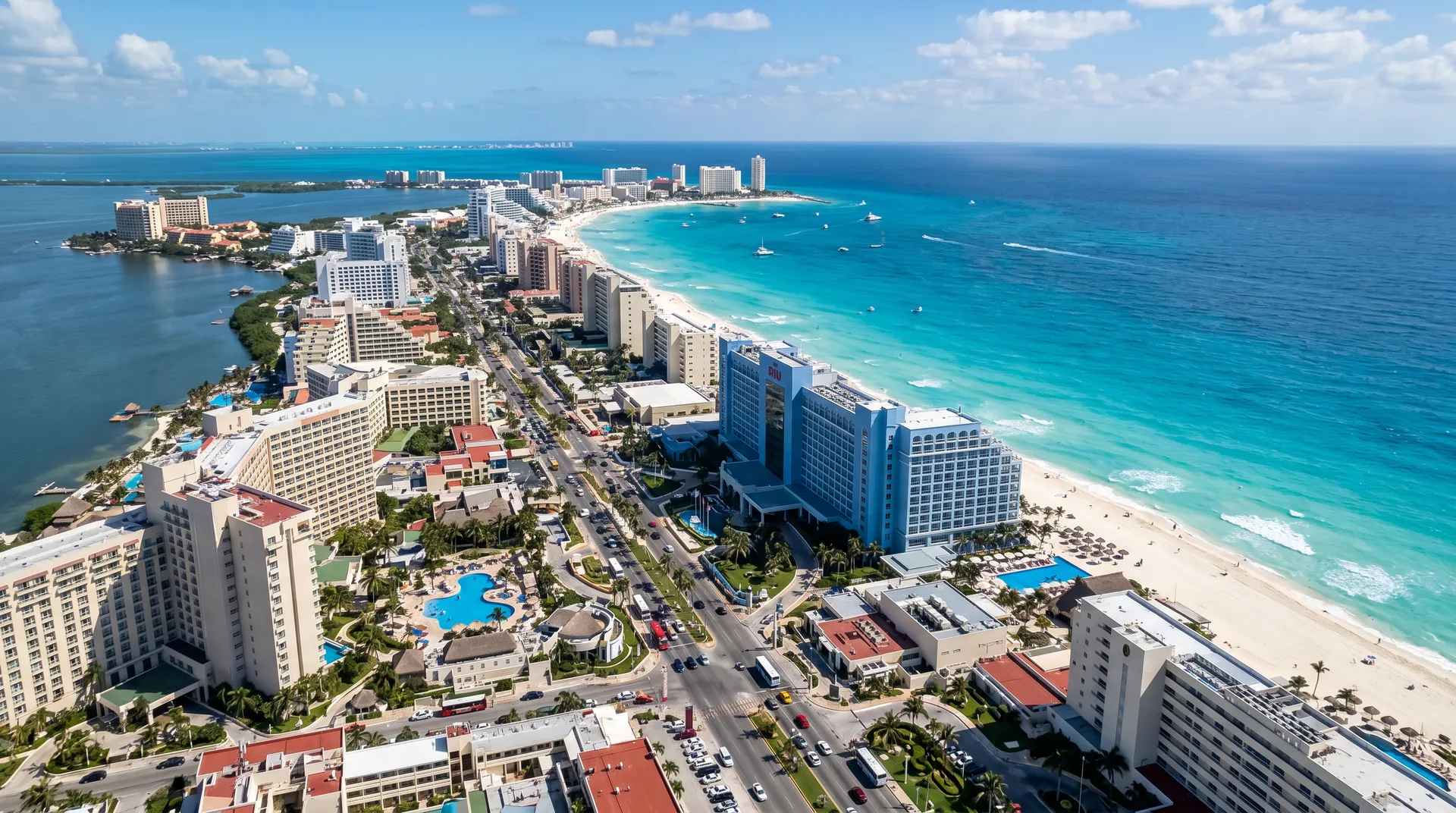
Cancún, Quintana Roo represents a strategic logistics gateway to Mexico's Caribbean coast and the broader Yucatán Peninsula region. Located on the eastern coast of the Yucatán Peninsula, Cancún benefits from proximity to major maritime routes and serves as a key entry point for goods destined for the Mexican Caribbean and Central America. The region's transportation infrastructure includes Cancún International Airport, one of Mexico's busiest airports for both passengers and cargo, and modern highway connections via Federal Highway 180 and other routes linking to the rest of Mexico.
The Cancún metropolitan area and surrounding region have experienced rapid economic growth driven primarily by tourism, hospitality, and real estate development. This growth has created substantial demand for construction materials, consumer goods, and industrial equipment transported from the United States and other regions. The area's retail sector, serving both tourists and the growing local population, requires consistent supply chain operations. Additionally, Cancún's position as a regional distribution center for Quintana Roo and neighboring states makes it a crucial node in Mexico's southeastern logistics network, handling both imports for local consumption and transshipment to other destinations in the Yucatán Peninsula and Central America.










