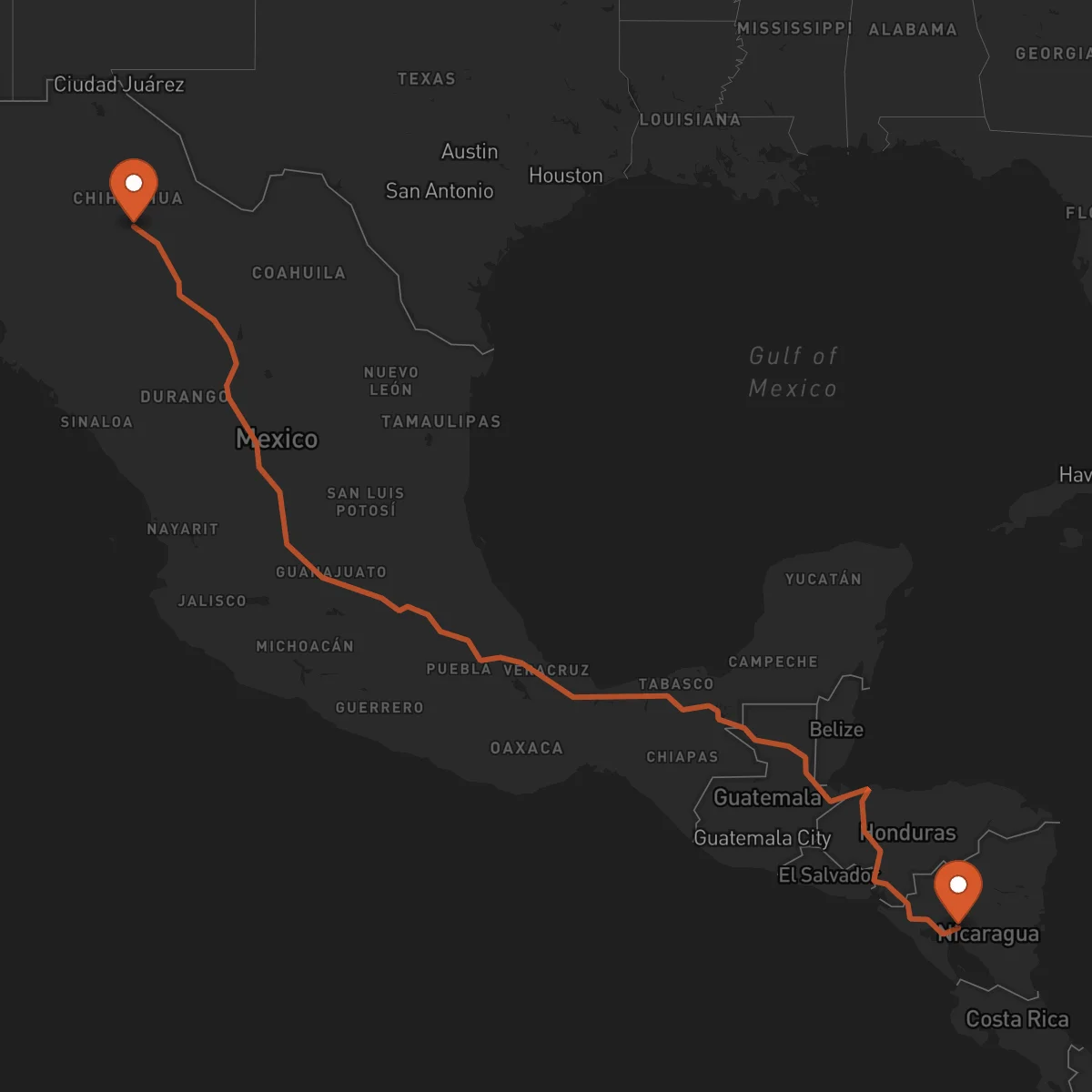
Boaco to Chihuahua
Chihuahua → BoacoFTL freight transportation service between Boaco and Chihuahua. Reliable logistics solutions for your business.
Route Description
Everything you need to know about the corridor Boaco - Chihuahua
The Boaco to Chihuahua corridor is a critical North-South logistics artery connecting Central America's agricultural heartland with one of Mexico's most vital industrial hubs. This cross-border route spans approximately 2,774 km, serving as a fundamental trade link for moving goods between Nicaragua and Northern Mexico, with strategic implications for supply chains targeting both domestic Mexican markets and onward export to the United States. The corridor's importance is magnified by its role in facilitating the flow of raw materials and finished products across diverse economic zones, underpinned by a network of highways that navigate through multiple countries and regulatory environments. Control Terrestre leverages its alliance of certified providers to manage the inherent complexities of this international route, ensuring seamless transitions at border crossings through expertise in customs documentation and compliance with programs like C-TPAT and FAST. Our focus on full truckload (FTL) solutions means we dedicate capacity specifically for your cargo, avoiding the handling and delays associated with consolidated freight. We coordinate the entire journey, from pickup in Boaco to delivery in Chihuahua's industrial parks, utilizing our providers' equipment—including dry vans, reefers, and flatbeds—to match the specific needs of the corridor's primary industries, all while maintaining our commitment to human-centric and environmentally responsible operations.
The economic context of this corridor is defined by the complementary industrial bases of its endpoints. Boaco, Nicaragua, is a significant contributor to the region's agricultural exports, while Chihuahua, Mexico, is a manufacturing and mining powerhouse. This creates a consistent, bidirectional flow of freight: agricultural products, livestock, and raw materials move northward, while manufactured components, consumer goods, and industrial supplies travel south. The main industries utilizing this corridor include agribusiness (coffee, beef, grains), food and beverage processing, automotive parts manufacturing, and general industrial logistics. The route's viability depends on the condition and capacity of the Pan-American Highway network through Central America, transitioning onto Mexico's Federal Highway 45 (a major north-south artery) and other key federal roads that connect directly to Chihuahua's industrial corridors. Infrastructure investments in these highways are crucial for maintaining transit reliability across the diverse terrain.
Key border crossings, primarily at the Guatemala-Mexico frontier (such as the Tecún Umán / Ciudad Hidalgo crossing), are pivotal nodes where customs and regulatory processes determine overall corridor efficiency. Navigating these requires meticulous preparation for customs clearance in both Nicaragua and Mexico, including compliance with NAFTA/USMCA regulations for goods destined for the U.S. market. Control Terrestre's providers hold essential certifications like BASC for security standards and Responsible Care for specialized cargo, which streamlines these processes. Our service model is built around dedicated and spot FTL capacity, allowing us to offer flexible solutions for both recurring shipments and urgent, one-off requirements, including expedited and specialized cargo like oversized or temperature-controlled loads. By acting as a single point of contact, we absorb the logistical burdens of cross-border coordination, documentation, and carrier management, providing our clients with visibility and control over their supply chain on this strategic corridor.
Services for this Route
Available services for the corridor Boaco - Chihuahua
 Origin
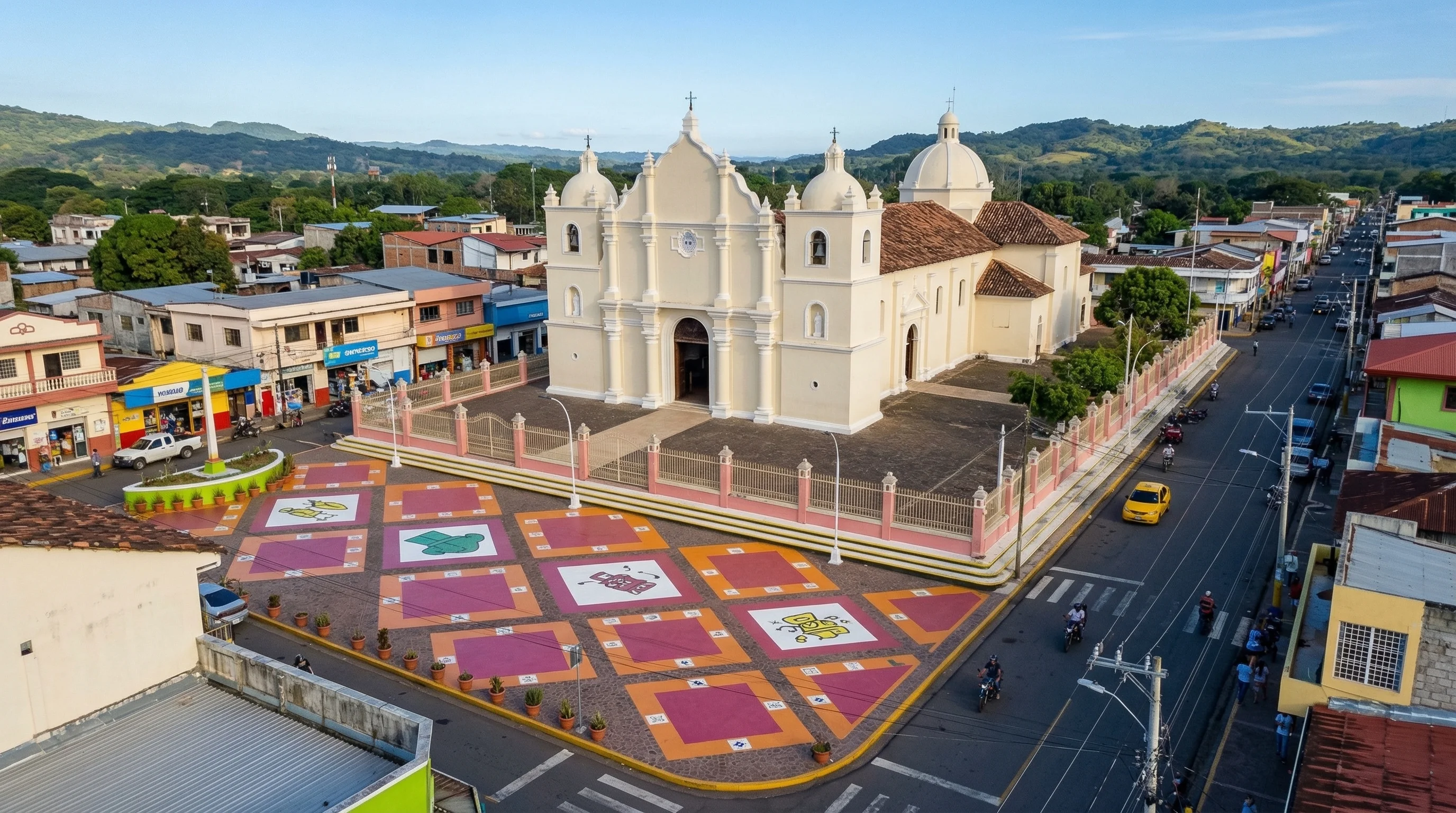
Boaco, located in central Nicaragua, serves as a strategic agricultural and livestock hub for the country. Its inland position provides efficient access to major Pacific port facilities like Corinto via well-maintained regional highways, making it a key origination point for export-focused freight. The department's economy is predominantly driven by robust agribusiness sectors, including coffee production, cattle ranching, and the cultivation of staples such as beans, maize, and sorghum. This agricultural output generates consistent demand for outbound full truckload (FTL) freight, primarily in dry vans and refrigerated units, destined for international markets. The available transportation infrastructure centers on the Nicaraguan highway network, with Route 1 (part of the Pan-American system) providing the main east-west connection to the capital, Managua, and the crucial north-south corridors that lead toward the Honduran and Guatemalan borders. From Boaco, cargo is consolidated for the long-haul journey north, leveraging these road links to enter the broader Central American and Mexican logistics corridor. The region's role as a primary source for bulk agricultural commodities makes it a consistent generator of FTL volume for corridors heading into Mexico.
 Destination
Chihuahua, Mexico, is a strategic industrial and logistics epicenter in Northern Mexico, serving as a primary gateway to the U.S. market via the El Paso-Ciudad Juárez binational region. Its strategic location is defined by its proximity to the U.S. border, extensive manufacturing base, and well-developed multimodal infrastructure. The state's economy is dominated by advanced manufacturing (particularly automotive and aerospace), mining, and agribusiness. This industrial diversity creates significant demand for inbound FTL freight to supply factories with raw materials and components, and outbound freight to distribute finished goods. The transportation infrastructure is exceptional, featuring the vital Federal Highway 45 that runs the length of the state, connecting directly to major border crossings. It is also a key hub for rail freight and is increasingly integrated with intermodal solutions. The presence of numerous industrial parks (maquiladoras) and distribution centers in cities like Chihuahua City, Ciudad Juárez, and Cuauhtémoc ensures a constant, high-volume flow of goods requiring dedicated truckload services. This makes Chihuahua not just a destination but a dynamic transshipment point within the North American supply chain.










