
Bismarck to Managua
Managua → BismarckFTL freight transportation service between Bismarck and Managua. Reliable logistics solutions for your business.
Route Description
Everything you need to know about the corridor Bismarck - Managua
The logistics corridor connecting Bismarck, North Dakota, to Managua, Nicaragua, represents a vital cross-border transportation route spanning approximately 4,091 kilometers. This corridor serves as a crucial link between the industrial heartland of the United States and the growing commercial center of Central America. The route traverses diverse terrain and crosses multiple international borders, requiring specialized expertise in cross-border logistics and customs compliance.
The corridor's strategic importance stems from its role in facilitating trade between North American manufacturing hubs and Central American markets. Major transportation infrastructure includes interstate highways connecting through the central United States, followed by key Mexican highways such as the Carretera Federal 45 and Carretera Federal 180, before continuing through Guatemala and Honduras to reach Nicaragua. The route requires careful coordination at border crossings, particularly at the US-Mexico border and subsequent Central American border points.
Key industries utilizing this corridor include automotive parts manufacturing, agricultural products, industrial equipment, and consumer goods. The route supports just-in-time inventory systems and supply chain optimization for companies operating across North and Central America. Control Terrestre's expertise in managing complex cross-border operations ensures seamless freight movement through this corridor, with our C-TPAT-certified carriers and experienced logistics team handling all aspects of customs clearance, documentation, and regulatory compliance.
Services for this Route
Available services for the corridor Bismarck - Managua
 Origin
Bismarck
Bismarck, the capital city of North Dakota, serves as a strategic logistics hub in the Upper Midwest region of the United States. Located along the Missouri River, Bismarck benefits from excellent transportation infrastructure including Interstate 94, which provides direct east-west connectivity across the northern United States. The city's central location makes it an ideal origin point for freight distribution to both coastal regions and international destinations.
The Bismarck economy is anchored by government services, healthcare, and energy sectors, with significant activity in oil and natural gas production from the nearby Bakken formation. The region also has strong agricultural roots, with grain production and food processing facilities contributing to the local economy. These industries generate substantial freight volume requiring reliable transportation solutions. Bismarck's industrial parks and warehousing facilities provide excellent support for logistics operations, while the nearby Bismarck Municipal Airport offers additional air freight options for time-sensitive shipments.
 Destination
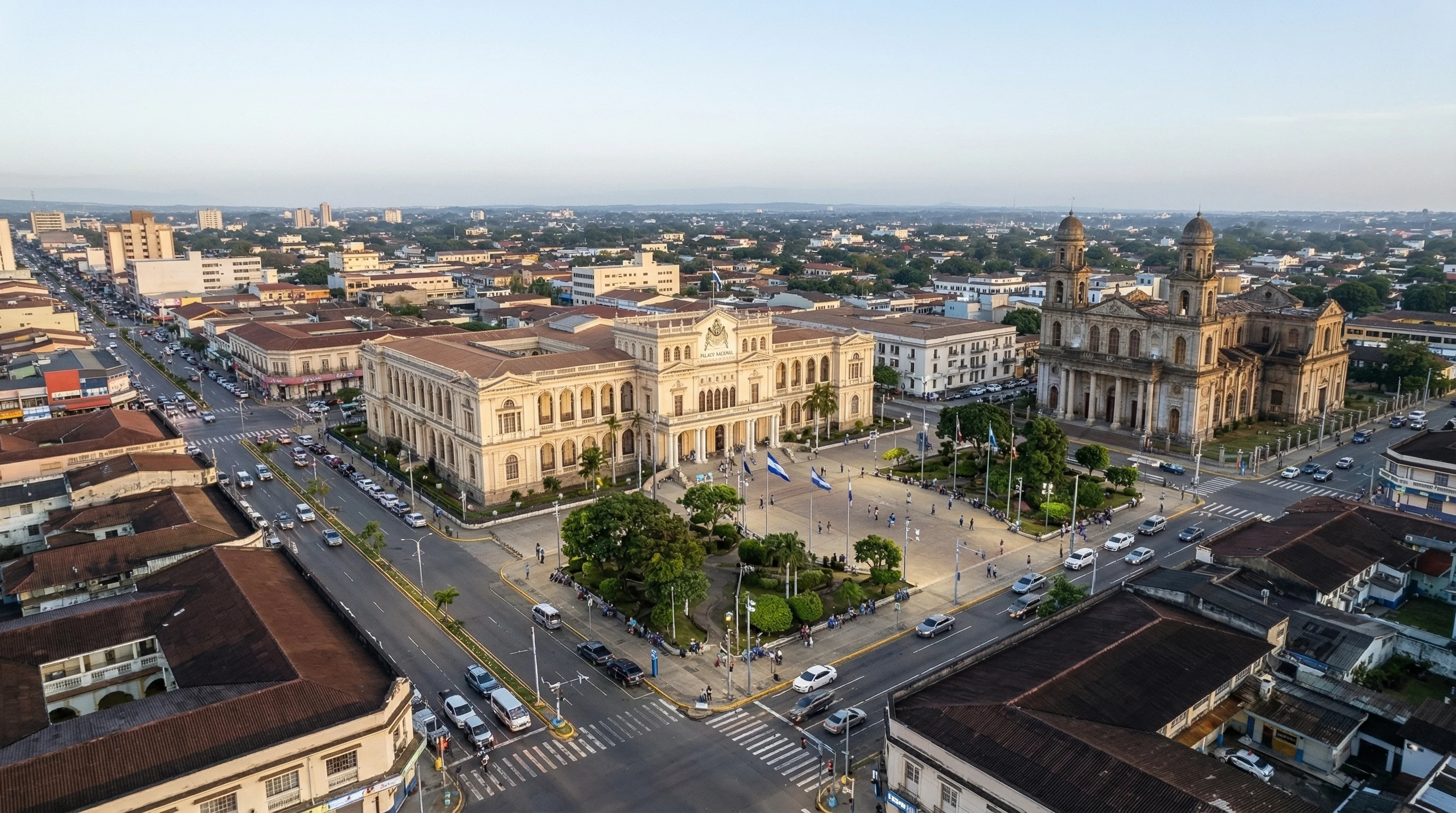
Managua, the capital and largest city of Nicaragua, represents a key commercial and logistics center in Central America. Strategically located in the Pacific lowlands region, Managua serves as the primary gateway for international trade entering Nicaragua and neighboring countries. The city's infrastructure includes the Augusto C. Sandino International Airport and well-developed road networks connecting to major ports such as Corinto and Puerto Sandino.
The Managua metropolitan area is the economic engine of Nicaragua, with diverse industries including manufacturing, services, and agriculture. Key sectors include textile and apparel production, food processing, construction materials, and agricultural exports such as coffee, beef, and sugar. The city's proximity to major agricultural regions and its role as a distribution center for Central American markets make it a critical destination for freight transportation. Managua's industrial parks and free trade zones provide modern facilities for warehousing and distribution, supporting the growing logistics needs of international companies operating in the region.










