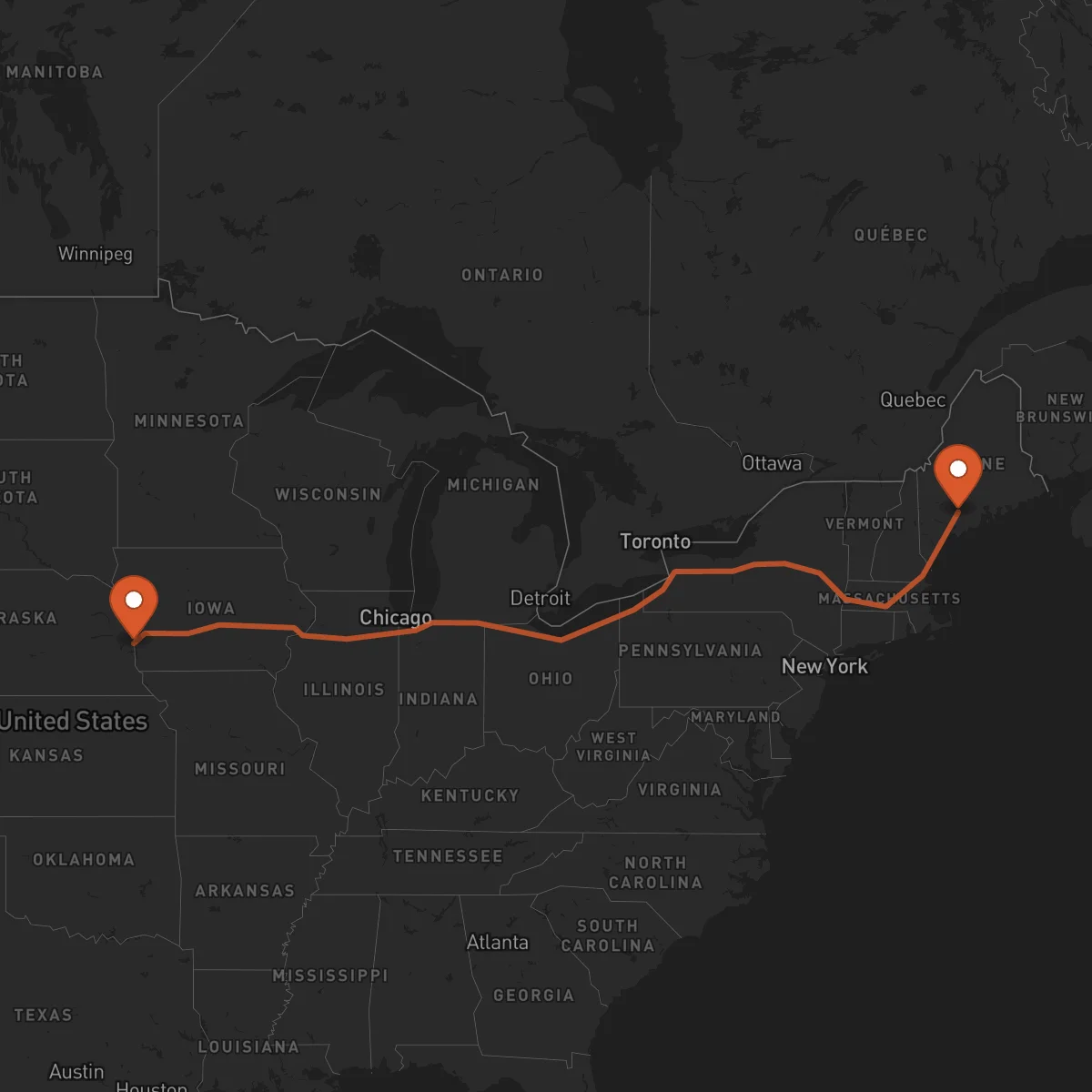
Augusta to Omaha
Omaha → AugustaFTL freight transportation service between Augusta and Omaha. Reliable logistics solutions for your business.
Route Description
Everything you need to know about the corridor Augusta - Omaha
The Augusta to Omaha corridor represents a vital domestic freight transportation route connecting the northeastern United States with the Midwest. This 2,153-kilometer journey traverses diverse landscapes and economic regions, serving as a critical link for businesses moving goods between Maine's industrial base and Nebraska's agricultural and manufacturing centers. The corridor's strategic importance has grown significantly as supply chains have become more complex and the need for reliable full truckload (FTL) transportation has increased.
The economic context of this route encompasses both regions' industrial strengths. Augusta serves as a key logistics hub for New England, with strong ties to paper manufacturing, forest products, and technology sectors. Omaha, positioned in the heart of America's agricultural belt, is a major center for food processing, transportation, and financial services. The corridor facilitates the movement of raw materials, finished goods, and agricultural products between these complementary economic zones.
Major transportation infrastructure along this route includes Interstate 95, I-90, I-80, and I-29, providing efficient connectivity through key states including Maine, New Hampshire, Vermont, New York, Pennsylvania, Ohio, Indiana, Illinois, Iowa, and Nebraska. Control Terrestre leverages this comprehensive highway network to provide seamless FTL transportation services, ensuring your cargo moves efficiently from origin to destination with minimal handling and maximum reliability.
Services for this Route
Available services for the corridor Augusta - Omaha
 Origin
Augusta
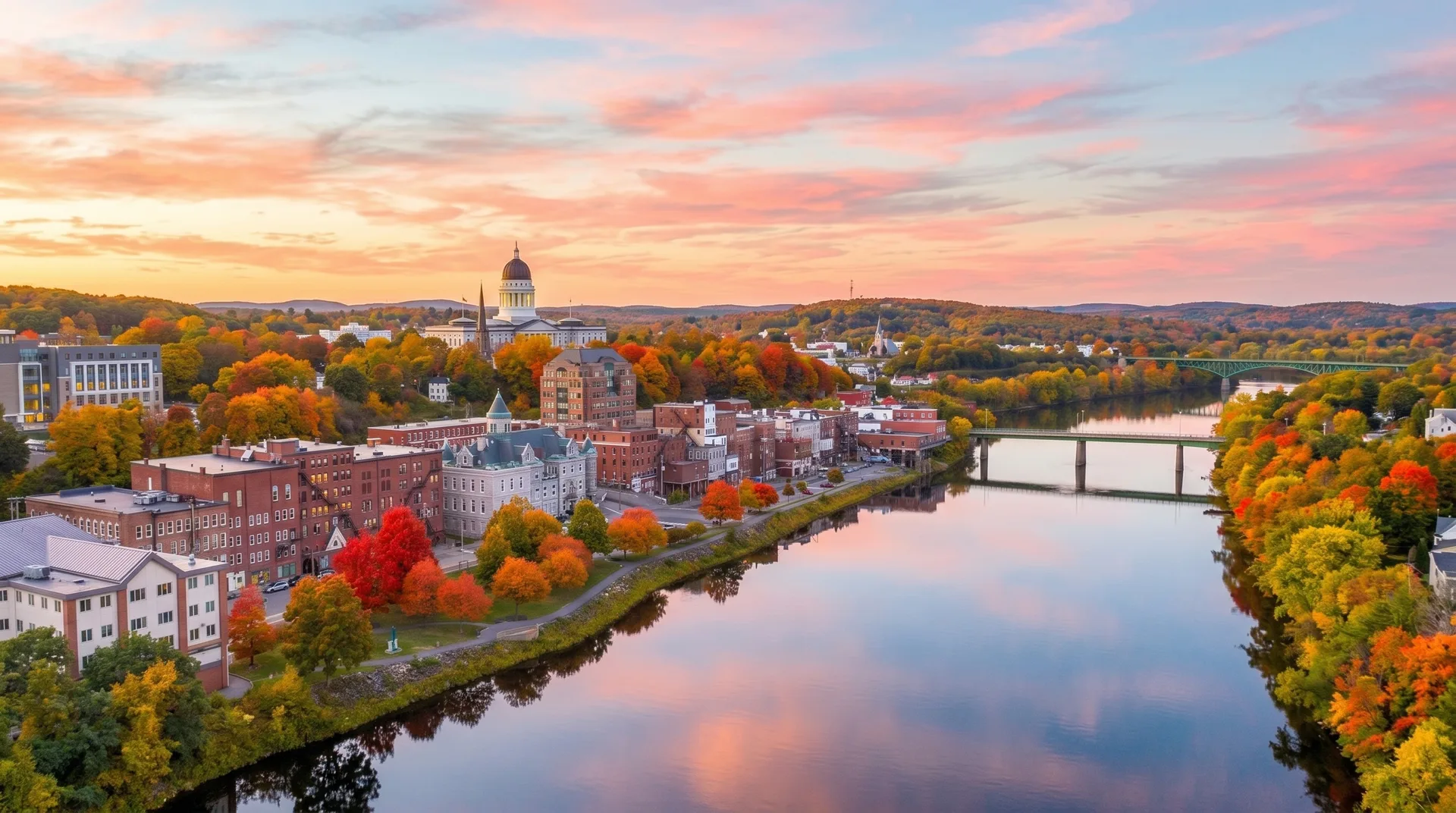
Augusta, Maine serves as a strategic gateway for freight movement in the northeastern United States. Located along the Kennebec River, Augusta's position provides access to both inland transportation routes and coastal shipping connections via nearby Portland. The city's logistics infrastructure includes major highways such as I-95 and US Route 202, facilitating efficient connections to the broader New England region and beyond. Augusta's proximity to key industrial centers in Maine, including paper mills, forest products facilities, and technology manufacturing plants, makes it an essential origin point for diverse freight movements.
The region's economic base includes strong representation from the forest products industry, paper manufacturing, and emerging technology sectors. Augusta's transportation infrastructure features multiple freight terminals, warehousing facilities, and cross-docking operations that support efficient cargo handling. The city's location provides strategic access to both Canadian markets via northern routes and major East Coast ports for international freight movements, making it an ideal starting point for FTL shipments heading west to Omaha and other Midwest destinations.
 Destination
Omaha
Omaha, Nebraska stands as a crucial logistics and transportation hub in the American Midwest, strategically positioned at the crossroads of major freight corridors. The city's location provides exceptional connectivity to surrounding agricultural regions, manufacturing centers, and national transportation networks. Omaha's infrastructure includes extensive highway access through I-80, I-29, and I-680, along with robust rail connections and a major international airport, creating a comprehensive multimodal transportation ecosystem for freight movements.
The Omaha metropolitan area serves as headquarters for several Fortune 500 companies and maintains strong ties to agriculture, food processing, transportation, and financial services. The region's economic diversity supports a wide range of freight transportation needs, from agricultural commodities and food products to manufactured goods and industrial equipment. Omaha's central location makes it an ideal destination for FTL shipments from across the country, with excellent distribution capabilities for onward freight movements throughout the Midwest and beyond.










