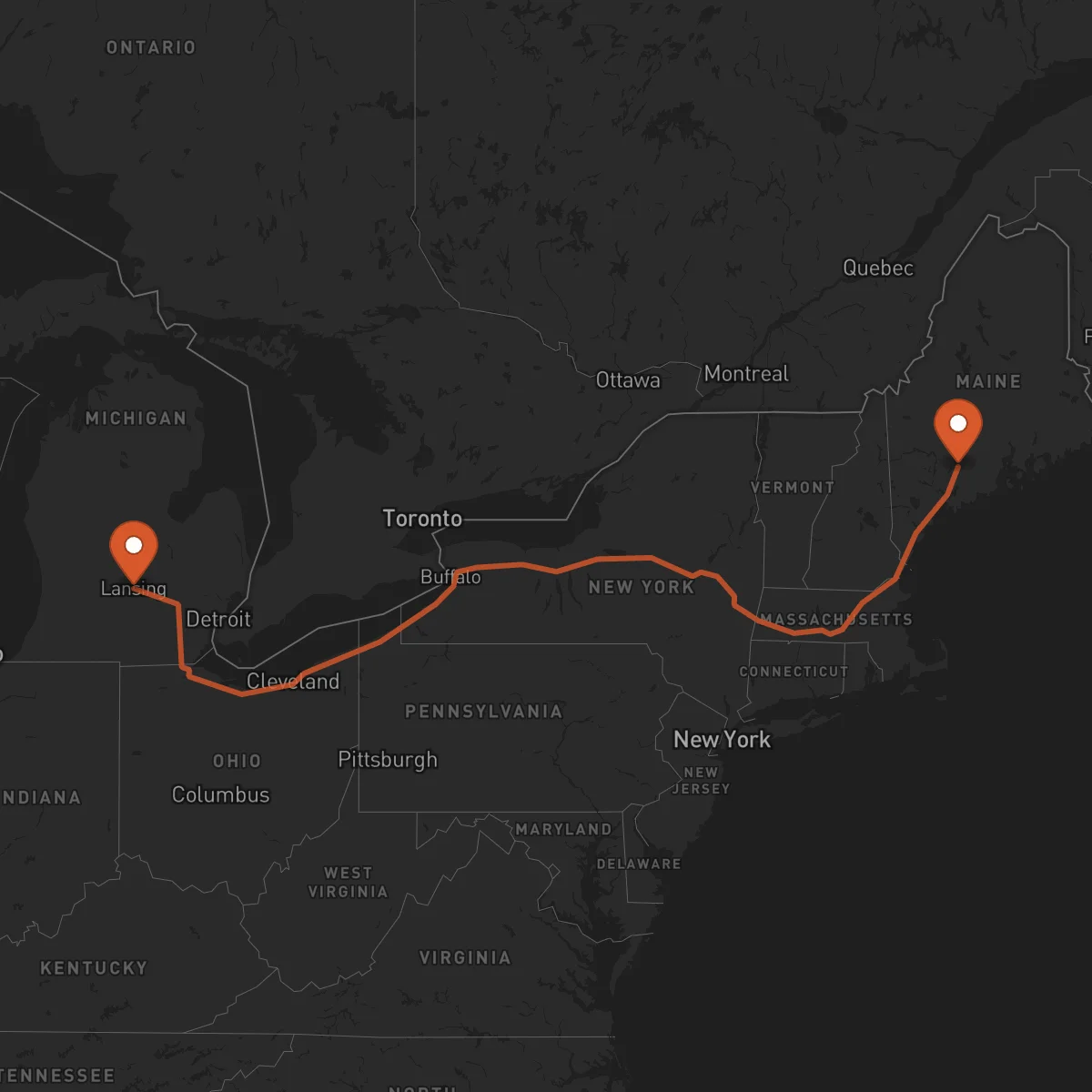
Augusta to Lansing
Lansing → AugustaFTL freight transportation service between Augusta and Lansing. Reliable logistics solutions for your business.
Route Description
Everything you need to know about the corridor Augusta - Lansing
The Augusta to Lansing corridor represents a vital domestic freight transportation route connecting the northeastern United States with the Great Lakes region. Spanning approximately 1,203 kilometers, this corridor links Maine's capital with Michigan's state capital, facilitating the movement of goods between two economically significant regions. This route traverses multiple states, crossing through key industrial and commercial zones that form the backbone of North American manufacturing and distribution networks.
The economic importance of this corridor cannot be overstated. Augusta serves as a gateway to New England's industrial base, while Lansing anchors Michigan's automotive and manufacturing sectors. The corridor supports a diverse range of industries including automotive parts, agricultural products, manufactured goods, and technology components. Companies along this route benefit from access to both coastal markets and inland distribution centers, making it a strategic pathway for supply chain optimization.
Major transportation infrastructure along this corridor includes Interstate 95, I-90, and I-94, providing reliable highway access for freight movement. These well-maintained routes ensure consistent transit times and support the efficient flow of goods between origin and destination points. The corridor also benefits from proximity to major rail networks and intermodal facilities, offering multimodal transportation options for shippers.
Control Terrestre specializes in optimizing freight operations along this corridor through our network of certified transportation providers. Our dedicated full truckload services ensure that your cargo moves efficiently and securely between Augusta and Lansing, with real-time tracking and professional handling throughout the journey. We understand the unique requirements of this route and provide tailored solutions that meet the specific needs of industries operating in both regions.
Services for this Route
Available services for the corridor Augusta - Lansing
 Origin
Augusta
Augusta, Maine serves as a strategic logistics hub for the northeastern United States, offering access to New England's extensive distribution networks. Located in Kennebec County, Augusta benefits from its position near major transportation corridors connecting Maine to the broader Atlantic seaboard. The city's logistics infrastructure includes access to Interstate 95, facilitating efficient movement of goods to and from coastal ports and inland markets. Augusta's proximity to Portland and other Maine industrial centers makes it an ideal origin point for regional freight distribution.
The economic landscape of Augusta encompasses diverse sectors including healthcare, education, government services, and manufacturing. The region is particularly strong in paper and wood products, given Maine's extensive forestry resources. Additionally, Augusta's location supports the distribution of agricultural products, seafood, and seasonal goods from northern New England. The city's transportation infrastructure includes a regional airport, rail connections, and highway access, providing multiple options for freight movement and supply chain flexibility.
 Destination
Lansing
Lansing, Michigan stands as a crucial logistics center in the Great Lakes region, strategically positioned to serve the industrial heartland of America. As Michigan's capital city, Lansing benefits from excellent transportation infrastructure including direct access to Interstate 96 and proximity to I-69, creating efficient connections to major manufacturing and distribution hubs throughout the Midwest. The city's location provides optimal access to both Canadian and domestic markets, making it a vital node in North American supply chains.
The economic foundation of Lansing is deeply rooted in the automotive industry, with major manufacturing facilities and suppliers concentrated in the region. Beyond automotive, Lansing's economy includes healthcare, education, and government services, creating diverse freight transportation needs. The city's industrial parks and manufacturing zones require reliable logistics support for just-in-time delivery of components and materials. Lansing's transportation infrastructure includes Capital Region International Airport, rail freight services, and extensive highway networks, supporting both domestic and international freight movements.










