Augusta to Charlotte
Charlotte → AugustaFTL freight transportation service between Augusta and Charlotte. Reliable logistics solutions for your business.
Route Description
Everything you need to know about the corridor Augusta - Charlotte
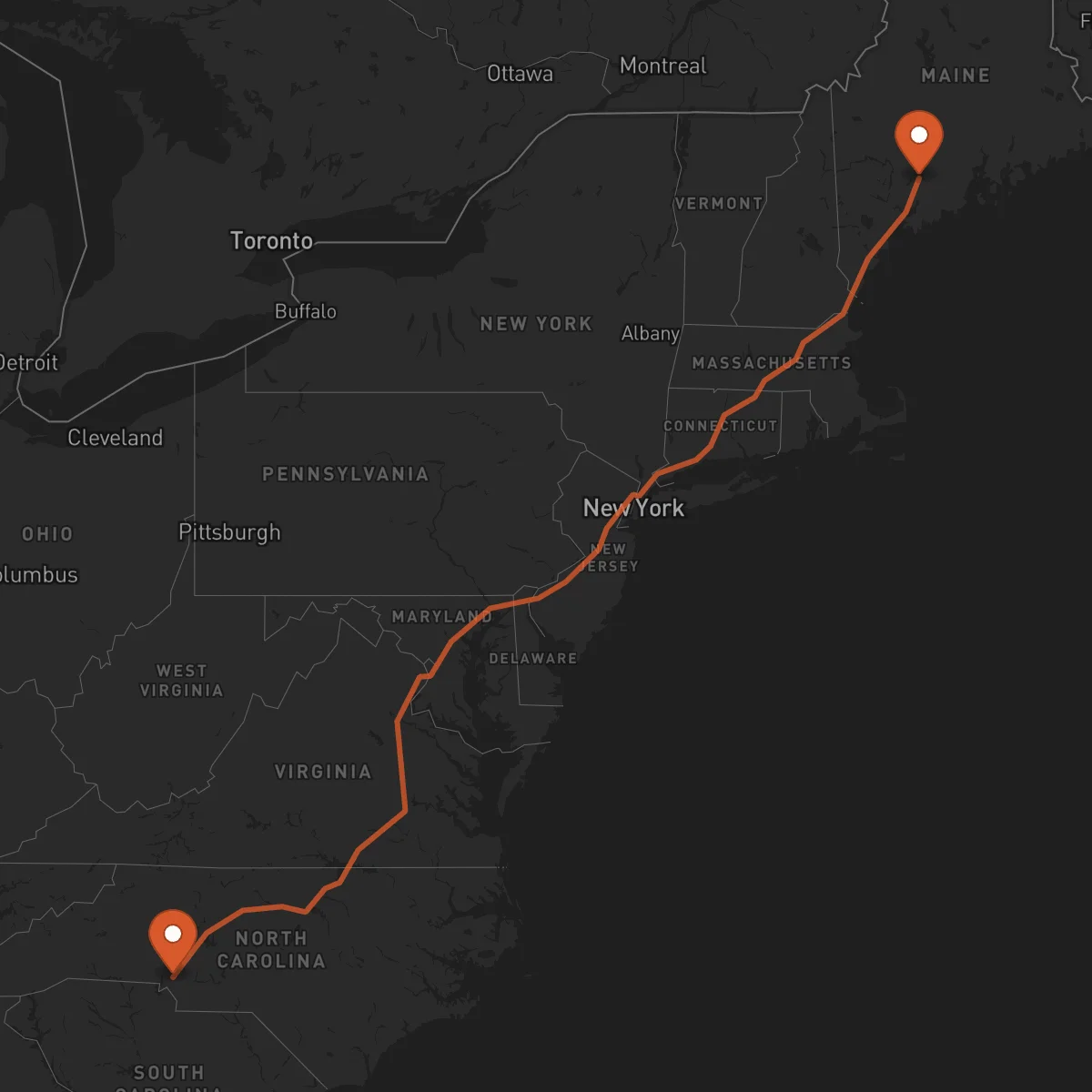
The corridor connecting Augusta, Maine to Charlotte, North Carolina represents a vital logistics route spanning approximately 1,382 kilometers through the northeastern and southeastern United States. This domestic corridor traverses diverse terrain and connects two distinct economic regions, making it strategically important for freight transportation across multiple industries. The route primarily follows major interstate highways including I-95 South through Massachusetts and Connecticut, transitioning to I-81 South through Virginia and Tennessee, before connecting to I-77 South into Charlotte, North Carolina.
The economic significance of this corridor lies in its ability to link Maine's manufacturing and forestry sectors with North Carolina's robust industrial and distribution hubs. This route facilitates the movement of goods between New England's industrial base and the Southeast's growing manufacturing centers. The corridor serves as a critical link for companies operating in both regions, enabling efficient supply chain operations across state lines.
Control Terrestre specializes in optimizing freight movements along this corridor through our network of certified transportation providers. Our dedicated FTL services ensure that your cargo moves directly from origin to destination without intermediate stops, maintaining the integrity and security of your shipments. We understand the specific requirements of this route, including seasonal weather considerations and regional regulations, allowing us to provide reliable transportation solutions that keep your supply chain running smoothly.
Services for this Route
Available services for the corridor Augusta - Charlotte
 Origin
Augusta
Augusta, Maine serves as a strategic logistics hub for the northeastern United States, offering access to major transportation networks and proximity to Canada's Atlantic provinces. The city's location along the Kennebec River and its position as Maine's capital make it a central point for distribution in the region. Augusta benefits from excellent highway connectivity through I-95, which provides direct access to major markets in the Northeast corridor. The city's transportation infrastructure includes the Augusta State Airport and rail connections through Pan Am Railways, supporting multimodal freight operations.
The economic landscape of Augusta is characterized by government services, healthcare, and manufacturing sectors. The region is particularly strong in forest products, paper manufacturing, and technology services. Augusta's proximity to Maine's vast timber resources makes it a key point for the forestry industry, while its skilled workforce supports advanced manufacturing operations. The city's strategic location allows companies to efficiently distribute products throughout New England and beyond, making it an ideal origin point for freight movements to southern destinations like Charlotte.
 Destination
Charlotte
Charlotte, North Carolina stands as a major logistics and distribution center in the southeastern United States, offering unparalleled connectivity and economic opportunity. The city's strategic location at the intersection of I-85 and I-77 provides direct access to major markets along the East Coast and throughout the Southeast. Charlotte Douglas International Airport, one of the busiest in the nation, complements the city's extensive highway network, while the nearby Port of Charleston provides international shipping capabilities. The region's transportation infrastructure supports efficient freight movements in all directions.
The Charlotte metropolitan area is home to a diverse and growing economy, with strong presence in banking and finance, energy, healthcare, and advanced manufacturing. The city has become a major distribution hub for e-commerce and retail operations, with numerous fulfillment centers and warehouses serving the Southeast region. Charlotte's pro-business environment and skilled workforce have attracted major corporations, creating a dynamic market for freight transportation services. The city's central location in the Southeast makes it an ideal destination for goods moving from northern markets, supporting the flow of products to one of the nation's fastest-growing regions.










