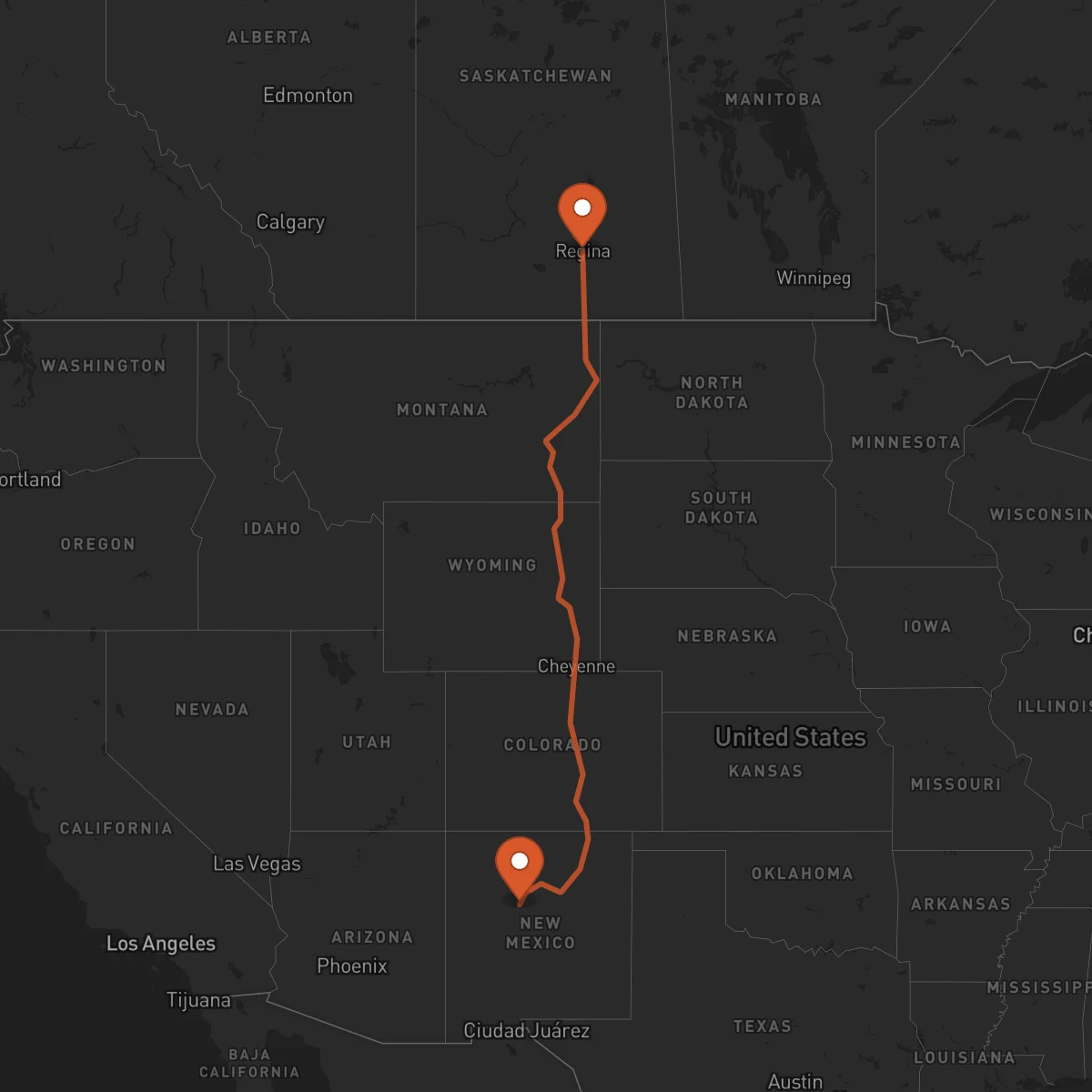
Albuquerque to Regina
Regina → AlbuquerqueFTL freight transportation service between Albuquerque and Regina. Reliable logistics solutions for your business.
Route Description
Everything you need to know about the corridor Albuquerque - Regina
The logistics corridor connecting Albuquerque, New Mexico to Regina, Saskatchewan represents a vital cross-border transportation route spanning approximately 1,716 kilometers across the heart of North America. This strategic corridor traverses the United States and Canada, linking the southwestern United States with the Canadian prairies, facilitating the movement of goods between two major economic regions. The route passes through diverse landscapes and connects key industrial centers, making it essential for businesses operating in both countries.
The corridor serves as a critical link for industries including agriculture, manufacturing, energy, and technology. Albuquerque's position in the southwestern United States provides access to major markets in the region, while Regina serves as a hub for Saskatchewan's agricultural and resource-based economy. The route accommodates a wide range of freight, from agricultural products and machinery to industrial equipment and consumer goods, supporting the economic integration of the North American supply chain.
Transportation infrastructure along this corridor includes major highways such as I-25, I-90, and the Trans-Canada Highway, providing reliable and efficient transport options. The primary border crossing at Sweetgrass-Coutts offers streamlined customs processing for qualified carriers, facilitating smooth cross-border movement. Control Terrestre leverages this infrastructure and our network of certified transportation providers to ensure seamless operations, handling all necessary customs documentation and compliance requirements to keep your freight moving efficiently between Albuquerque and Regina.
Services for this Route
Available services for the corridor Albuquerque - Regina
 Origin
Albuquerque
Albuquerque, New Mexico serves as a strategic logistics hub in the southwestern United States, positioned at the crossroads of major transportation networks. The city's location provides excellent connectivity to markets throughout the western United States and Mexico, with direct access to Interstate 25 and Interstate 40. Albuquerque's logistics infrastructure includes a major international airport, extensive rail connections, and proximity to the Port of Entry at Santa Teresa, facilitating both domestic and international freight movement.
The Albuquerque metropolitan area is a center for technology, aerospace, and manufacturing industries, with significant presence of national laboratories and research facilities. The region's economy also benefits from agriculture, particularly in the surrounding areas, and a growing renewable energy sector. These diverse industries create consistent demand for reliable freight transportation services, making Albuquerque an ideal origin point for cross-border shipments to Canada and beyond.
 Destination
Regina
Regina, Saskatchewan stands as a key logistics center in the Canadian prairies, strategically located at the intersection of the Trans-Canada Highway and major rail lines. The city's position in the heart of Saskatchewan provides central access to the vast agricultural regions of the prairies, as well as connections to major urban centers in western Canada. Regina's transportation infrastructure includes an international airport, extensive highway networks, and robust rail services, making it an efficient destination for cross-border freight.
The Regina economy is anchored by agriculture, energy, and government services, with Saskatchewan being one of Canada's leading producers of wheat, canola, and potash. The region's strong agricultural base creates consistent demand for specialized transportation services, particularly for oversized and temperature-controlled shipments. Regina's role as the provincial capital also generates significant government and institutional freight movements, while the growing technology and manufacturing sectors continue to expand the city's logistics needs.










