Albuquerque to Edmonton
Edmonton → AlbuquerqueFTL freight transportation service between Albuquerque and Edmonton. Reliable logistics solutions for your business.
Route Description
Everything you need to know about the corridor Albuquerque - Edmonton
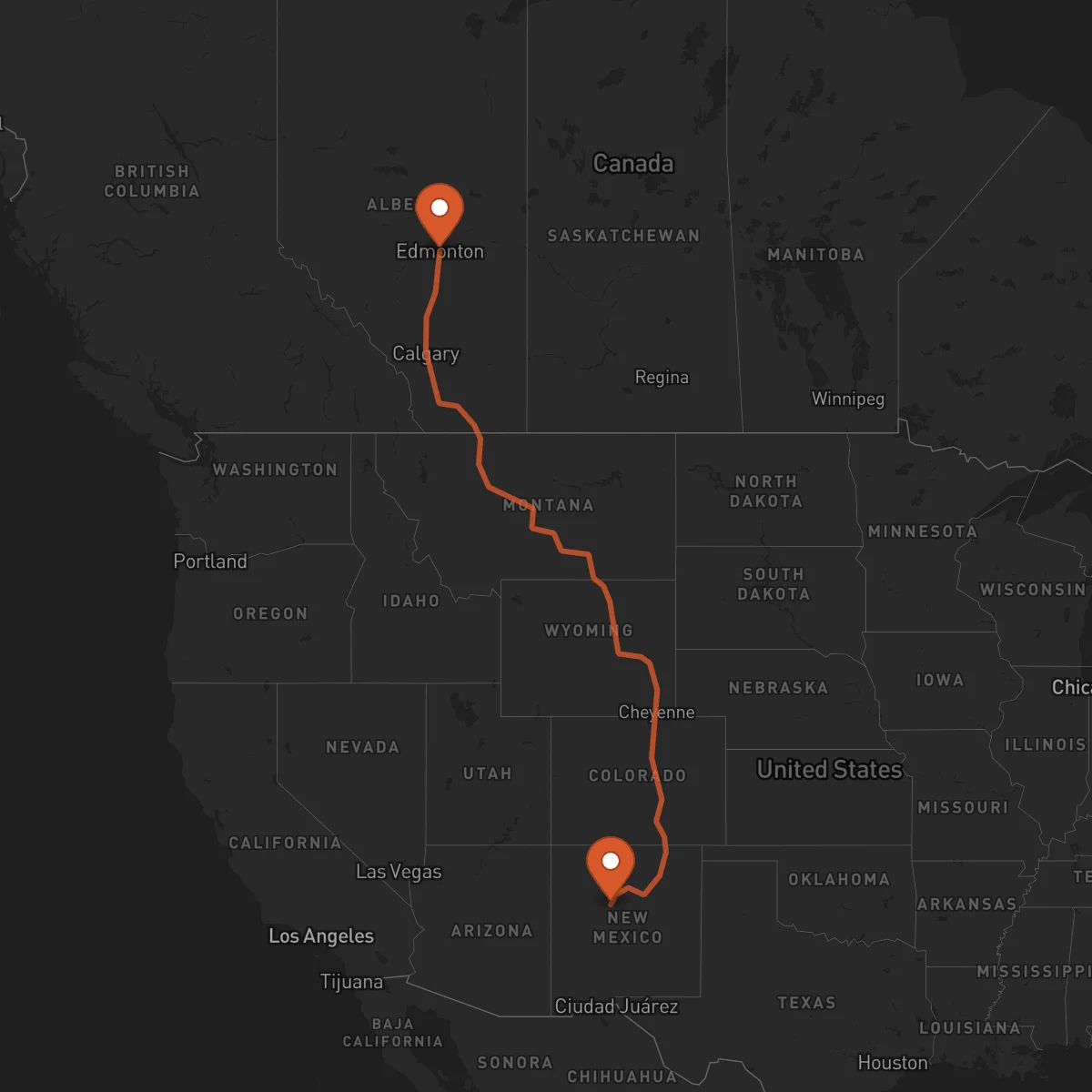
The logistics corridor connecting Albuquerque, New Mexico to Edmonton, Alberta represents a vital cross-border transportation route spanning approximately 2,121 kilometers across the United States and Canada. This strategic corridor traverses diverse landscapes and connects two major economic centers, facilitating the movement of goods between the southwestern United States and western Canada. The route primarily follows Interstate 25 northward through Colorado, connecting with Interstate 90 in Wyoming, then continues through Montana before crossing into Alberta via Highway 2. This north-south axis serves as a critical link for businesses operating across the North American continent.
The economic significance of this corridor is substantial, supporting industries ranging from energy and natural resources to manufacturing and technology. Edmonton, known as Canada's gateway to the north, serves as a major distribution hub for Alberta's oil sands operations and agricultural products, while Albuquerque's strategic location in the southwestern United States makes it an ideal departure point for cross-country shipments. The corridor facilitates the exchange of industrial equipment, consumer goods, automotive parts, and specialized cargo between these regions.
Transportation infrastructure along this route is well-developed, with multiple interstate highways providing reliable connectivity. Key border crossing points include those near Sweet Grass, Montana/Calgary, Alberta, where customs processing is streamlined for pre-approved carriers. Control Terrestre leverages this infrastructure to provide efficient FTL (Full Truckload) services, ensuring timely delivery of cargo between these two cities. Our expertise in cross-border logistics includes handling customs documentation, compliance requirements, and coordination with trusted transportation partners who maintain C-TPAT and FAST certifications, ensuring smooth transit across international boundaries.
Services for this Route
Available services for the corridor Albuquerque - Edmonton
 Origin
Albuquerque
Albuquerque, New Mexico serves as a strategic logistics hub in the southwestern United States, positioned at the intersection of major transportation routes. The city's elevation of 5,312 feet and location along the Rio Grande provide unique advantages for distribution operations. Albuquerque's economy is diverse, with significant contributions from technology, aerospace, renewable energy, and manufacturing sectors. The city hosts several major distribution centers and warehouses, taking advantage of New Mexico's business-friendly environment and central location within the western United States.
The transportation infrastructure in Albuquerque is robust, featuring extensive highway networks including Interstate 25 and Interstate 40, which intersect in the city. The Albuquerque International Sunport provides air cargo services, while the nearby Belen rail yard offers intermodal capabilities. The city's dry climate and relatively flat terrain make it ideal for year-round logistics operations, minimizing weather-related disruptions that can affect other regions.
 Destination
Edmonton, Alberta stands as a premier logistics center in western Canada, strategically positioned to serve both domestic and international markets. As the capital of Alberta, Edmonton benefits from its location on the North Saskatchewan River and its proximity to major oil sands operations in northern Alberta. The city has evolved into a distribution powerhouse, particularly for energy sector equipment, agricultural products, and manufactured goods destined for northern Canada and beyond.
The transportation infrastructure in Edmonton is comprehensive, featuring major highways including the Yellowhead Highway (Highway 16) and Queen Elizabeth II Highway (Highway 2), which connect to Calgary and the United States border. The Edmonton International Airport offers significant cargo capacity, while the city's extensive rail network provides intermodal options. Edmonton's position as a northern gateway makes it an essential hub for freight moving to and from Alaska and other northern territories, with facilities equipped to handle specialized and oversized cargo.


Ready to ship your cargo?
Get a personalized quote for your freight.
Quote Now Albuquerque - Edmonton








