Albuquerque to Albany
Albany → AlbuquerqueFTL freight transportation service between Albuquerque and Albany. Reliable logistics solutions for your business.
Route Description
Everything you need to know about the corridor Albuquerque - Albany
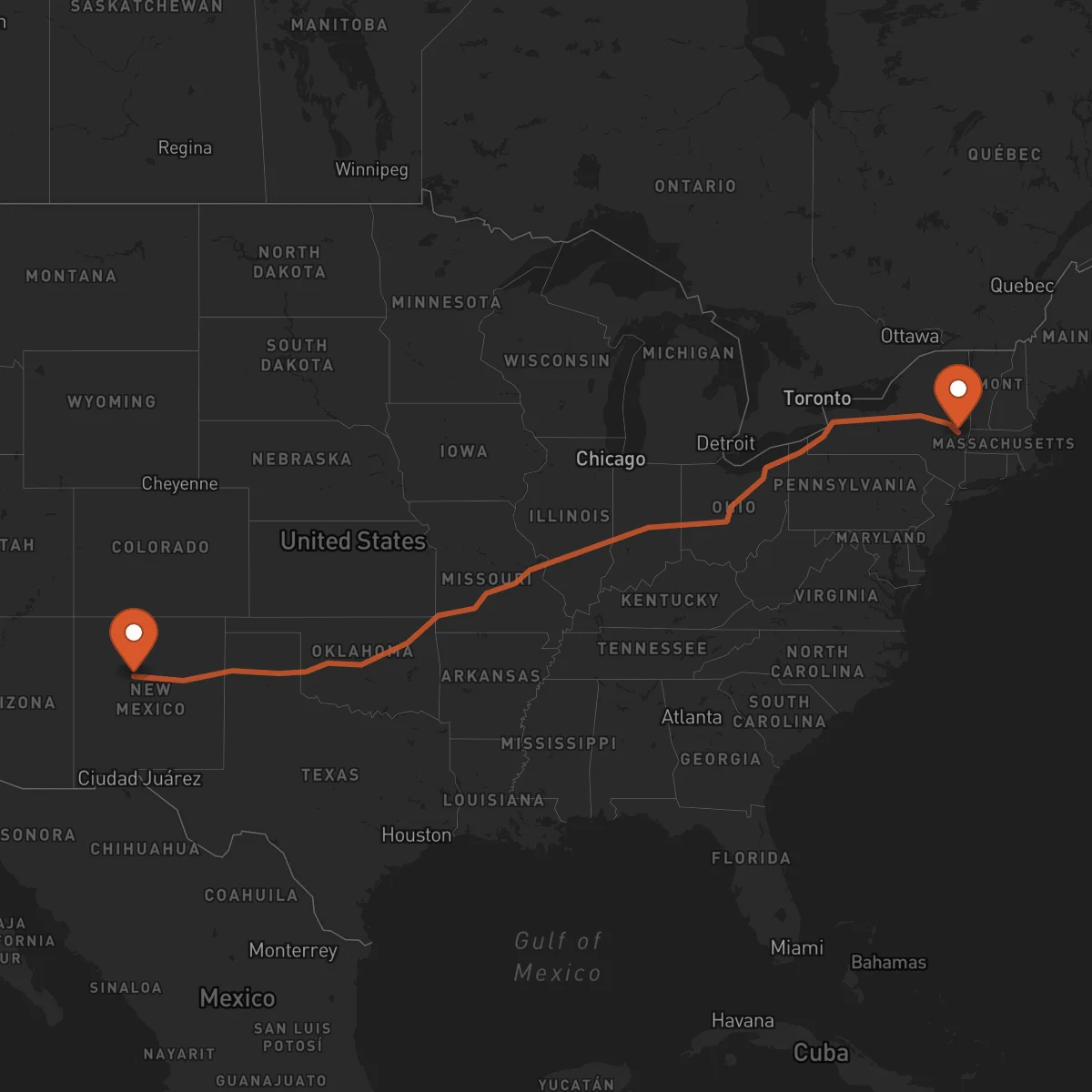
The Albuquerque-Albany corridor represents a vital freight transportation link between the southwestern and northeastern United States, spanning approximately 2,949 kilometers. This domestic route connects New Mexico's largest city with New York's capital, facilitating the movement of goods across eight states through diverse geographic and economic regions. The corridor traverses major metropolitan areas including Amarillo, Oklahoma City, St. Louis, Indianapolis, and Columbus, providing access to numerous industrial and commercial hubs along the way.
The economic significance of this corridor extends beyond simple point-to-point transportation. It serves as a critical supply chain artery for industries ranging from aerospace and defense in the Southwest to manufacturing, technology, and government services in the Northeast. The route enables efficient distribution of raw materials, finished goods, and specialized equipment between these distinct economic regions, supporting just-in-time manufacturing processes and retail supply chains.
Control Terrestre specializes in providing reliable full truckload (FTL) transportation services along this corridor, leveraging our network of certified carriers and strategic partnerships. Our dedicated transportation solutions ensure consistent capacity, real-time tracking, and professional handling of your freight, whether you're shipping specialized cargo, temperature-sensitive goods, or standard freight. With our commitment to safety, efficiency, and customer service, we help businesses maintain seamless supply chain operations across this extensive domestic route.
Services for this Route
Available services for the corridor Albuquerque - Albany
 Origin
Albuquerque
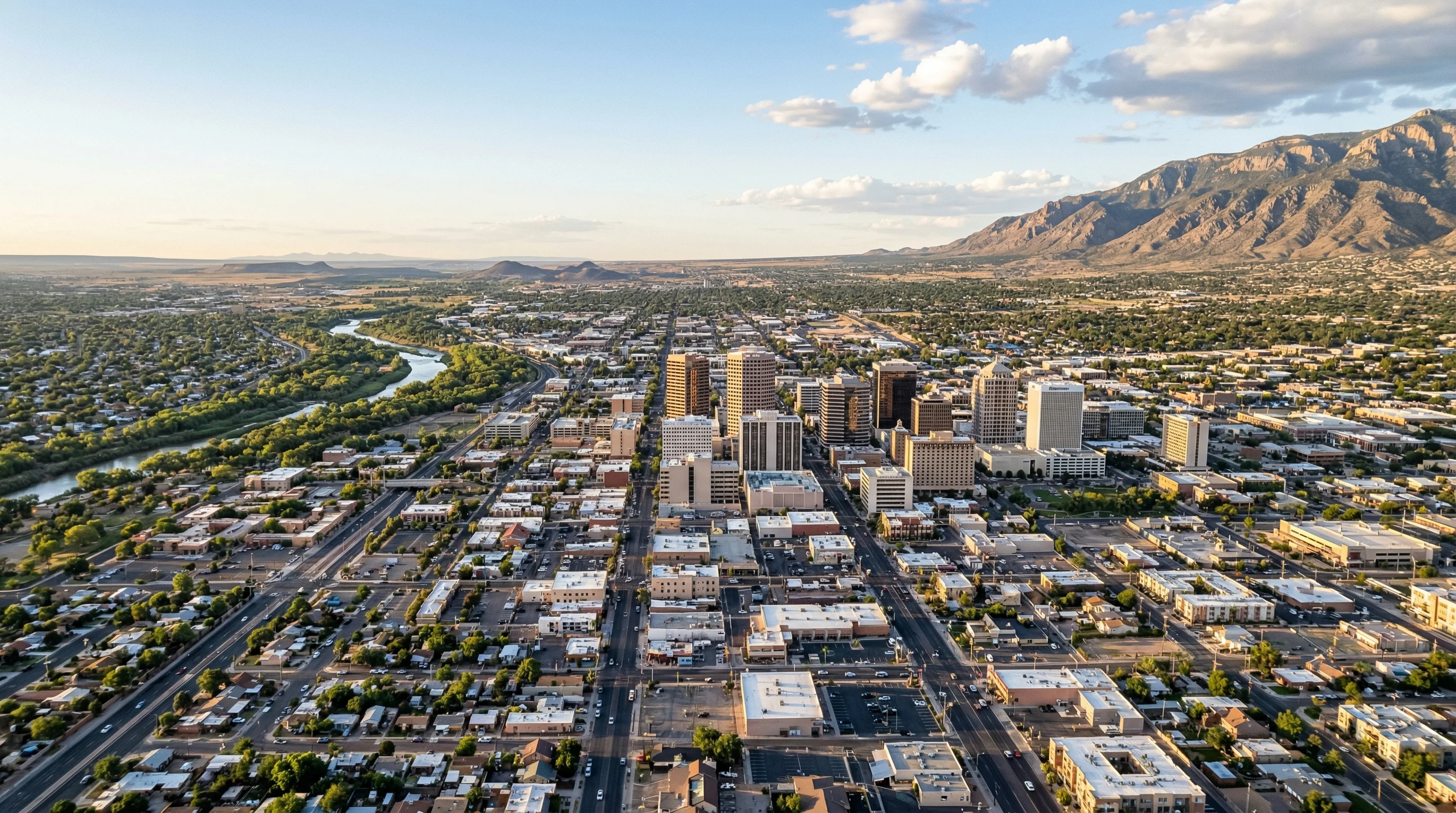
Albuquerque, New Mexico serves as a strategic logistics hub for the southwestern United States, positioned at the crossroads of major transportation routes including I-40 and I-25. The city's elevation of 1,619 meters and central location within the state make it an ideal distribution center for regional freight movements. Albuquerque's economy is anchored by aerospace and defense industries, with significant presence of Sandia National Laboratories and Kirtland Air Force Base, alongside a growing technology sector and traditional manufacturing operations.
The city benefits from comprehensive transportation infrastructure including the Albuquerque International Sunport, extensive rail connections through BNSF Railway, and a well-developed highway network. The city's logistics capabilities are enhanced by its proximity to major industrial parks and distribution centers, making it an efficient origin point for freight destined to markets across the country. Albuquerque's dry climate and stable weather patterns also contribute to reliable year-round transportation operations.
 Destination
Albany
Albany, New York stands as a strategic logistics center in the northeastern United States, located at the confluence of the Hudson River and major interstate highways I-90 and I-787. As New York's capital, Albany serves as a governmental and economic hub for the Capital District region, which includes Troy, Schenectady, and surrounding communities. The city's location provides direct access to the Port of Albany and connects to the extensive northeastern rail network, making it a crucial node for freight distribution throughout the region.
The Albany area's economy is diverse, encompassing state government operations, education institutions like SUNY Albany, healthcare services, and a growing technology sector. The region's manufacturing base includes nanotechnology, pharmaceuticals, and traditional industries that rely on efficient freight transportation. Albany's proximity to major northeastern markets including New York City, Boston, and Montreal, combined with its developed transportation infrastructure, makes it an ideal destination for freight distribution and a strategic point for supply chain operations throughout the northeastern United States.










