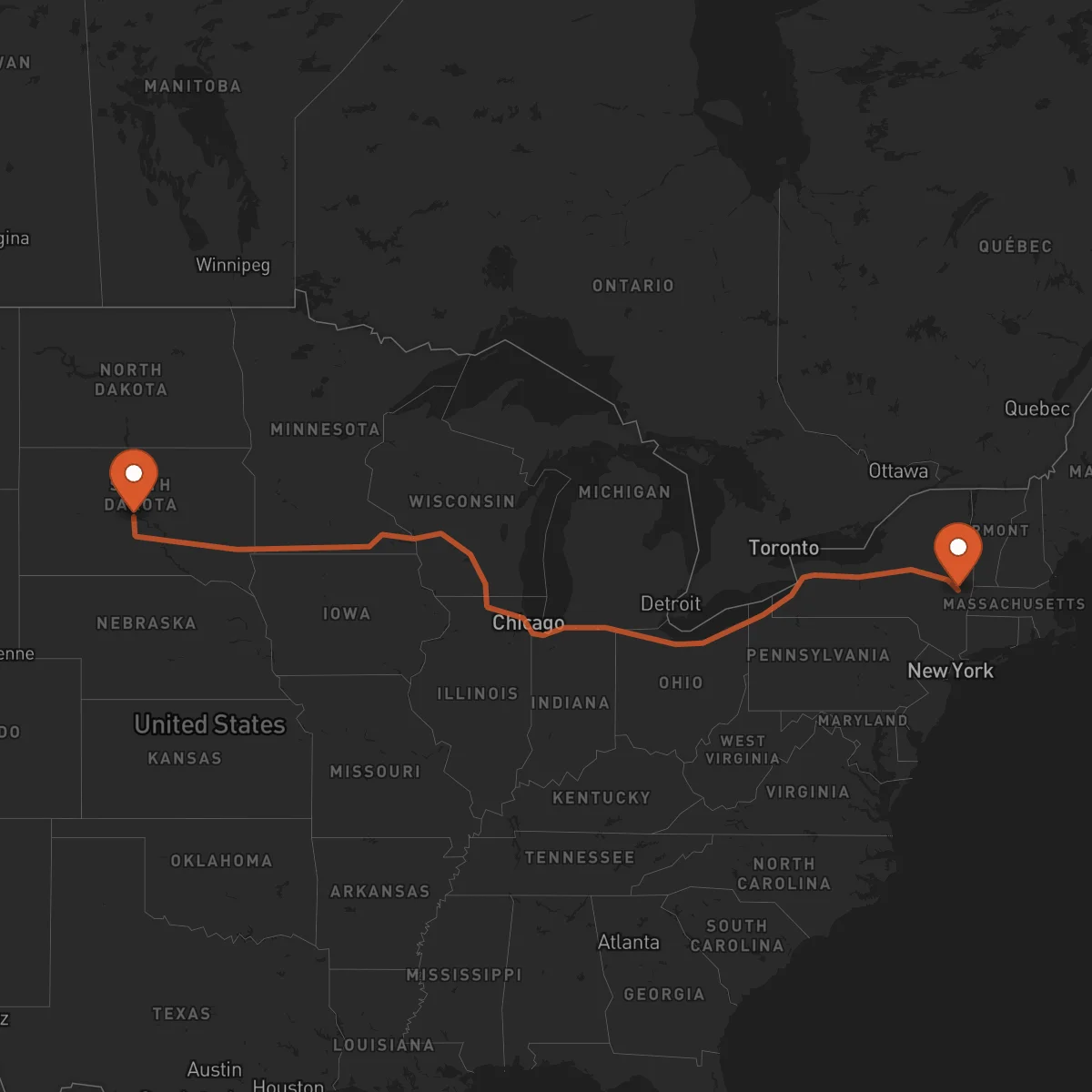
Albany to Pierre
Pierre → AlbanyFTL freight transportation service between Albany and Pierre. Reliable logistics solutions for your business.
Route Description
Everything you need to know about the corridor Albany - Pierre
The Albany to Pierre corridor connects New York's capital region with South Dakota's state capital, spanning approximately 2,144 kilometers across the heart of the United States. This domestic freight route traverses diverse terrain and crosses multiple state lines, making it a critical link for businesses requiring reliable transportation between the Northeast and Midwest regions. The corridor passes through major transportation hubs including Cleveland, Chicago, and Minneapolis, providing multiple routing options for freight optimization.
The economic significance of this corridor extends beyond simple point-to-point transportation. Albany serves as a major distribution center for the Northeast, while Pierre represents the agricultural and governmental hub of the Great Plains. This connection facilitates the movement of goods between manufacturing centers, agricultural producers, and government facilities. The route supports various industries including manufacturing, agriculture, retail distribution, and government logistics operations.
Control Terrestre specializes in providing full truckload (FTL) services along this corridor, offering dedicated transportation solutions that ensure your cargo moves efficiently and securely. Our experienced carriers understand the unique challenges of this cross-country route, including varying state regulations, weather conditions, and delivery scheduling requirements. We provide door-to-door service with real-time tracking capabilities, ensuring your freight arrives on time regardless of the distance involved.
Services for this Route
Available services for the corridor Albany - Pierre
 Origin
Albany
Albany, New York serves as a strategic logistics hub in the Northeast, located at the intersection of major transportation corridors including I-90, I-87, and I-787. The city's position along the Hudson River provides additional multimodal transportation options, while its proximity to major markets like New York City, Boston, and Montreal makes it an ideal origin point for regional and cross-country freight movements. Albany's Capital District is home to numerous warehouses, distribution centers, and manufacturing facilities that generate substantial freight volume.
The region's economy is diverse, with strong representation in government services, healthcare, education, and high-tech industries. Albany's nanotechnology sector, centered around the SUNY Polytechnic Institute, creates specialized shipping needs for sensitive equipment and materials. The area also has significant retail distribution operations and light manufacturing that require reliable transportation services. Albany's well-developed transportation infrastructure includes the Albany International Airport, extensive rail connections, and a modern highway system that facilitates efficient freight movement in all directions.
 Destination
Pierre
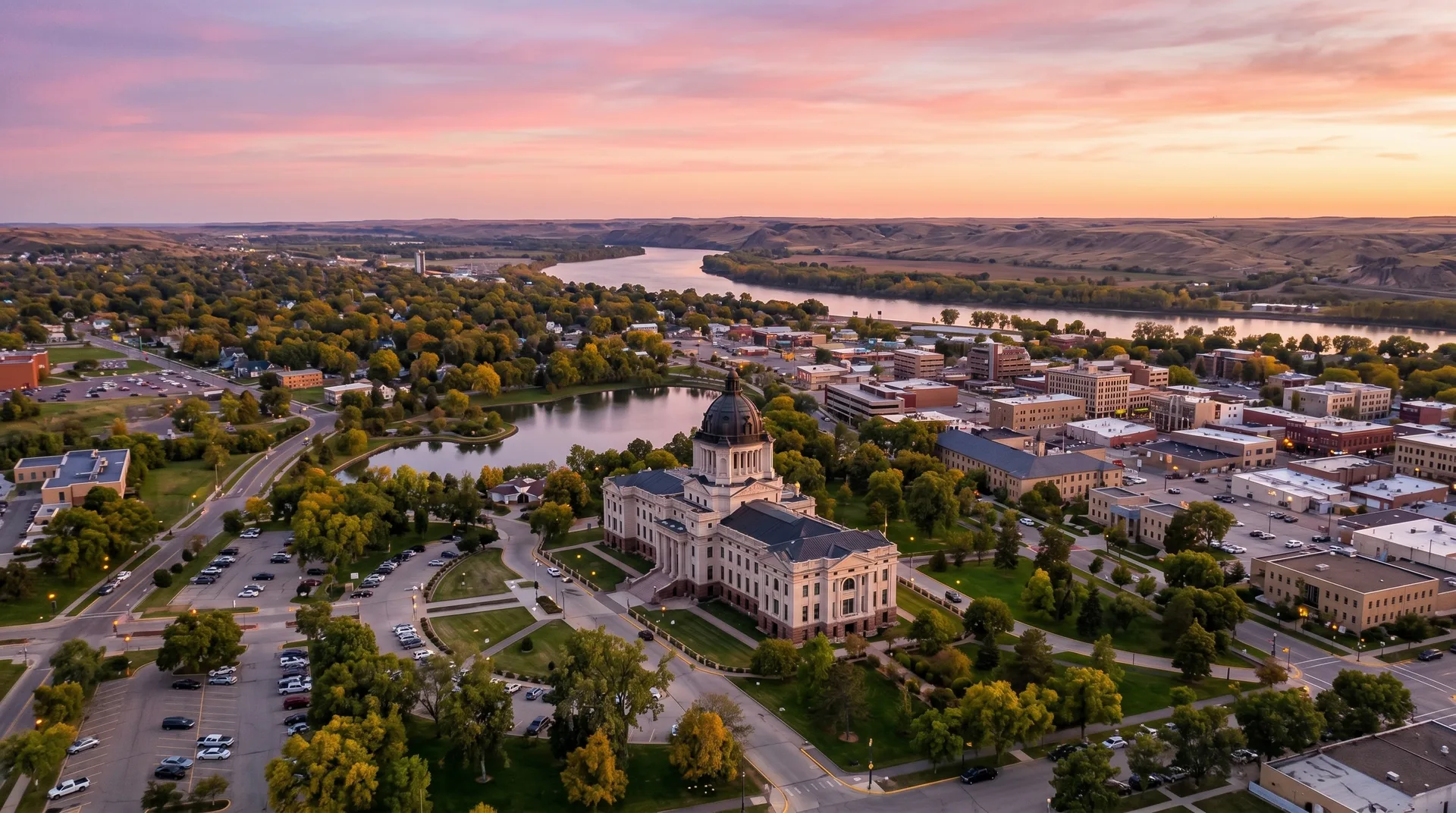
Pierre, South Dakota represents a strategic logistics point in the Great Plains region, serving as the state capital and a central hub for South Dakota's economy. Located along the Missouri River and near the geographic center of the state, Pierre provides access to major agricultural regions and serves as a distribution point for goods throughout the Midwest. The city's location at the intersection of US-14 and US-83 creates important freight connections to regional markets.
The local economy is primarily driven by government services, agriculture, and tourism, with significant agricultural production in surrounding areas creating substantial freight movement for crops, livestock, and agricultural equipment. Pierre's role as the state capital generates consistent government-related freight traffic, while the region's growing healthcare and retail sectors contribute to ongoing logistics demand. The area's transportation infrastructure includes access to major highways, rail connections through BNSF Railway, and proximity to regional airports, though trucking remains the dominant mode for most freight movements to and from the region.










