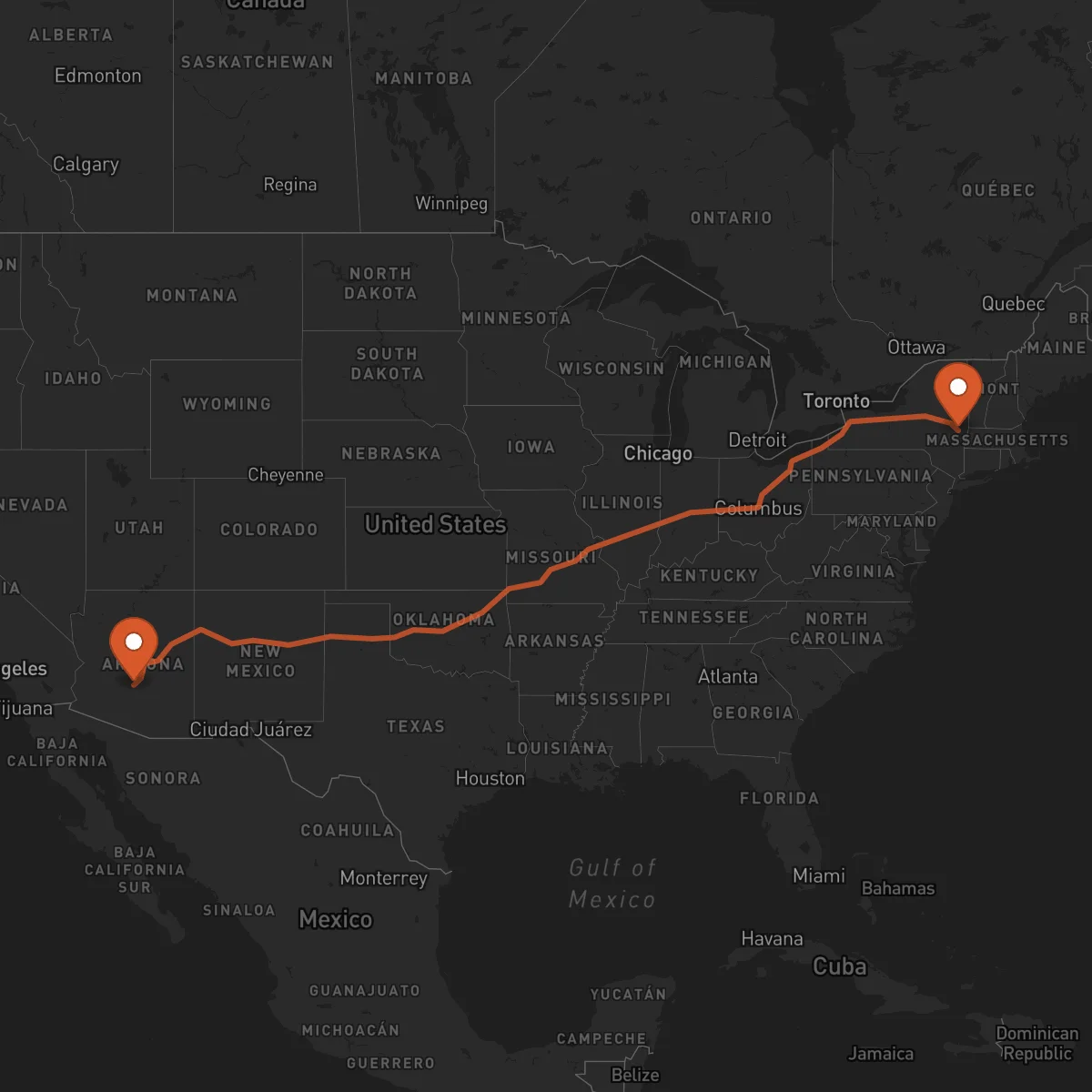
Albany to Mesa
Mesa → AlbanyFTL freight transportation service between Albany and Mesa. Reliable logistics solutions for your business.
Route Description
Everything you need to know about the corridor Albany - Mesa
The Albany to Mesa corridor represents a vital freight transportation route connecting the northeastern United States with the southwestern region. This 3,457 km domestic corridor traverses diverse geographical and economic landscapes, facilitating the movement of goods between New York's capital region and Arizona's growing industrial hub. The route serves as a critical link in the national supply chain, supporting commerce between the Northeast's manufacturing centers and the Southwest's distribution networks.
This corridor passes through key economic regions including the Midwest manufacturing belt and the Mountain West, connecting major transportation hubs and industrial centers. The route primarily utilizes Interstate 80 and Interstate 40, providing reliable access to major cities and logistics nodes along the way. These interstate highways offer consistent infrastructure and connectivity to regional distribution networks, making this corridor essential for cross-country freight movements.
Control Terrestre specializes in providing dedicated full truckload (FTL) services along this corridor, offering companies reliable transportation solutions for their cargo needs. Our strategic partnerships with certified carriers ensure consistent service quality and capacity availability. We understand the specific requirements of long-haul domestic transportation and provide customized solutions that align with our clients' supply chain objectives, whether they need standard dry van services or specialized equipment for unique cargo requirements.
Services for this Route
Available services for the corridor Albany - Mesa
 Origin
Albany
Albany, New York serves as a strategic gateway for freight movements in the northeastern United States. Located on the banks of the Hudson River, Albany benefits from its position at the intersection of major transportation routes, including Interstate 90 and Interstate 87. The city's proximity to the Port of Albany and its connections to the New York State Thruway system make it an ideal origin point for nationwide freight distribution. Albany's logistics infrastructure includes the Albany International Airport and extensive rail connections through CSX and Canadian Pacific railways.
The Albany region is characterized by diverse economic sectors including state government operations, healthcare, education, and advanced manufacturing. The area hosts significant nanotechnology research and development at the Albany NanoTech Complex, along with traditional manufacturing industries. The presence of major educational institutions and healthcare facilities creates consistent demand for specialized freight services, while the region's industrial base requires reliable transportation for raw materials and finished goods distribution.
 Destination
Mesa
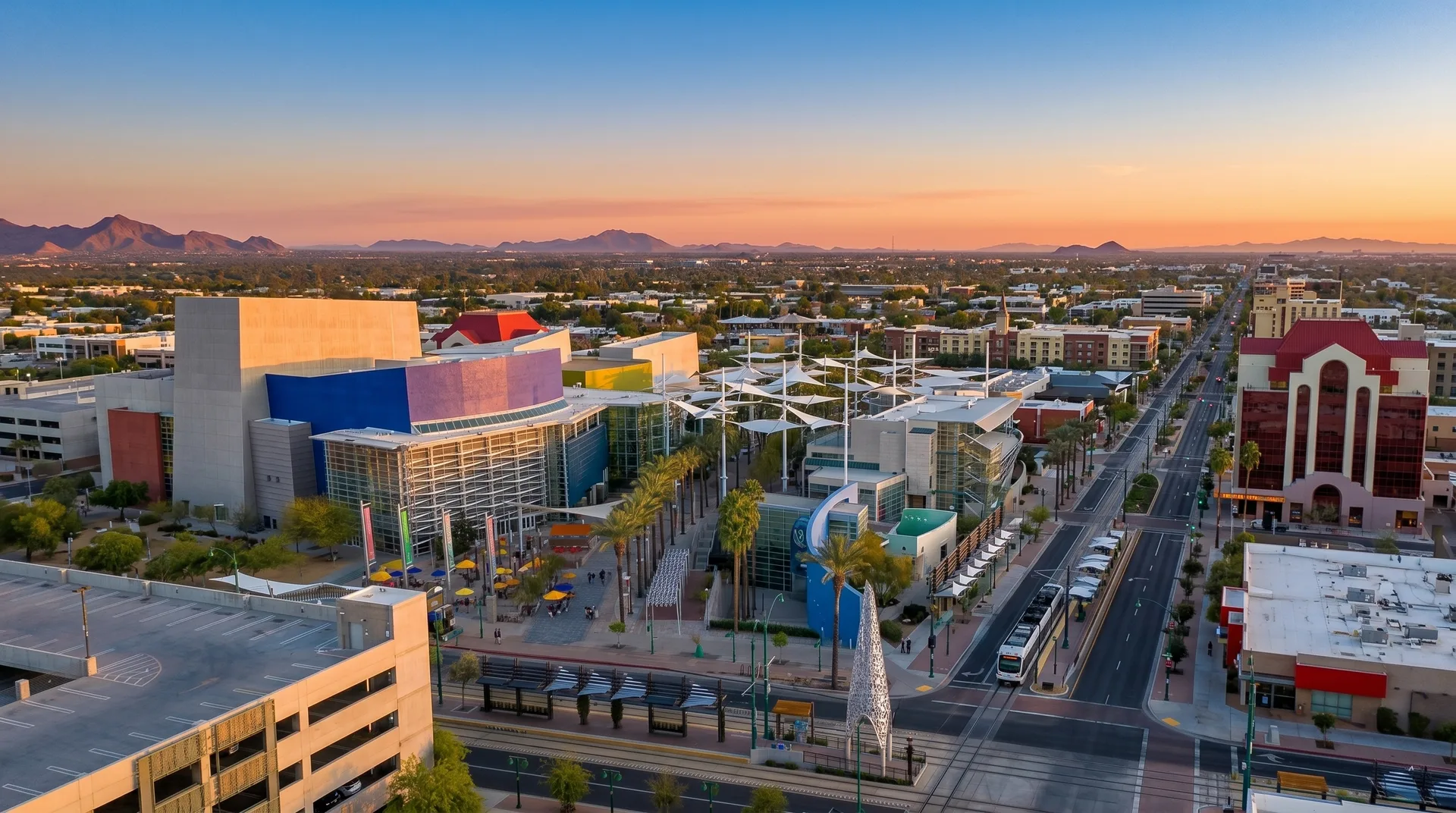
Mesa, Arizona has emerged as a strategic logistics hub in the southwestern United States, offering excellent connectivity to major markets across the region. Located in the Phoenix metropolitan area, Mesa provides direct access to Interstate 10 and Interstate 17, facilitating efficient freight movements throughout the Southwest. The city's proximity to Phoenix Sky Harbor International Airport and the Union Pacific Railroad intermodal facility enhances its transportation capabilities. Mesa's location also offers convenient access to major ports of entry along the U.S.-Mexico border, approximately 350 miles to the south.
The Mesa economy is anchored by advanced manufacturing, aerospace and defense, healthcare, and technology sectors. The region hosts major distribution centers for national retailers and e-commerce companies, taking advantage of Arizona's strategic location for cross-country logistics. Mesa's growing semiconductor industry and proximity to Phoenix's tech corridor create demand for specialized freight services. The city's business-friendly environment and expanding industrial parks continue to attract companies seeking efficient distribution points for the western United States and beyond.










