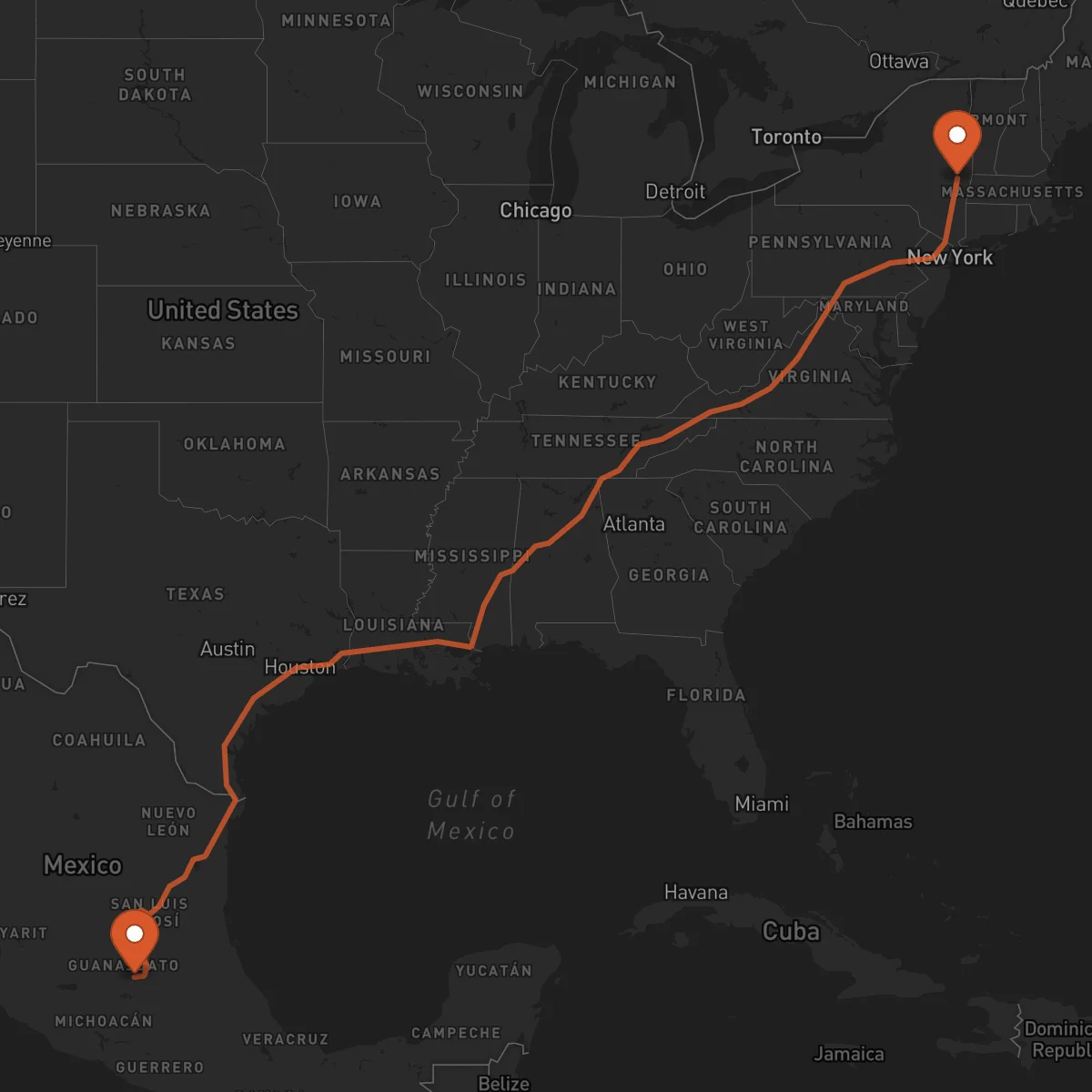
Albany to Celaya
Celaya → AlbanyFTL freight transportation service between Albany and Celaya. Reliable logistics solutions for your business.
Route Description
Everything you need to know about the corridor Albany - Celaya
The Albany to Celaya logistics corridor connects the northeastern United States with the industrial heartland of Mexico, covering approximately 3,523 kilometers. This strategic cross-border route facilitates the movement of goods between New York's manufacturing and distribution centers and Mexico's automotive and aerospace manufacturing hubs. The corridor primarily utilizes Interstate 90, Interstate 80, and major Mexican highways including Federal Highway 45, providing reliable access through key border crossings such as Laredo/Nuevo Laredo or El Paso/Ciudad Juárez.
This transportation corridor serves critical industries including automotive manufacturing, aerospace components, industrial machinery, and consumer goods. Albany's proximity to major ports and distribution centers makes it an ideal origin point for shipments destined for Celaya's thriving manufacturing sector, which specializes in automotive parts production and advanced manufacturing. The route supports just-in-time delivery requirements for manufacturers operating under tight production schedules.
Control Terrestre provides comprehensive FTL (Full Truckload) services along this corridor, ensuring dedicated transportation solutions for your cargo. Our experienced team manages all cross-border logistics requirements, including customs documentation, compliance with C-TPAT and FAST program requirements, and coordination with certified transportation partners. We offer specialized equipment options including dry vans, refrigerated units, and flatbed trailers to accommodate various cargo types, ensuring your shipments move efficiently between Albany and Celaya with minimal handling and maximum security.
Services for this Route
Available services for the corridor Albany - Celaya
 Origin
Albany
Albany, New York serves as a strategic logistics hub in the northeastern United States, offering excellent connectivity to major markets along the East Coast and beyond. The city's location provides access to the Port of Albany, extensive rail networks, and proximity to major interstate highways including I-90 and I-87. Albany's logistics infrastructure includes modern warehousing facilities, distribution centers, and intermodal terminals that support efficient freight movement throughout the region.
The region's economy encompasses diverse sectors including government services, education, healthcare, and advanced manufacturing. Albany is home to numerous technology companies, research institutions, and manufacturing facilities that require reliable transportation services. The presence of major universities and research centers has fostered innovation in various industries, creating demand for specialized freight services to transport sensitive equipment and materials. The area's robust logistics infrastructure and strategic location make it an ideal origin point for cross-border shipments to Mexico and other destinations.
 Destination
Celaya
Celaya, located in the state of Guanajuato, Mexico, is a vital industrial center strategically positioned in the country's central region. The city benefits from its location along Federal Highway 45, which connects major industrial cities across Mexico, and its proximity to key manufacturing hubs in the Bajío region. Celaya's logistics infrastructure includes industrial parks, modern warehousing facilities, and direct highway connections to major ports and border crossings.
The city has developed a strong industrial base, particularly in automotive manufacturing and aerospace industries. Celaya hosts numerous automotive parts suppliers and assembly plants that serve both domestic and international markets. The region's skilled workforce and competitive operating costs have attracted significant foreign investment, making it a key destination for industrial freight. The city's growing industrial sector requires reliable transportation services for both raw materials and finished products, supporting the continuous flow of goods through the cross-border supply chain.










