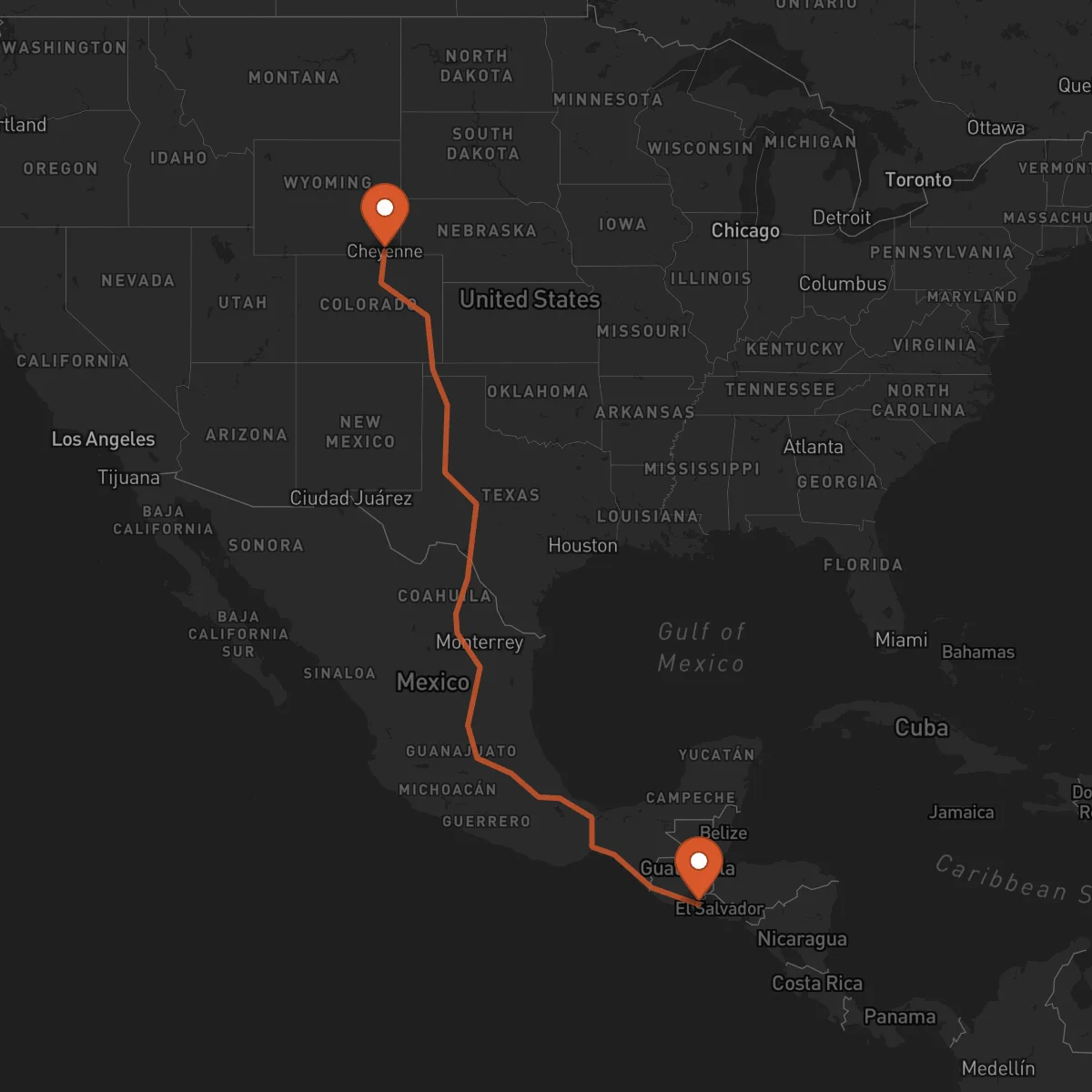
Ahuachapán to Cheyenne
Cheyenne → AhuachapánFTL freight transportation service between Ahuachapán and Cheyenne. Reliable logistics solutions for your business.
Route Description
Everything you need to know about the corridor Ahuachapán - Cheyenne
The Ahuachapán to Cheyenne corridor represents a critical north-south artery connecting Central America's production hubs with the interior of the United States. This cross-border route spans approximately 3,355 km, bridging the industrial and agricultural regions of El Salvador with the distribution and energy centers of the American Rockies. Its strategic importance lies in facilitating the efficient movement of goods from a key export nation in Central America to a major logistics nexus in the U.S., supporting integrated supply chains across the continent. Economically, the corridor serves vibrant industrial zones: Ahuachapán is a center for coffee, sugar, and textile production, while Cheyenne acts as a gateway for agricultural products, energy sector equipment, and manufactured goods destined for the Mountain West and beyond. Main industries leveraging this route include agribusiness, food and beverage, textiles, and industrial manufacturing. The primary transportation infrastructure relies on a network of major highways. From Ahuachapán, cargo moves north via the CA-1 highway through Guatemala and Mexico, connecting to the Mexican federal highway system. In the U.S., the route predominantly utilizes Interstate 25 (I-25) from the New Mexico border north through Colorado to Wyoming, with potential connections to I-80 for broader distribution. Key border crossings, such as El Ceibo/El Carmen (Guatemala-Mexico) and the Bridge of the Americas/El Paso (Mexico-U.S.), are pivotal. Navigating customs and compliance requires expertise in regulations like C-TPAT and FAST, which our provider network holds. At Control Terrestre, we facilitate seamless operations on this corridor through our exclusive focus on full truckload (FTL) solutions. Our strategic alliance with certified carriers ensures dedicated capacity, expertise in cross-border documentation, and specialized equipment—from dry vans and reefers to flatbeds for oversized cargo. We manage the complexities of this long-haul corridor, providing a single point of contact to optimize your supply chain from origin to destination with a human and efficient approach.
Services for this Route
Available services for the corridor Ahuachapán - Cheyenne
 Origin
Ahuachapán
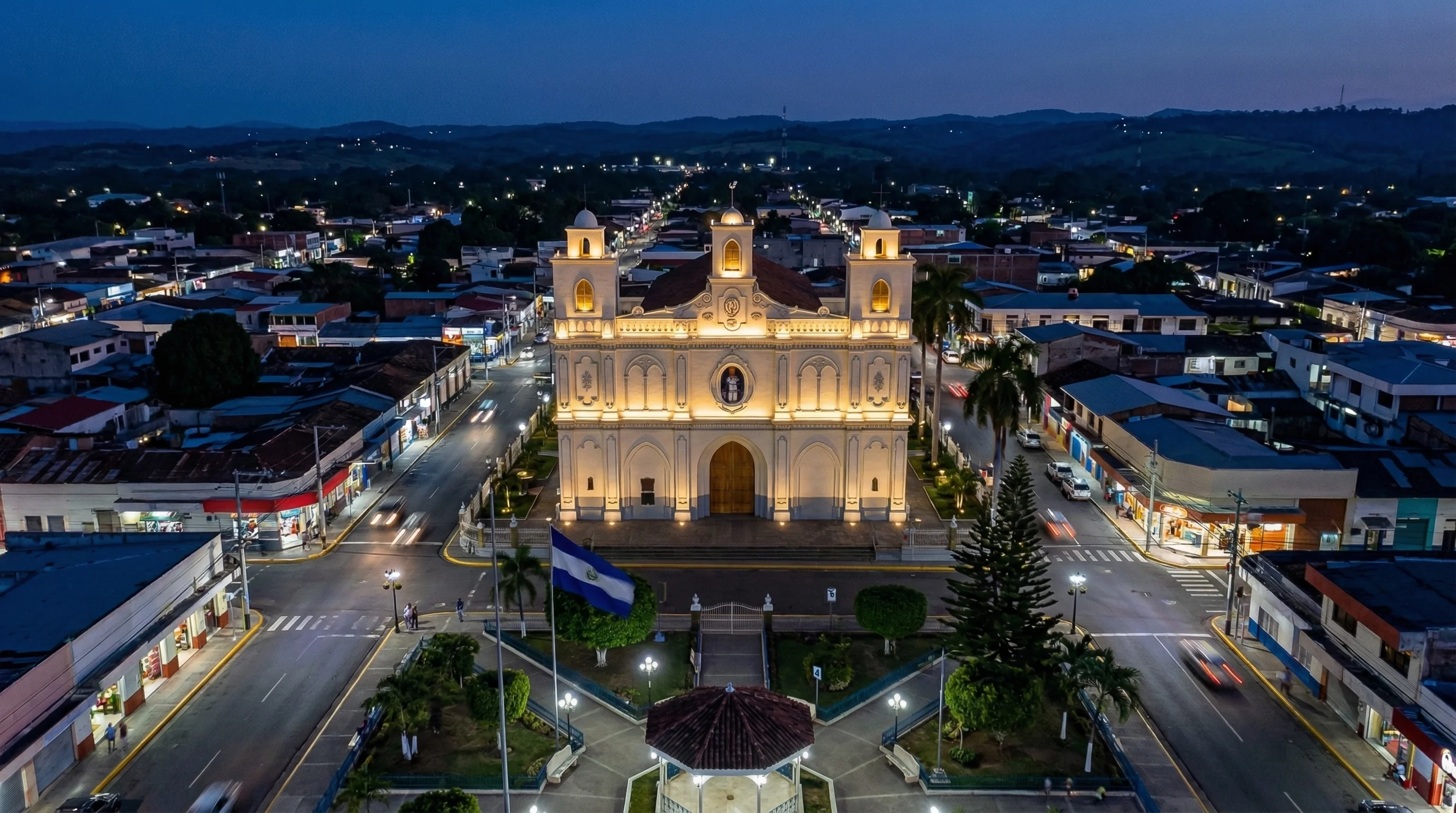
Ahuachapán, located in western El Salvador near the Guatemalan border, is a strategically vital logistics origin point. Its proximity to the CA-1 highway provides direct access to the Central American highway network, making it a primary gateway for exporting Salvadoran goods. The region's economy is anchored by robust agricultural and industrial sectors. It is internationally renowned as a premier coffee-producing area, with plantations driving significant export volume. Additionally, the region hosts important sugar mills, textile manufacturers, and food processing plants, creating a consistent demand for outbound freight transportation. The available transportation infrastructure is well-developed for its role. The CA-1 highway is the main arterial road, connecting Ahuachapán to the port of Acajutla for maritime export and northward to the Guatemalan and Mexican borders. Local road networks support the collection of goods from rural plantations and factories to central consolidation points. This infrastructure, combined with the region's productive output, positions Ahuachapán as a crucial starting node for full truckload shipments moving into the North American logistics corridor.
 Destination
Cheyenne
Cheyenne, Wyoming, serves as a strategically significant logistics destination in the North American interior. As the capital and largest city in Wyoming, it is a central hub for the Rocky Mountain region, offering a 'last-mile' distribution point for a vast, sparsely populated area. Its economy is diversified, with major industries including agriculture (beef, hay, grain), energy (oil, gas, renewables), manufacturing, and government/defense contracting. These sectors generate substantial inbound freight needs for raw materials, equipment, and finished goods. The city's transportation infrastructure is built for heavy freight. It is a major intersection for two critical Interstate highways: I-25 runs north-south, connecting to Denver and Colorado Springs to the south and Casper and Montana to the north, while I-80 runs east-west, linking to Salt Lake City, Omaha, and Chicago. This crossroads position allows for efficient redistribution across the western and central United States. Furthermore, Cheyenne is a significant rail hub, with main lines from Union Pacific and BNSF, enabling intermodal flexibility. This robust infrastructure network makes Cheyenne an ideal endpoint for FTL shipments requiring deep access into the Mountain West and Great Plains markets.


Ready to ship your cargo?
Get a personalized quote for your freight.
Quote Now Ahuachapán - Cheyenne








