Huehuetenango a Charleston
Charleston → HuehuetenangoServicio de transporte de carga FTL entre Huehuetenango y Charleston. Soluciones logísticas confiables para tu negocio.
Descripción de la Ruta
Todo lo que necesitas saber sobre el corredor Huehuetenango - Charleston
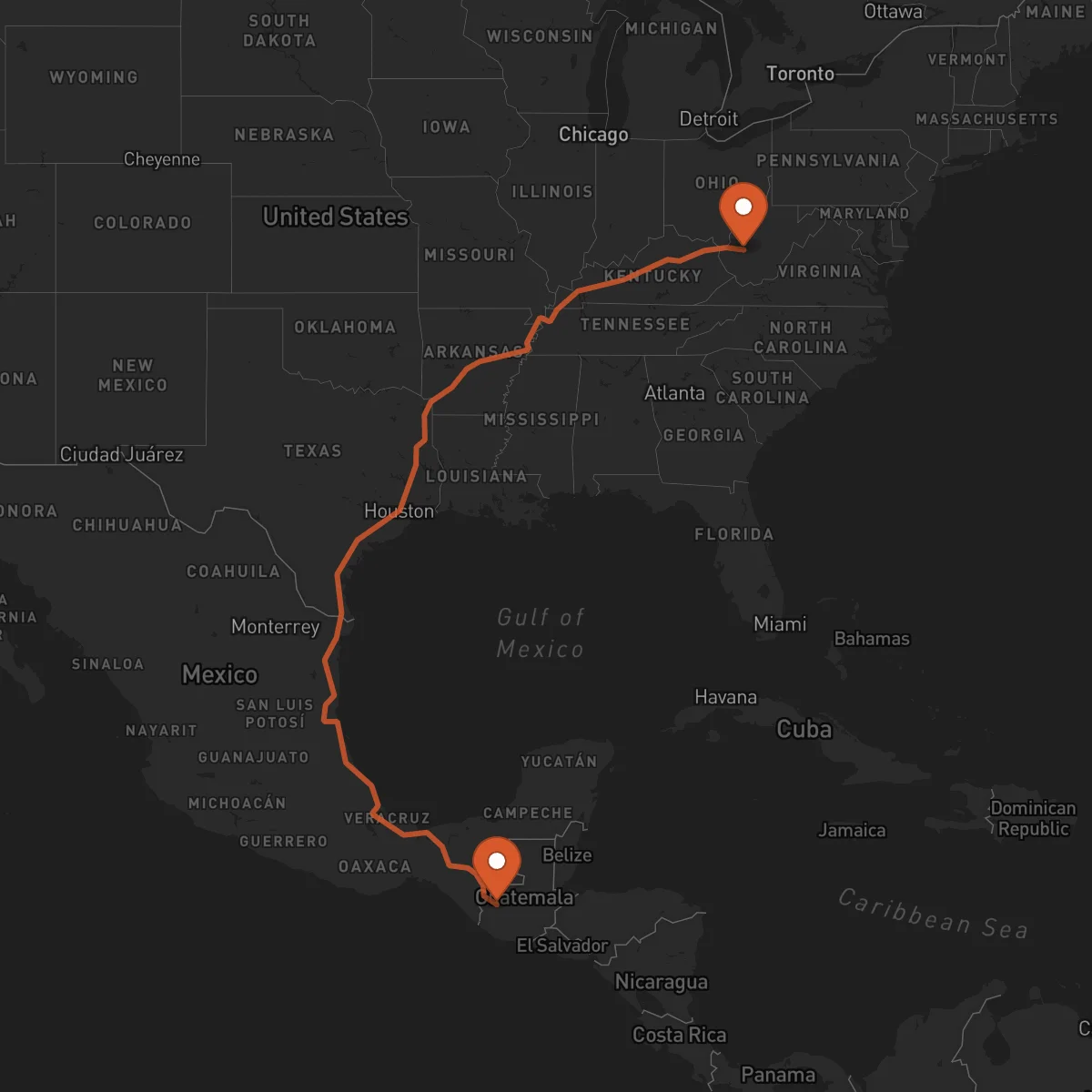
The Huehuetenango to Charleston corridor is a critical cross-border logistics link connecting Central America with the Appalachian industrial heartland of the United States. Spanning approximately 2,736 km, this route serves as a vital artery for trade, facilitating the movement of goods from Guatemala's productive highlands to the manufacturing and energy hubs of West Virginia and the broader Midwest and Eastern Seaboard. Strategically, it bridges key economic zones, enabling efficient supply chain flows for industries reliant on full truckload (FTL) transportation. The corridor's importance is underscored by its role in supporting bilateral trade, where Guatemalan exports, including textiles, agricultural products, and manufactured components, find their way to U.S. markets, while U.S. industrial materials and finished goods are transported south.
Economically, the regions served by this corridor are defined by complementary industrial strengths. In Guatemala, the western highlands around Huehuetenango are known for textile maquilas, coffee production, and agricultural commodities. On the U.S. side, Charleston and the surrounding Kanawha Valley are a historic center for chemical manufacturing, polymers, energy equipment, and machinery. This creates a consistent demand for reliable, dedicated freight services to move raw materials inbound and finished products outbound. Primary users of this corridor include manufacturers, agricultural commodity shippers, and distributors with supply chains spanning both regions.
Transportation infrastructure relies on a seamless integration of highway networks. The route typically begins on Guatemala's CA-1 highway, transitioning through Mexico via federal routes like the MX-190 and MX-150D towards northern border crossings. Once in the United States, the journey continues on the Interstate system, primarily utilizing I-35 and I-44 to connect with I-64, which leads directly into Charleston. Key border crossings, such as those in Laredo, Texas, or El Paso, are pivotal transit points. At Control Terrestre, we facilitate operations on this corridor by leveraging our alliance of certified carriers. Our providers hold C-TPAT and FAST certifications, which streamline customs clearance and enhance security, reducing delays. We exclusively offer FTL solutions—including dedicated, expedited, and specialized options for oversized or regulated cargo—ensuring a single, secure shipment from door to door without consolidation.
Customs and border considerations are integral to this cross-border route. Compliance with U.S. and Guatemalan regulations, as well as Mexican transit rules, requires expertise. Our network's certifications (BASC, Clean Transportation) and experience in handling export/import freight and hazardous materials (where applicable) ensure adherence to all protocols. We manage the complexities of documentation, customs brokerage coordination, and border crossing logistics, providing our clients with a transparent, human-centric experience. By focusing on robust, green transportation practices and a provider network optimized for North American corridors, Control Terrestre delivers the reliability companies need to optimize their supply chains between Huehuetenango and Charleston.
Servicios para esta Ruta
Servicios disponibles para el corredor Huehuetenango - Charleston
 Origen
Huehuetenango
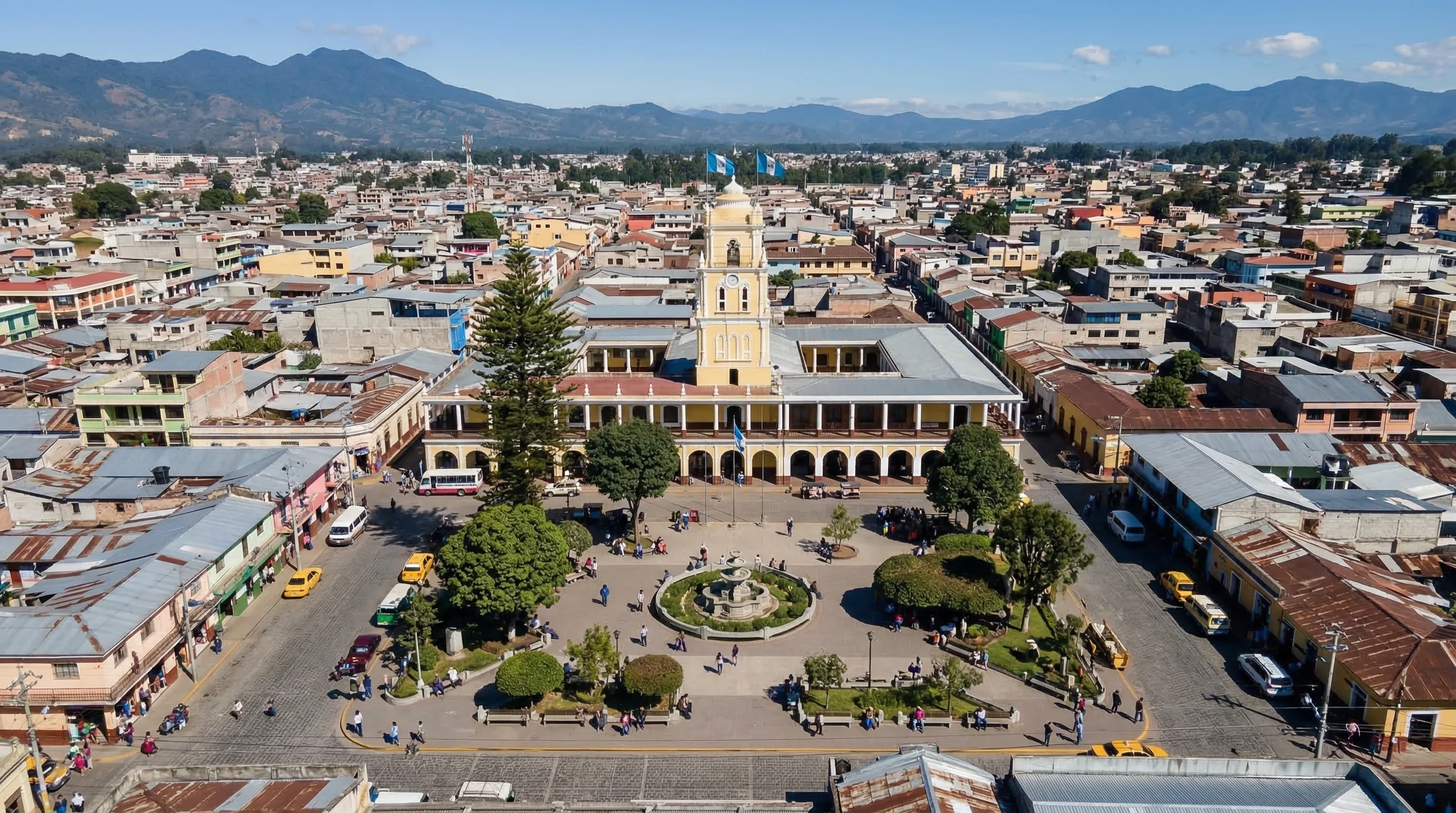
Huehuetenango, located in the western highlands of Guatemala near the Mexican border, holds a strategic position as a gateway for cross-border logistics into Central America. Its proximity to major Mexican highway corridors makes it an ideal originating point for freight destined for the United States. The region's economy is driven by textile manufacturing (maquilas), high-quality coffee production, and diverse agriculture, including vegetables and grains. These sectors generate consistent demand for outbound FTL services to transport raw materials and finished goods. The primary transportation infrastructure is anchored by the CA-1 highway, which connects Huehuetenango to Mexico's federal highway network, enabling efficient access to northern border crossings. This road infrastructure supports the movement of all standard equipment types, from dry vans to flatbeds, facilitating trade flows northward.
 Destino
Charleston
Charleston, West Virginia, is a strategic logistics hub in the Appalachian region, serving as a key distribution point for industrial and energy sectors. Its central location provides efficient access to markets across the Midwest, Eastern Seaboard, and Gulf Coast via the U.S. Interstate system. The local economy is dominated by chemical manufacturing, polymer production, energy equipment, and machinery, creating significant demand for inbound raw materials and outbound finished goods. Transportation infrastructure is robust, with direct access to I-64, I-77, and I-79, linking Charleston to major cities like Columbus, Pittsburgh, and Norfolk. These interstates support high-volume FTL traffic and accommodate diverse equipment, including tankers for chemicals and flatbeds for oversized industrial components, making it a critical node in national supply chains.


¿Listo para enviar tu carga?
Obtén una cotización personalizada para tu carga.
Cotizar Ahora Huehuetenango - Charleston








