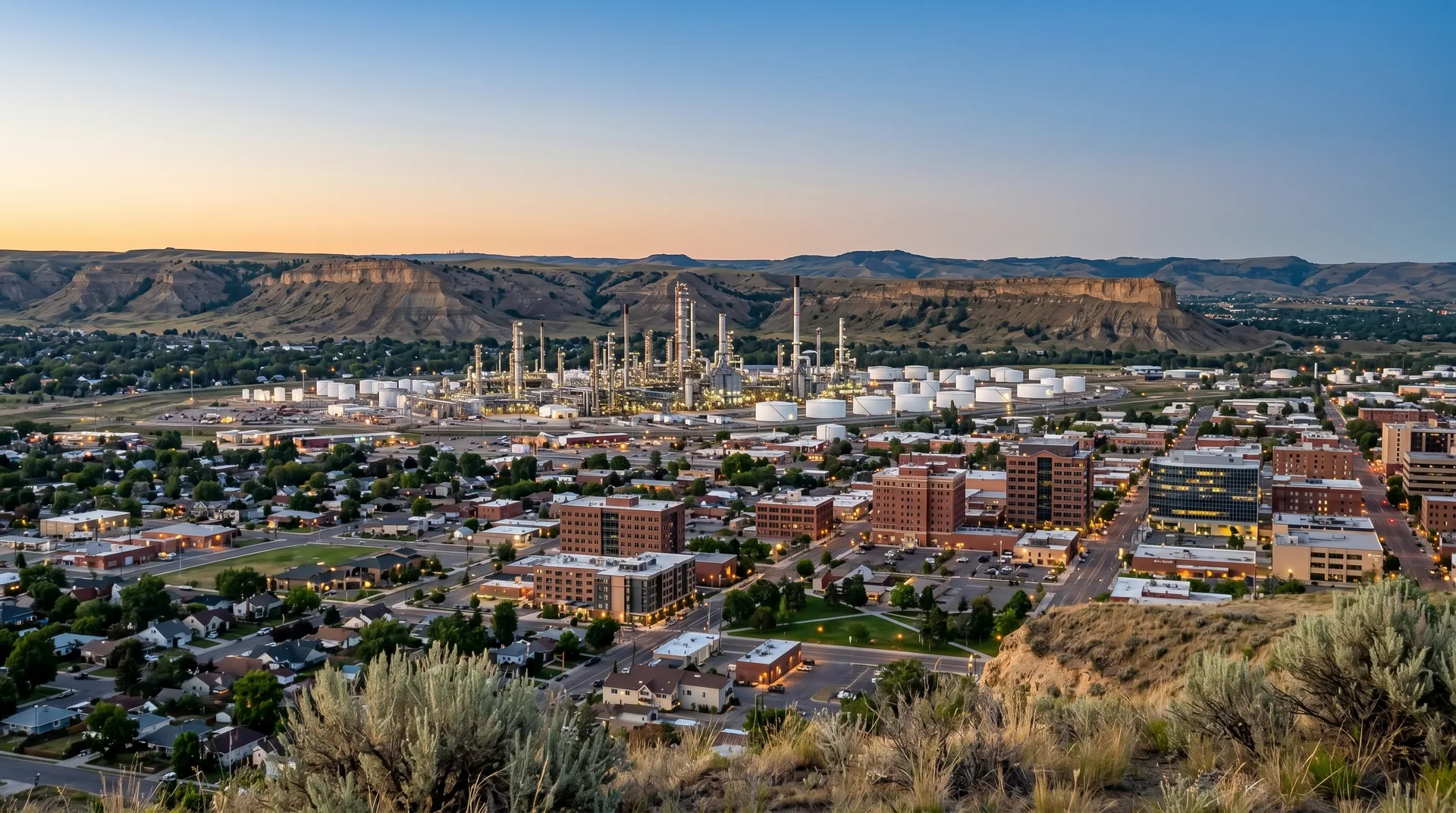

Ground freight transportation in Montana
Montana represents a strategic territory for ground freight operations connecting the northern United States with Canada and Pacific Northwest markets. Its geographic expanse and its position as a border state make it a fundamental corridor for binational trade and for supply chains supplying the northern and northwestern regions of the United States. Despite its low population density, Montana is a key piece in transcontinental and cross-border trade routes.
At Control Terrestre, we operate in Montana understanding the particularities of this state: extensive distances, demanding weather conditions, and the importance of connectivity with Canada. Our network of strategic providers is prepared to manage FTL operations that require experience on long-haul routes and the ability to navigate the specific logistical challenges of the northern United States.
Infrastructure and connectivity
Montana has a network of interstate highways that, while less dense than in other states, is vital for regional and international commerce. Interstate 90 crosses southern Montana from east to west, connecting to Wyoming to the east and continuing toward Idaho and Washington state to the west. This route is essential for transcontinental traffic moving through the northern corridor and for connecting to Pacific ports in Seattle and Tacoma.
Interstate 15 runs north to south, connecting the border crossings with Canada (particularly Sweetgrass-Coutts) with Idaho, Utah, and eventually California. This route is fundamental for trade with western Canada and for freight movements between Canada and the western and southwestern U.S. markets.
Interstate 94 crosses southern Montana to the east, connecting to North Dakota and providing access to upper Midwest markets. State and regional routes complement this network, enabling access to rural areas, agro-industrial centers, and natural resource extraction areas.
The border crossings with Canada are critical components of Montana's logistics infrastructure. Sweetgrass-Coutts is the primary crossing point for commercial ground traffic, facilitating the flow of goods between the United States and the Canadian provinces of Alberta and beyond.
Cities such as Billings, Missoula, Great Falls, and Kalispell function as regional logistics hubs, with infrastructure for freight consolidation and redistribution. Billings, in particular, is the state's most important economic center and a reference point for operations in eastern Montana.
Key industries and sectors
Montana's economy is strongly tied to natural resources and primary activities that generate specific demand for ground freight services. The agricultural sector is a fundamental pillar, with significant production of wheat, barley, cattle, and other agricultural products. Grain, livestock, and processed meat product movements require transportation capabilities in both dry and refrigerated trailers.
Mining and mineral resource extraction have a historical and current presence in Montana, including coal, precious metals, and other industrial minerals. Transporting these materials demands specialized unit configurations and knowledge of specific regulations.
The oil and natural gas sector, particularly in the eastern region of the state and connected to the Bakken formation extending into North Dakota, generates specialized transportation needs including equipment related to the energy industry.
The forestry and wood products industry maintains relevance in the mountainous areas of the state, generating flows of raw materials and processed products that require bulk material hauling capabilities.
Tourism, while not generating the same freight volumes as other industries, demands transportation of supplies, equipment, and consumer products to remote areas, especially during peak tourist seasons.
Cross-border trade with Canada is a significant component of logistics activity, with bidirectional flows of manufactured, agricultural, energy, and raw material products between both countries.
Our solutions for Montana
At Control Terrestre, we offer domestic ground freight services connecting Montana with all of North America. We understand that operations in this state frequently involve long distances and precise coordination due to the extensive geography and variable weather conditions.
Our cross-border freight transportation services are especially relevant for Montana, facilitating the movement of goods between the United States and Canada through the state's border crossings. We work with providers that hold FAST and C-TPAT certifications that streamline crossing processes and ensure compliance with customs regulations of both countries.
For operations requiring speed, we offer expedited freight that prioritizes transit times, essential for time-sensitive cargo moving through long-haul routes crossing Montana toward the Pacific Northwest or Canada.
Dedicated services are particularly useful for clients with recurring flows, such as agro-industrial or energy sector companies that require constant and predictable movements. This modality provides operational consistency and exclusive units assigned to specific operations.
In specialized freight, our network includes capabilities to transport hazardous materials (Hazmat) related to the energy and chemical industries, oversized loads for industrial and mining equipment, and tanker trailers for liquids and petrochemical products.
Refrigerated transportation is essential for Montana's meat and agro-industrial industry. We operate with 48' and 53' refrigerated trailers that maintain the cold chain on movements to domestic markets and for exports to Canada.
Our available units include 48' and 53' dry van trailers (Full and Tandem configurations), flatbeds for industrial freight and equipment, hopper trailers for bulk materials, and chassis for intermodal operations, allowing us to serve the diverse freight profiles that characterize Montana's industries.
All our providers operate under safety protocols that account for Montana's demanding weather conditions, particularly during the winter months.
Frequently asked questions (FAQ)
Can Control Terrestre manage freight transportation between Montana and Mexico?
Yes, although Montana and Mexico do not share a direct border, our services connect both regions through our domestic routes. We handle export and import freight linking Montana with Mexico, managing transit through the intermediate states and the southern United States border crossings.
How do you handle winter weather conditions in Montana?
We work with providers experienced in operating in demanding weather conditions. While we cannot control the weather, our provider network has adequate equipment and safety protocols for winter operations. It is important to note that severe weather conditions can affect transit times, and we proactively communicate any situation that impacts operations.
What types of freight do you most frequently handle in Montana?
We primarily handle freight related to the state's predominant industries: agricultural products (grains, livestock, meat products) in dry and refrigerated trailers, equipment and materials for the mining and energy industries on flatbeds and specialized configurations, forestry products, and cross-border trade merchandise with Canada. All our services are exclusively FTL; we do not handle consolidated freight.


Freight experts
Ground freight from North to Central America with full coverage and 24/7 monitoring.








