路线描述
关于该走廊您需要了解的一切 哥伦比亚 - 卡尔加里
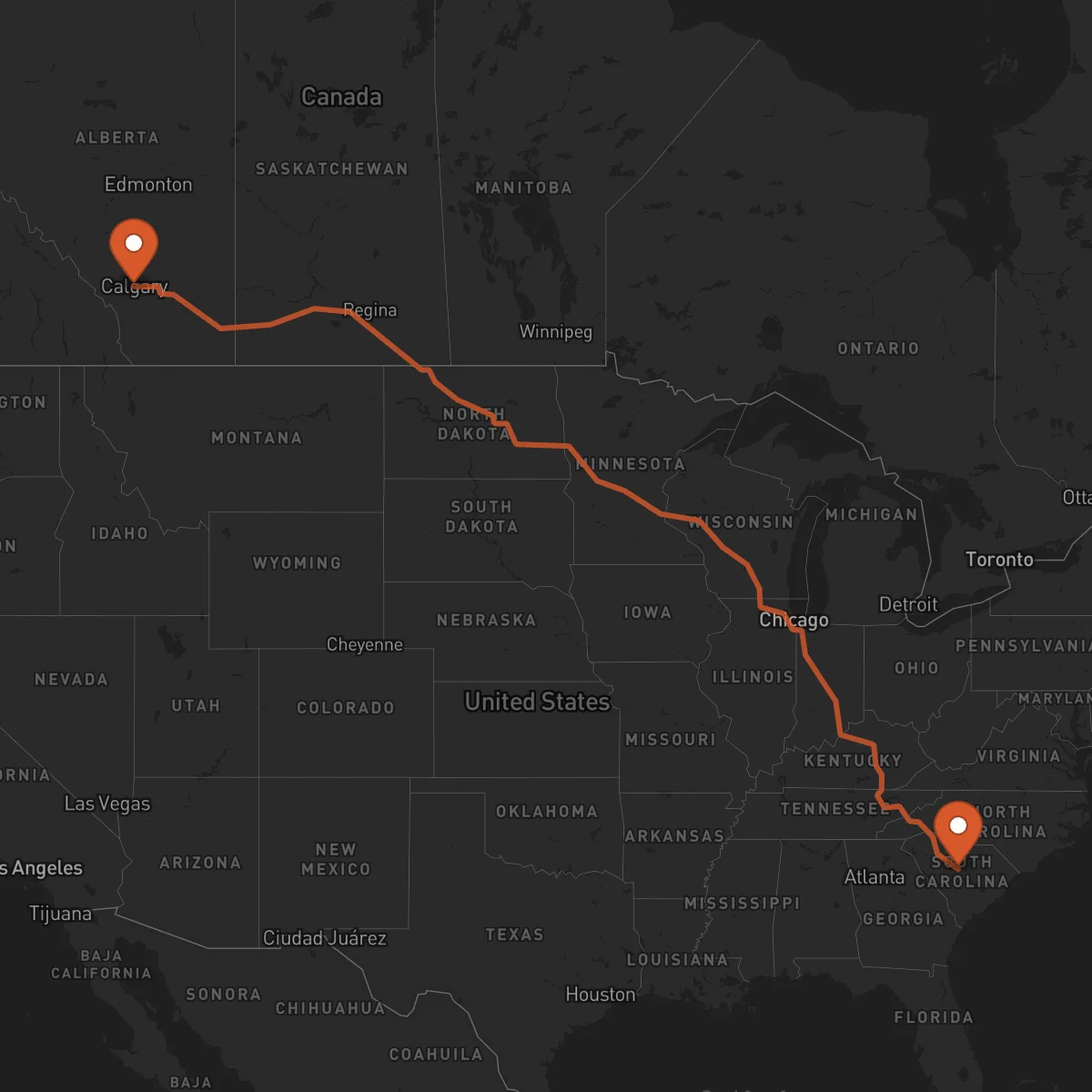
The Columbia, South Carolina to Calgary, Alberta corridor represents a vital cross-border freight route connecting the southeastern United States with Canada's energy capital. This 3,261 km transportation corridor traverses diverse terrain and crosses multiple state and provincial boundaries, making it a complex yet strategically important route for freight movement between these two major economic regions.
The corridor serves as a critical link for industries requiring reliable transportation between the manufacturing and distribution hubs of South Carolina and the energy, technology, and agricultural sectors of Alberta. Major highways including I-26, I-40, I-70, and the Trans-Canada Highway form the backbone of this route, providing multiple options for freight carriers to optimize delivery times and costs. The journey typically involves crossing at key border points such as Sweetgrass, MT or Coutts, AB, where customs clearance and documentation requirements must be carefully managed.
Control Terrestre specializes in facilitating seamless cross-border operations along this corridor, leveraging our extensive network of certified carriers and our expertise in customs procedures. Our team ensures that freight moves efficiently through all necessary checkpoints while maintaining compliance with both US and Canadian regulations. We provide dedicated FTL services that guarantee your cargo travels directly from origin to destination without unnecessary handling or delays, making us the ideal partner for companies requiring reliable transportation between Columbia and Calgary.
 起点
起点
Columbia, South Carolina serves as a strategic logistics hub in the southeastern United States, offering excellent connectivity to major markets along the East Coast. The city's central location in South Carolina provides easy access to interstates I-20, I-26, and I-77, creating efficient distribution networks for regional and national freight movement. Columbia's logistics infrastructure includes multiple warehousing facilities, intermodal yards, and proximity to major ports like Charleston, making it an ideal origin point for cross-border shipments.
The region's economy is diverse, with strong manufacturing sectors including automotive (BMW has a major plant nearby), aerospace, and advanced materials. The presence of several universities and research institutions also drives demand for specialized freight services. Columbia's mild climate and year-round accessibility make it particularly suitable for consistent freight operations, while its position away from major coastal congestion points offers advantages for timely departures and arrivals.
 终点
终点
Calgary, Alberta stands as a major logistics and economic center in Western Canada, strategically positioned at the intersection of key transportation routes. The city serves as the primary gateway to the Canadian Rockies and is a crucial hub for freight moving between Canada's energy sector and US markets. Calgary's transportation infrastructure includes extensive highway networks (Trans-Canada Highway, Deerfoot Trail), a major international airport, and rail connections that facilitate efficient cargo movement throughout North America.
The Calgary economy is heavily influenced by the energy sector, with significant activity in oil, natural gas, and renewable energy industries. Additionally, the city has growing technology, agriculture, and manufacturing sectors that create consistent demand for freight services. Calgary's location provides strategic advantages for cross-border operations, with relatively straightforward access to US markets while maintaining strong connections to other Canadian provinces. The city's logistics ecosystem includes modern warehousing facilities and a skilled workforce experienced in handling various types of freight, from standard commercial goods to specialized equipment.










