Trade in the Americas is sustained by a network of strategic routes and key cities that function as logistics nodes, ports, distribution centers, and multimodal connection points. For Mexico – one of the countries most integrated into the North American economy – understanding and leveraging these trade hubs is fundamental to maximizing efficiency, reducing costs, and ensuring competitiveness in an increasingly demanding global supply chain.
Below is an in-depth analysis of the most important cities for trade in the Americas and the critical routes that connect the continent.
1. Laredo, Texas: the heart of Mexico–United States trade
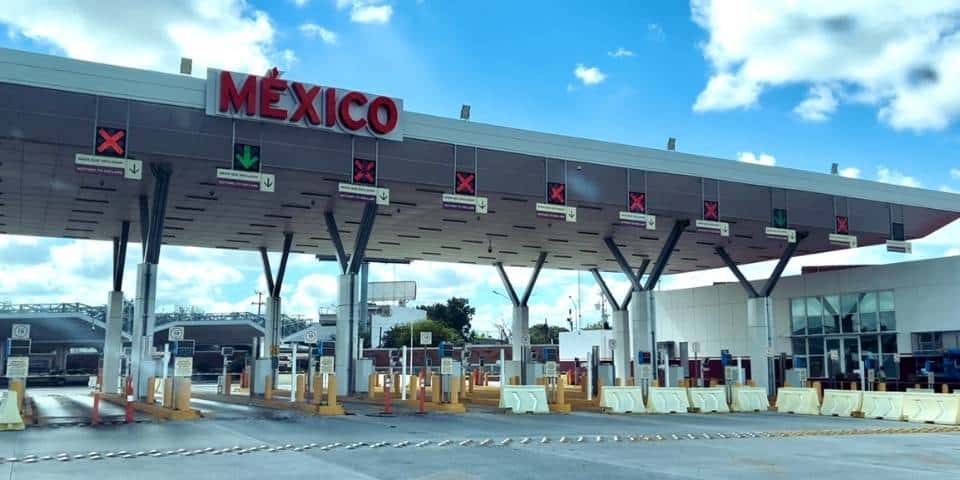
If there is one city essential to understanding trade in the Americas, it is Laredo, where nearly 40% of all land freight between Mexico and the United States crosses.
The importance of this city lies in:
Its customs infrastructure and border crossings (World Trade Bridge and Colombia Solidarity Bridge).
The constant flow of trailers connecting Monterrey, Saltillo, Guanajuato, and Querétaro with the U.S. market.
Its role as the primary entry point for automotive, electronics, machinery, and agricultural goods.
For Mexico, Laredo is more than a border city: it is the logistical lung that drives our exports and enables nearshoring to be truly operational.
2. Los Angeles – Long Beach: the Pacific megaport
The Los Angeles–Long Beach port complex is the largest gateway in the Americas for goods from Asia. Its impact is not only American: it directly influences Mexican logistics because:
It is a hub for containers that subsequently travel by rail or truck to Mexico.
Global companies distribute from there to North and Latin America.
Supply chains based on Asian products rely on this megaport to supply Mexican industries.
This Pacific–California–Mexico route is key for electronics, textiles, auto parts, and consumer goods.
3. Miami: the connection point with Latin America
In terms of air and maritime trade to the south of the continent, Miami is the major player. Its relevance to the Americas is based on:
Being the main air cargo hub to South America and the Caribbean.
Hosting continental distribution centers.
Its port with high container movement to Panama, Colombia, and Central America.
For Mexico, Miami represents the gateway to southern markets and a strategic outlet for pharmaceutical, fashion, electronic, and perishable products.
4. Houston: energy, chemicals, and maritime connection
Houston stands out for its specialization:
The main energy hub on the continent.
The second port with the highest cargo volume in the United States.
Direct connections with Mexican automotive, oil, gas, and heavy manufacturing industries.
The Houston–Tamaulipas–Nuevo León and Houston–Veracruz routes sustain a large part of the energy and manufacturing movement between both countries.
5. Toronto and Vancouver: the Canadian axis of the USMCA
Mexico maintains consistent trade growth with Canada, and cities like Toronto and Vancouver are key:
Toronto
Financial and technology center.
Logistics hub for air and rail transport.
Vancouver
Canada’s most important port for transpacific trade.
Critical connection for Asian goods distributed to North America.
These cities strengthen the trilateral integration under the USMCA, helping Mexico consolidate its position as a strategic trading partner.
6. São Paulo: the economic engine of South America
In the south of the continent, São Paulo is the logistical giant:
Largest economic and manufacturing center in Latin America.
Large-capacity cargo airport.
Growing connection with Mexico in auto parts, food, technology, and chemicals.
The Mexico–São Paulo routes are strengthening each year and expanding the regional reach of the Mexican industry.
7. Panama: the point that balances global trade
The Panama Canal is probably the most important logistical element in the Americas:
Reduces times and costs for ships between Asia and the east coast of the continent.
Its air hub (Tocumen) is the most connected in Latin America.
Functions as a platform for maritime redistribution to Central America and the Caribbean.
For Mexico, Panama ensures efficient maritime routes to the eastern United States and South America.
8. Strategic routes that unite the continent
Trade in the Americas depends on logistics corridors that sustain the flow of goods. Among the most important are:
Monterrey–Laredo–Dallas–Chicago (automotive and manufacturing industry).
Pacific Asia–California–Mexico Route (mass consumption, electronics, fashion).
Miami–Panama–Colombia (main corridor to South America).
Mexico–Toronto–Montreal (USMCA integration).
Panama–Brazil–Chile (South-South trade).
These routes condense the most critical movements on the continent.
America is a living map: Mexico must leverage its key routes
The commercial network of the Americas is not static: it evolves, adapts, and responds to technological, geopolitical, and economic changes. For Mexico, understanding and strategically utilizing these logistics nodes is essential to maintaining its leadership in the region.
The ports, airports, cities, and corridors mentioned define continental competitiveness, and the companies that manage to integrate efficiently into these routes will be those that dominate the future of logistics.
Control Terrestre positions itself as a reliable ally to connect Mexico with the most important routes on the continent, ensuring efficient, secure, and adapted operations to the needs of modern commerce.
📩 Want to stay up to date with the latest trends in logistics, trade, and transportation? Subscribe to the Control Terrestre newsletter and don't miss any updates.