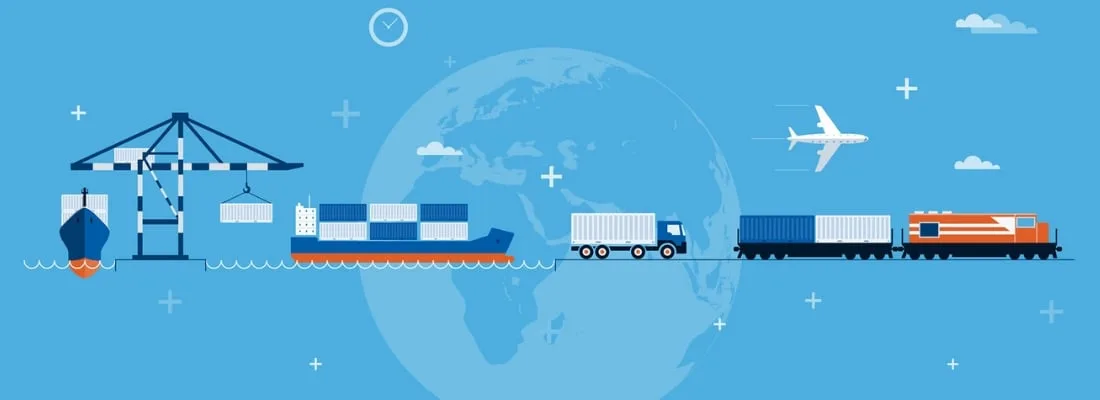
New requirements, new challenges for global transport
International trade is undergoing a profound transformation. New environmental regulations imposed by the European Union, the United States, and the International Maritime Organization (IMO) are redefining how companies transport goods globally. In this context, so-called green logistics has ceased to be a trend and has become a strategic imperative for any company seeking to remain competitive.
Since 2024, several international agreements require logistics chains to reduce their carbon footprint and transparently report their emissions. The EU's Carbon Border Adjustment Mechanism (CBAM) Regulation, for example, already affects exporters of steel, cement, fertilizers, and energy. And although in its initial phase it only applies to certain sectors, by 2026 it will progressively cover more manufactured products, including those transported from Mexico and Latin America.
These measures force companies to adapt their logistics operations: from the type of fuel used to the choice of routes, suppliers, and modes of transport.
The pressure of international environmental regulations
The tightening of regulations is not limited to Europe. In the United States, the Environmental Protection Agency (EPA) has established stricter emission limits for freight trucks and commercial fleets starting in 2027, while Canada is already incentivizing the use of electric trucks and renewable fuels in cross-border corridors.
In addition, the International Maritime Organization (IMO) implemented the Energy Efficiency Existing Ship Index (EEXI) and the Carbon Intensity Indicator (CII) in 2023, which require merchant ships to progressively reduce their CO₂ emissions. This directly impacts Mexican and Latin American maritime transport, as ports that do not meet the new requirements could see their commercial traffic restricted.
In other words, environmental regulations are generating a new global competitive framework, in which sustainability is measured, audited, and translated into commercial costs or benefits.
Innovations driving green logistics
The transition to cleaner transport not only involves complying with regulations, but also adopting technologies that increase efficiency. The main trends already shaping the course include:
Electric and hydrogen fleets: Mexico and Brazil are already testing long-range electric trucks, while Europe is expanding projects based on green hydrogen mobility.
Advanced biofuels: the use of biodiesel blends and synthetic fuels is gaining ground in aviation and maritime transport.
Route optimization using artificial intelligence: AI allows for the planning of routes that reduce fuel consumption and emissions by up to 15%.
Sustainable logistics centers: new industrial parks in Querétaro, Nuevo León, and the State of Mexico integrate solar roofs, recycling systems, and energy monitoring.
Environmental certifications: standards such as ISO 14001 and the PAS 2060 standard (carbon neutrality) are becoming requirements for collaborating with large multinational corporations.
These innovations not only help companies comply with regulations, but also improve corporate reputation and reduce operating costs in the long term.
Latin America facing the green transformation
For Latin American exporters, green logistics represents both a challenge and an opportunity. According to data from ECLAC (2025), the region could lose competitiveness if it does not invest in sustainable infrastructure. In Mexico alone, it is estimated that the transport sector generates 25% of the national CO₂ emissions, making modernization urgent.
Land and maritime transport companies are already taking important steps. In Brazil, Vale and Petrobras are experimenting with renewable fuels in their mining vessels. In Chile, logistics operators are incorporating electric trucks for urban distribution, and in Mexico, Ferromex and Control Terrestre are evaluating intermodal transport alternatives and cleaner technologies in their fleet.
These actions reflect a regional trend towards the progressive decarbonization of the logistics chain, aligned with the objectives of the Paris Agreement and global commitments to net-zero emissions by 2050.
The business benefits of sustainable logistics
Adopting sustainable practices is not only a matter of environmental responsibility; it is also a strategic decision. Companies that invest in green transport are obtaining tangible advantages:
Reduced energy costs: electric and optimized fleets consume less and require less maintenance.
Access to new markets: many international clients already demand ESG reports and suppliers with green certifications.
Improved corporate reputation: sustainable brands are perceived as innovative and reliable.
Preferential financing: international banks offer lower rates to projects with an environmental focus.
Anticipatory regulatory compliance: adapting before regulations become mandatory avoids future penalties.
In an environment where environmental transparency has become a key corporate value, companies that integrate sustainability into their logistics strategy will be best positioned.
The future of international transport is green
The transport of goods is entering a new stage in which environmental performance will be as important as operational efficiency. International standards no longer leave room for improvisation: those who do not adopt clean technologies or measure their emissions run the risk of being left out of the market.
Mexico, thanks to its strategic position and its growing network of logistics corridors, has the opportunity to lead this transition in Latin America. But achieving this will depend on collaboration between companies, governments, and logistics operators committed to sustainable innovation.
Control Terrestre is committed to that transformation. Through land and intermodal transport solutions that optimize resources, reduce emissions, and promote efficiency, the company seeks to advance towards cleaner, more competitive logistics aligned with international standards.
📩 Want to stay up-to-date with the latest trends in logistics, commerce, and transport? Subscribe to the Control Terrestre newsletter and don't miss any updates.